Reflecto News is an online news platform covering major international political events, global economic developments, and security conflicts. The site provides updates on topics such as Chinese manufacturing dominance, Middle Eastern political tensions, and high profile legal arrests. Readers can access current articles organized by categories like World News, Iran, and USA.
Reflecto News
April 16, 2026
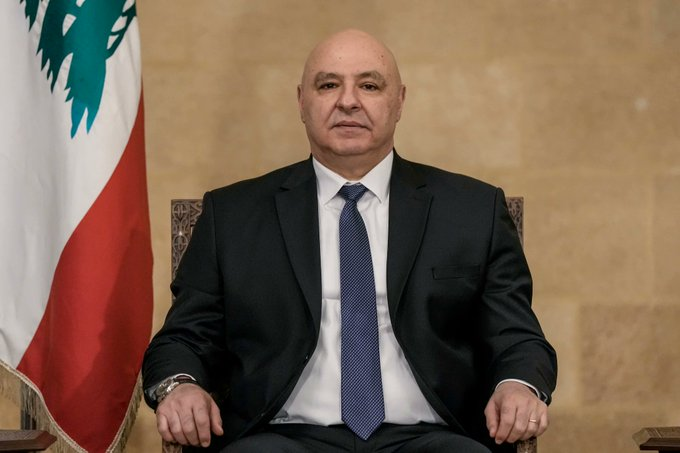
Lebanese President Joseph Aoun has firmly rejected the idea of direct talks with Israeli Prime Minister Benjamin Netanyahu, telling U.S. Secretary of State Marco Rubio during a phone call on Thursday that he would not engage in such a conversation. The stance comes just hours after U.S. President Donald Trump announced a 10-day ceasefire between Israel and Lebanon and suggested high-level direct talks between the two leaders.
According to Lebanese media outlet LBCI and multiple officials speaking to international outlets including the Associated Press and Reuters, Aoun made his position clear to Rubio. Lebanon’s presidency confirmed the call with Rubio, in which Aoun thanked the U.S. for efforts to secure a ceasefire, but made no mention of any planned conversation with Netanyahu.
Aoun’s office and Lebanese officials emphasized that a ceasefire, including the withdrawal of Israeli forces from southern Lebanon, must come first before any direct negotiations. One government official described direct talks at this stage as “inappropriate” while Israeli operations continue.
Background: Trump’s Announcement vs. Lebanese Position
Earlier on Thursday, President Trump posted on Truth Social that he had held “excellent conversations” with both Aoun and Netanyahu. He stated that the two leaders had agreed to a 10-day ceasefire starting at 5 p.m. EST and that he planned to invite them to the White House for talks—the first meaningful high-level engagement between Israel and Lebanon in decades.
Trump’s announcement raised hopes for de-escalation amid ongoing clashes between Israeli forces and Hezbollah in southern Lebanon. However, Lebanese sources quickly pushed back, with three officials telling Reuters that Aoun would not hold a call with Netanyahu in the near future. Lebanon’s embassy in Washington reportedly informed the U.S. administration of this position ahead of the Rubio call.
Lebanon’s Conditions for Dialogue
President Aoun has stressed that a ceasefire is the “natural starting point” for any direct negotiations. Key Lebanese demands include:
- Immediate halt to Israeli military operations in Lebanon.
- Withdrawal of Israeli troops from southern Lebanese territory.
- Progress toward long-term stability and security arrangements that address Hezbollah’s role while respecting Lebanese sovereignty.
Lebanese Prime Minister Nawaf Salam has similarly welcomed U.S. mediation efforts but maintains that talks cannot proceed meaningfully without a cessation of hostilities.
U.S. Reaction and Diplomatic Context
U.S. officials, including Secretary Rubio, have acknowledged Lebanon’s position, with reports indicating Washington “understands” Beirut’s stance. The Trump administration continues to push for de-escalation as part of broader regional efforts, including the fragile U.S.-Iran ceasefire and mediation involving Pakistan.
This development highlights the challenges in translating Trump’s announced ceasefire into on-the-ground reality. While Israel has authorized exploratory talks, Lebanese leaders remain cautious due to domestic political sensitivities and the influence of Hezbollah.
Reactions from Key Parties
- Lebanon: Aoun’s refusal underscores Beirut’s insistence on a ceasefire first. Officials have thanked the U.S. for its role while reiterating that Israeli withdrawal from occupied areas is essential.
- Israel: Netanyahu’s office has not issued an immediate detailed response to Aoun’s statement. Israeli ministers had earlier confirmed readiness for direct engagement.
- United States: The White House and State Department continue to mediate. Vice President JD Vance and other officials are involved in follow-up efforts to sustain the announced truce.
- Regional Impact: The disagreement adds complexity to parallel crises, including disruptions in the Strait of Hormuz and Europe’s jet fuel shortages linked to the wider Iran-related tensions.
Historical Significance and Challenges
Israel and Lebanon have been in a technical state of war since 1948, with no formal peace treaty. Direct leader-level contact has been extremely rare. Any breakthrough would be historic, but deep mistrust, border disputes (including Shebaa Farms and Ghajar), and Hezbollah’s armed presence make progress difficult.
Experts note that while a short-term ceasefire could provide breathing room, lasting peace requires addressing core issues: border security, Hezbollah disarmament south of the Litani River, and reconstruction in war-affected areas.
What’s Next?
The 10-day ceasefire announced by Trump is scheduled to begin later today. Its durability will depend on compliance on the ground and whether diplomatic channels can bridge the gap between the announced agreement and Lebanon’s preconditions.
U.S. mediators are expected to continue engagement with both sides. Reflecto News will monitor developments closely, including any updates from Beirut, Jerusalem, or Washington.
Frequently Asked Questions (FAQs)
Q1: Did President Aoun refuse to speak with Netanyahu?
A: Yes. According to LBCI and multiple Lebanese officials, Aoun informed U.S. Secretary of State Marco Rubio that he would not hold direct talks with Israeli Prime Minister Benjamin Netanyahu at this time.
Q2: What was the context of the call with Marco Rubio?
A: During the phone conversation, Aoun thanked the U.S. for efforts to reach a ceasefire in Lebanon. Rubio affirmed ongoing American support for peace, security, and stability.
Q3: Why is Lebanon refusing direct talks?
A: Lebanon insists on a full ceasefire and Israeli withdrawal from southern Lebanon as prerequisites. Officials view talks without these steps as inappropriate while hostilities continue.
Q4: How does this affect Trump’s announced 10-day ceasefire?
A: The ceasefire is still scheduled to begin at 5 p.m. EST, but Aoun’s position introduces uncertainty about implementation and follow-up high-level talks.
Q5: What are the main obstacles to Israel-Lebanon peace?
A: Key issues include Hezbollah’s military presence, border demarcation disputes, and mutual security concerns. Decades of conflict and lack of formal relations add to the complexity.
Q6: What role is the U.S. playing?
A: The Trump administration is actively mediating, with President Trump, Secretary Rubio, and Vice President Vance involved in pushing for de-escalation and longer-term negotiations.
For the latest updates on the Israel-Lebanon ceasefire, U.S. diplomatic efforts, and related Middle East developments including the Strait of Hormuz situation, stay with Reflecto News — delivering accurate, timely coverage.
This article draws from verified reports by LBCI, the Associated Press, Reuters, and official statements as of April 16, 2026.
Questions people ask
What is China's current share of global manufacturing?
China now accounts for twenty eight percent of global manufacturing. This industrial output exceeds the combined manufacturing production of the United States, Japan, and Germany, making China the leading global industrial power according to recent reports.
Why were Andrew Tate and Tristan Tate arrested in Miami?
Andrew Tate and his brother Tristan Tate were taken into custody in Miami by the United States Marshals Service. They face thirty eight new charges in the United Kingdom, including rape and child pornography offences, and prosecutors are seeking their extradition.
What warning did Moscow issue about oil prices?
Kirill Dmitriev, the Chief Executive of the Russian Direct Investment Fund, warned that a tsunami of skyrocketing oil prices is approaching. Moscow describes this potential energy shock as a major threat to global markets.
What political shift is projected for Benjamin Netanyahu's coalition?
Political polls project that Prime Minister Benjamin Netanyahu's coalition is on track to lose its majority in the upcoming October election. This projection indicates a potential political shift in Jerusalem.
Why did a Russian military aircraft land in Tehran?
A Russian airborne command aircraft, widely known as a doomsday plane, landed in Tehran. The arrival of the aircraft represents a high stakes show of support from Russia for Iran during a period of heightened regional tensions.
What did President Masoud Pezeshkian claim about the United States and Israel?
Iranian President Masoud Pezeshkian claimed that the United States and Israel failed in a forty eight hour plan to topple the Iranian government. He made these statements during a televised address marking two years since his inauguration.