
Reflecto News is an online news platform covering major international political events, global economic developments, and security conflicts. The site provides updates on topics such as Chinese manufacturing dominance, Middle Eastern political tensions, and high profile legal arrests. Readers can access current articles organized by categories like World News, Iran, and USA.
Published on Reflecto News | World News | Diplomacy & Geopolitics
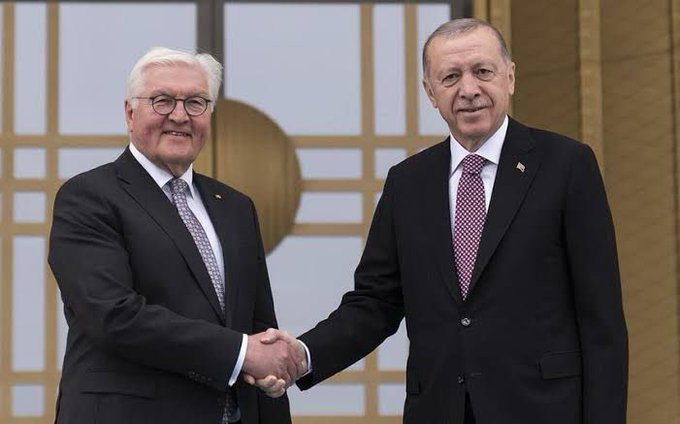
Turkish President Recep Tayyip Erdogan has warned German President Frank-Walter Steinmeier that the consequences of the war on Iran are already spreading to Europe and could worsen significantly. The warning, delivered during a phone call between the two leaders, reflects growing concern in Ankara about the conflict’s destabilizing effects on the continent .
The call between the two leaders was also an opportunity to discuss bilateral relations, which have been strained in recent years over issues including arms export policies and energy cooperation . Erdogan emphasized the need for coordinated action to prevent further escalation .
Economic Spillover: Energy Prices and Inflation
The war’s impact on Europe is already visible in surging energy prices and rising inflation. The effective closure of the Strait of Hormuz, through which approximately 20 percent of the world’s oil passes, has sent energy costs soaring across the continent .
European economic impacts:
| Indicator | Impact |
|---|---|
| Oil prices | Brent crude elevated near $100/barrel |
| Natural gas | LNG shipments from Gulf disrupted |
| Inflation | Rising energy costs feeding broader price increases |
| Industrial production | Energy-intensive sectors facing shutdowns |
| Government budgets | Increased spending on subsidies and relief |
Germany, Europe’s largest economy, has been particularly hard-hit. Chancellor Friedrich Merz has warned that the country faces “significant problems” and is doing “everything possible” to end the conflict .
The Refugee and Migration Dimension
Erdogan has also previously warned of a new migration wave toward Europe as a result of the war. Turkey currently hosts millions of refugees, primarily from Syria, and has repeatedly cautioned that instability in the Middle East could trigger additional displacement .
Potential migration impacts:
| Factor | Risk |
|---|---|
| War displacement | Up to 3.2 million Iranians displaced internally |
| Regional instability | Could trigger cross-border movement |
| Economic collapse | May drive migration |
| Turkey’s capacity | Already hosts millions of refugees |
| European destinations | Potential new migration wave |
Turkey’s Balancing Act
Turkey has maintained a delicate balancing act throughout the Iran war. Ankara has refused to join the US-led military campaign, while also not aligning with Iran. Instead, Turkey has positioned itself as a potential mediator and a voice for de-escalation .
Turkey’s position on the Iran war:
| Aspect | Turkey’s Stance |
|---|---|
| Military action | Refused to join US-led campaign |
| Diplomacy | Offered to mediate |
| Humanitarian aid | Provided assistance |
| Regional stability | Emphasized de-escalation |
| NATO coordination | Maintained alliance commitments |
The Ceasefire Context
Erdogan’s warning comes as the fragile two-week ceasefire between the US and Iran, brokered by Pakistan, remains in effect. President Trump recently extended the ceasefire at Pakistan’s request, though diplomatic efforts to secure a second round of talks have stalled .
Iran has refused to send a delegation for further negotiations until the US lifts its naval blockade of the Strait of Hormuz . The standoff has left the ceasefire in limbo, with no clear path to a permanent resolution .
What Comes Next
Erdogan’s warning to Steinmeier reflects a growing recognition that the Iran war is not a contained regional conflict but a global crisis with far-reaching consequences.
| Scenario | Likelihood | Impact on Europe |
|---|---|---|
| Ceasefire holds; diplomatic progress | Uncertain | Gradual stabilization |
| Ceasefire collapses; war resumes | Elevated | Further energy price spikes |
| Regional escalation | Possible | Refugee flows, broader instability |
| Diplomatic breakthrough | Unlikely | Long-term recovery |
The Turkish president’s message to Germany is clear: Europe cannot afford to be a bystander. The consequences of the war are already at its doorstep—and they could get much worse .
Frequently Asked Questions (FAQs)
1. What did Erdogan warn German President Steinmeier about?
Erdogan warned that the consequences of the war on Iran are already spreading to Europe and could get worse .
2. How is the Iran war affecting Europe?
Europe is experiencing surging energy prices, rising inflation, and potential refugee flows. The closure of the Strait of Hormuz has disrupted oil and gas supplies .
3. What is Turkey’s position on the Iran war?
Turkey has refused to join the US-led military campaign while also not aligning with Iran. Ankara has positioned itself as a potential mediator .
4. Has Turkey warned about migration before?
Yes. Erdogan has previously warned of a new migration wave toward Europe as a result of the war .
5. What is the status of the ceasefire?
The two-week ceasefire between the US and Iran, brokered by Pakistan, remains in effect but is fragile. President Trump recently extended it at Pakistan’s request .
6. Could the war trigger a new refugee crisis?
Potentially. Up to 3.2 million Iranians have been displaced internally, and regional instability could trigger cross-border movement .
7. What is Germany’s response?
Chancellor Merz has warned that Germany faces “significant problems” from the war and is doing “everything possible” to end the conflict .
Stay informed with Reflecto News – Your trusted source for breaking diplomatic, geopolitical, and energy intelligence. Subscribe for real-time updates on the Iran war’s global impact, European security, and regional developments.
Questions people ask
What is China's current share of global manufacturing?
China now accounts for twenty eight percent of global manufacturing. This industrial output exceeds the combined manufacturing production of the United States, Japan, and Germany, making China the leading global industrial power according to recent reports.
Why were Andrew Tate and Tristan Tate arrested in Miami?
Andrew Tate and his brother Tristan Tate were taken into custody in Miami by the United States Marshals Service. They face thirty eight new charges in the United Kingdom, including rape and child pornography offences, and prosecutors are seeking their extradition.
What warning did Moscow issue about oil prices?
Kirill Dmitriev, the Chief Executive of the Russian Direct Investment Fund, warned that a tsunami of skyrocketing oil prices is approaching. Moscow describes this potential energy shock as a major threat to global markets.
What political shift is projected for Benjamin Netanyahu's coalition?
Political polls project that Prime Minister Benjamin Netanyahu's coalition is on track to lose its majority in the upcoming October election. This projection indicates a potential political shift in Jerusalem.
Why did a Russian military aircraft land in Tehran?
A Russian airborne command aircraft, widely known as a doomsday plane, landed in Tehran. The arrival of the aircraft represents a high stakes show of support from Russia for Iran during a period of heightened regional tensions.
What did President Masoud Pezeshkian claim about the United States and Israel?
Iranian President Masoud Pezeshkian claimed that the United States and Israel failed in a forty eight hour plan to topple the Iranian government. He made these statements during a televised address marking two years since his inauguration.