
Reflecto News is an online news platform covering major international political events, global economic developments, and security conflicts. The site provides updates on topics such as Chinese manufacturing dominance, Middle Eastern political tensions, and high profile legal arrests. Readers can access current articles organized by categories like World News, Iran, and USA.
Published on Reflecto News | Technology & Innovation
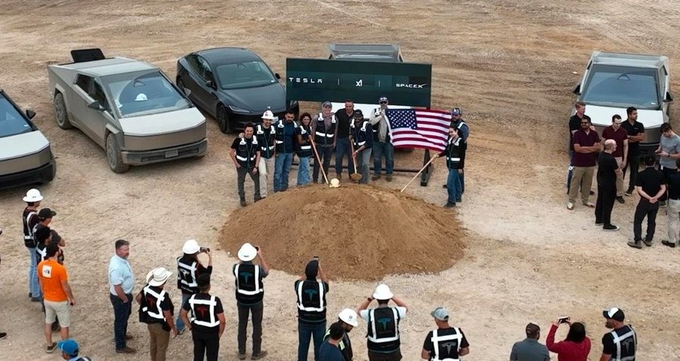
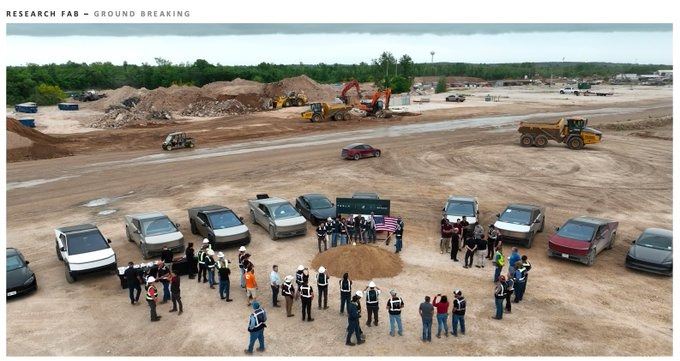
Tesla has officially broken ground on TERAFAB at Giga Texas, a massive chipmaking facility that could fundamentally rewrite the rules of the auto industry. The project represents the most aggressive vertical integration play in modern manufacturing: building the chips that run their cars, on-site, cutting out the supply chain that nearly broke the auto industry in 2021 .
It’s vertical integration at a scale no one else is attempting.
From Supply Chain Nightmare to Silicon Sovereignty
The 2021 chip shortage paralyzed global auto production. Factories sat idle. Delivery dates slipped by months. Tesla wasn’t immune, but it weathered the storm better than most—largely because its engineers could rewrite software to work with available chips while others waited.
That experience left a mark. Elon Musk made his position clear on the January 2026 earnings call: “When I look ahead and say what’s the limiting factor for Tesla growth, if you go three or four years out, I think it actually is chip production” .
TERAFAB is the answer. The facility is designed to bring logic processing, memory production, and advanced packaging under one roof—something no private company outside Taiwan and South Korea has attempted at this scale .
The Numbers Behind the Ambition
The scale is staggering. TERAFAB is targeting 2-nanometer process technology, the most advanced node currently in commercial production . Initial targets aim for 100,000 wafer starts per month, with an eventual ambition to scale toward one million .
The project is structured as a partnership across Musk’s companies. During the Q1 2026 earnings call, Musk confirmed Tesla will handle the R&D fab phase, while SpaceX will take the lead on the initial large-scale buildout .
But here’s what makes the approach fundamentally different. The research fab is designed to be a “pilot line”—a small-scale facility capable of outputting a few thousand wafers per month, intended as a testing ground for new technologies and processes before scaling up .
This is the “iterative” approach that has defined Musk’s other ventures. Build small, test, learn, then scale.
The Intel Partnership: An Unlikely Alliance
In a surprising move, Tesla has partnered with Intel for TERAFAB’s technology foundation . Musk announced the company will use Intel’s most advanced production process—14A—which has not yet secured any customers .
“We plan to use Intel’s 14A process, which is state-of-the-art and, in fact, not yet totally complete,” Musk said on the earnings call. “But given that by the time TERAFAB scales up, 14A will be probably fairly mature or ready for prime time, it seems like the right move” .
The partnership extends beyond simple licensing. Intel will contribute its chip design, fabrication, and packaging expertise, positioning itself as a strategic partner rather than just a supplier .
What TERAFAB Will Build
The facility won’t produce generic chips. It’s designed specifically for Tesla’s ecosystem :
- AI5/AI6 chips: The brains behind Full Self-Driving, Optimus humanoid robots, and Cybercab robotaxis—with performance gains of 40-50x over previous generations
- Dojo 3 supercomputing chips: Supporting Tesla’s autonomous driving training and xAI’s large language models
- Radiation-hardened D3 space chips: Designed for SpaceX’s Starlink and Starship
Tesla’s AI5 inference processor is among the first products TERAFAB is designed to produce, with small-batch production expected in 2026 and volume production projected for 2027 .
The Cost of Independence
The price tag is significant. Tesla has guided toward $20-25 billion for the TERAFAB facility itself, on top of existing 2026 capital expenditure guidance of more than $20 billion .
For perspective, Samsung’s Taylor fab cost roughly $17 billion. TSMC’s largest facilities cost $15-20 billion each and handle about 100,000 wafer starts per month . TERAFAB’s starting target matches that scale.
Tesla ended 2025 with $44 billion in cash, but the company’s 2025 revenue declined 3% to $94.8 billion, with free cash flow at $6.2 billion . The company is committing to more than double its capex level while simultaneously funding a multi-decade semiconductor project—a significant financial stretch.
A Challenge to the Chip Industry
TERAFAB puts Tesla on a collision course with the semiconductor establishment. The goal is not to replace TSMC or Samsung entirely—Musk has explicitly said TERAFAB will remain a TSMC customer . But the facility gives Tesla negotiating leverage and a hedge against future supply shocks.
The execution risk is enormous. Building a leading-edge fab involves more than 2,000 individual processes, specialized equipment that is globally scarce, and engineering talent that incumbents have spent decades accumulating .
But the 2021 chip shortage proved that the auto industry’s just-in-time supply model has limits. TERAFAB is Tesla’s bet that those limits won’t apply to them.
Frequently Asked Questions (FAQs)
1. What is TERAFAB?
TERAFAB is Tesla’s semiconductor manufacturing facility at Giga Texas, designed to produce AI chips for Tesla vehicles, Optimus robots, and SpaceX applications. It will bring logic processing, memory production, and advanced packaging under one roof .
2. How much will TERAFAB cost?
Tesla has guided toward $20-25 billion for the facility itself, with some analysts estimating the full cost could run $35-40 billion .
3. When will TERAFAB start producing chips?
Small-batch production is expected in 2026, with volume production projected for 2027. AI5 mass production is targeted for mid-2027 .
4. What process technology will TERAFAB use?
The facility will use 2-nanometer process technology, among the most advanced nodes currently in commercial production .
5. Is Intel involved in TERAFAB?
Yes. Tesla will use Intel’s 14A process technology, and Intel is participating as a partner providing chip design, manufacturing, and packaging expertise .
6. Will TERAFAB replace TSMC as Tesla’s chip supplier?
No. Musk has stated TERAFAB will remain a TSMC customer. The facility is designed to supplement, not replace, existing supply relationships .
7. What chips will TERAFAB produce?
AI5/AI6 chips for FSD and Optimus, Dojo 3 supercomputing chips, and radiation-hardened D3 space chips for SpaceX .
Stay informed with Reflecto News – Your trusted source for breaking technology and innovation intelligence. Subscribe for real-time updates on semiconductor manufacturing, electric vehicle technology, and industrial transformation.
Questions people ask
What is China's current share of global manufacturing?
China now accounts for twenty eight percent of global manufacturing. This industrial output exceeds the combined manufacturing production of the United States, Japan, and Germany, making China the leading global industrial power according to recent reports.
Why were Andrew Tate and Tristan Tate arrested in Miami?
Andrew Tate and his brother Tristan Tate were taken into custody in Miami by the United States Marshals Service. They face thirty eight new charges in the United Kingdom, including rape and child pornography offences, and prosecutors are seeking their extradition.
What warning did Moscow issue about oil prices?
Kirill Dmitriev, the Chief Executive of the Russian Direct Investment Fund, warned that a tsunami of skyrocketing oil prices is approaching. Moscow describes this potential energy shock as a major threat to global markets.
What political shift is projected for Benjamin Netanyahu's coalition?
Political polls project that Prime Minister Benjamin Netanyahu's coalition is on track to lose its majority in the upcoming October election. This projection indicates a potential political shift in Jerusalem.
Why did a Russian military aircraft land in Tehran?
A Russian airborne command aircraft, widely known as a doomsday plane, landed in Tehran. The arrival of the aircraft represents a high stakes show of support from Russia for Iran during a period of heightened regional tensions.
What did President Masoud Pezeshkian claim about the United States and Israel?
Iranian President Masoud Pezeshkian claimed that the United States and Israel failed in a forty eight hour plan to topple the Iranian government. He made these statements during a televised address marking two years since his inauguration.