Reflecto News is an online news platform covering major international political events, global economic developments, and security conflicts. The site provides updates on topics such as Chinese manufacturing dominance, Middle Eastern political tensions, and high profile legal arrests. Readers can access current articles organized by categories like World News, Iran, and USA.
Reflecto News
April 16, 2026
Europe faces a severe jet fuel shortage that could trigger flight cancellations as early as May, according to a stark warning from Fatih Birol, Executive Director of the International Energy Agency (IEA). In an exclusive interview with the Associated Press, Birol stated that the continent has “maybe six weeks or so” of jet fuel remaining if supplies through the Strait of Hormuz remain disrupted by the ongoing Iran conflict.
Birol described the situation as “the largest energy crisis we have ever faced,” highlighting the global ripple effects from blocked oil, gas, and refined product flows through the critical Persian Gulf chokepoint. He warned: “If we are not able to open the Strait of Hormuz… I can tell you soon we will hear the news that some of the flights from city A to city B might be canceled as a result of lack of jet fuel.”
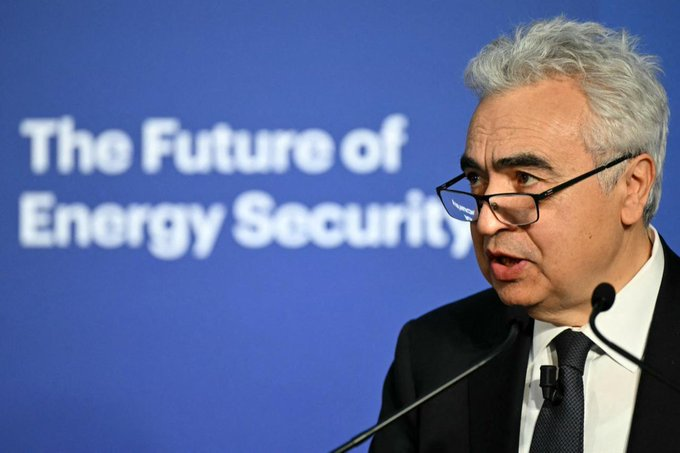
The Warning in Detail
Speaking from IEA headquarters in Paris, Birol emphasized that Europe’s vulnerability stems from its heavy reliance on Middle Eastern jet fuel imports. Prior to the crisis, the region supplied about 75% of Europe’s net jet fuel imports. With the Strait of Hormuz effectively closed for more than six weeks due to the Iran conflict, alternative supplies from the United States and other sources have only partially offset the shortfall.
The IEA had earlier projected that if Europe replaces only about 50% of lost Middle Eastern volumes, physical shortages could emerge at airports by June, with stocks potentially falling below critical thresholds. Birol’s latest comments suggest the timeline may be even tighter, with disruptions possible by early May in some countries.
Why the Strait of Hormuz Matters
The Strait of Hormuz is one of the world’s most vital energy arteries, handling roughly 20-30% of global seaborne oil trade and significant volumes of liquefied natural gas (LNG) and refined products, including jet fuel. The ongoing U.S.-Iran tensions, naval blockade enforcement, and Iranian threats have severely restricted tanker traffic, leaving more than 110 oil-laden tankers and over 15 LNG carriers waiting in the Persian Gulf.
This disruption has sent jet fuel prices soaring and forced European refiners to operate at maximum capacity while ramping up imports from alternative routes, which are more expensive and logistically challenging.
Broader Energy Crisis Context
Birol’s assessment ties directly into escalating regional conflicts, including the fragile U.S.-Iran ceasefire, the U.S. naval presence in the Strait of Hormuz, and parallel developments such as the recent Israel-Lebanon ceasefire announcement. Hardline statements from Iranian officials, including threats to sink U.S. ships, have heightened fears of prolonged disruption.
The crisis is already causing demand destruction in aviation, with some flight reductions reported in affected regions. Higher energy prices are also expected to drive up gasoline, electricity, and heating costs across Europe and beyond, hitting households and businesses unevenly.
Potential Impacts on Aviation and the Economy
- Flight Cancellations: European airlines and airports could begin canceling routes as early as May if stocks are not replenished, particularly affecting summer travel season.
- Economic Ripple Effects: Grounded flights would hurt tourism, business travel, and related industries. Broader oil product shortages could lead to higher fuel prices and supply chain disruptions.
- Regional Variations: Some European countries with lower inventories may face shortages sooner than others. Independent stocks in major hubs like Amsterdam-Rotterdam-Antwerp have already hit multi-year lows.
Airlines are preparing contingency plans, while the European Commission is reportedly working on emergency measures to secure alternative supplies and manage demand.
What’s Being Done and Outlook
European refiners are maximizing jet fuel output, and record inflows from the U.S. have been observed in recent weeks. However, experts warn that full replacement of Middle Eastern volumes remains difficult in the short term.
The IEA continues to monitor the situation closely and has urged swift diplomatic efforts to reopen the Strait of Hormuz. Progress in U.S.-Iran talks, mediated in part by Pakistan, and any de-escalation in related conflicts could ease pressures.
Birol stressed that without resolution, the crisis will intensify, spreading from the Middle East and Asia to Europe and the Americas.
Reflecto News will provide ongoing updates on the jet fuel situation, energy markets, and diplomatic developments in the Middle East.
Frequently Asked Questions (FAQs)
Q1: How much jet fuel does Europe have left according to the IEA?
A: Fatih Birol stated Europe has “maybe six weeks or so” of jet fuel remaining if the Strait of Hormuz stays blocked, with potential shortages starting as early as May.
Q2: Why is Europe so vulnerable to disruptions in the Strait of Hormuz?
A: The Middle East previously supplied about 75% of Europe’s net jet fuel imports. Alternative sources cannot fully compensate quickly or cost-effectively.
Q3: Could flights really be canceled soon?
A: Yes — Birol warned that without reopening the strait, some routes could see cancellations “soon” due to lack of jet fuel.
Q4: What is the IEA calling this situation?
A: “The largest energy crisis we have ever faced,” due to the scale of supply disruptions across oil, gas, and refined products.
Q5: How does this connect to the Iran conflict?
A: The ongoing tensions, including the U.S. naval blockade and Iranian responses, have restricted shipping through the Strait of Hormuz, the key route for Gulf energy exports.
Q6: What can be done to prevent shortages?
A: Diplomatic resolution to reopen the strait, increased imports from the U.S. and other producers, demand management by airlines, and potential emergency measures by the EU.
For the latest on the Europe jet fuel crisis, Strait of Hormuz developments, global energy markets, and related Middle East news, bookmark Reflecto News and follow our dedicated coverage.
This article is based on the Associated Press interview with Fatih Birol and verified reports from the IEA and other sources as of April 16, 2026.
Questions people ask
What is China's current share of global manufacturing?
China now accounts for twenty eight percent of global manufacturing. This industrial output exceeds the combined manufacturing production of the United States, Japan, and Germany, making China the leading global industrial power according to recent reports.
Why were Andrew Tate and Tristan Tate arrested in Miami?
Andrew Tate and his brother Tristan Tate were taken into custody in Miami by the United States Marshals Service. They face thirty eight new charges in the United Kingdom, including rape and child pornography offences, and prosecutors are seeking their extradition.
What warning did Moscow issue about oil prices?
Kirill Dmitriev, the Chief Executive of the Russian Direct Investment Fund, warned that a tsunami of skyrocketing oil prices is approaching. Moscow describes this potential energy shock as a major threat to global markets.
What political shift is projected for Benjamin Netanyahu's coalition?
Political polls project that Prime Minister Benjamin Netanyahu's coalition is on track to lose its majority in the upcoming October election. This projection indicates a potential political shift in Jerusalem.
Why did a Russian military aircraft land in Tehran?
A Russian airborne command aircraft, widely known as a doomsday plane, landed in Tehran. The arrival of the aircraft represents a high stakes show of support from Russia for Iran during a period of heightened regional tensions.
What did President Masoud Pezeshkian claim about the United States and Israel?
Iranian President Masoud Pezeshkian claimed that the United States and Israel failed in a forty eight hour plan to topple the Iranian government. He made these statements during a televised address marking two years since his inauguration.