Reflecto News is an online news platform covering major international political events, global economic developments, and security conflicts. The site provides updates on topics such as Chinese manufacturing dominance, Middle Eastern political tensions, and high profile legal arrests. Readers can access current articles organized by categories like World News, Iran, and USA.
Reflecto News
April 16, 2026
In a significant step toward regional integration and economic cooperation, Türkiye, Syria, and Jordan have reached an agreement to modernize and reconnect their railway networks. The initiative aims to establish a contiguous north-south transport corridor stretching from southern Europe to the Persian Gulf, with plans for eventual extension into Saudi Arabia’s rail system.
Turkish Transport and Infrastructure Minister Abdulkadir Uraloğlu announced the deal following a trilateral meeting with his Syrian and Jordanian counterparts last week. Speaking to Bloomberg, Uraloğlu confirmed that the project is expected to take four to five years to complete once construction ramps up.
The agreement builds on a trilateral memorandum of understanding signed earlier in April in Amman, focusing on rail connectivity, road infrastructure, and port integration to revive historic trade routes, including elements of the legendary Hejaz Railway.
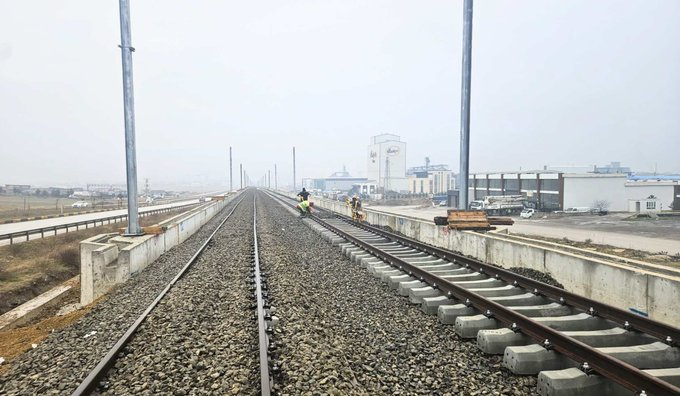
Details of the Railway Modernization Project
The core objective is to create a seamless rail link that connects European rail networks (via Türkiye) through Syria and Jordan, ultimately reaching the Persian Gulf and beyond. Key elements include:
- Modernization and Rehabilitation: Upgrading existing lines, repairing war-damaged sections (particularly in Syria), and building missing links to ensure high-standard freight and potentially passenger services.
- Hejaz Railway Revival: The project incorporates the historic Hejaz Railway, originally constructed by the Ottomans in the early 20th century to connect Damascus with Medina. Türkiye has committed to helping rebuild approximately 30 km of destroyed track in Syria, while Jordan will support maintenance and operations.
- Timeline: Initial phases focus on the Türkiye-Syria-Jordan axis, with full operational capability targeted within 4–5 years. A three-year roadmap for broader transport cooperation, including standardized procedures and border facilitation, is also in place.
- Extension to Saudi Arabia: Once the core corridor is established, it will link to Saudi Arabia’s expanding rail network, potentially reaching Riyadh and further south.
The initiative also envisions integrating maritime routes, such as Türkiye and Syria’s Mediterranean ports with Jordan’s strategic Red Sea port of Aqaba, creating a multimodal logistics network.
Historical Context: Reviving the Hejaz Railway
The Hejaz Railway, inaugurated in 1908 under Ottoman Sultan Abdulhamid II, was a pioneering engineering project designed primarily for transporting pilgrims to the holy cities of Mecca and Medina. It once symbolized Ottoman connectivity across the region but fell into disuse and disrepair amid conflicts, including the Arab Revolt during World War I and later regional wars.
This new agreement represents a modern revival of that vision, updated with contemporary standards for speed, capacity, and efficiency. It aims to transform the route into a vital artery for freight, reducing reliance on congested maritime paths.
Strategic and Economic Significance
- Alternative to Maritime Routes: The corridor offers a land-based alternative to sea routes through the Strait of Hormuz and Red Sea, which have faced disruptions due to ongoing regional tensions, including the U.S.-Iran naval issues and related energy crises affecting global shipping and jet fuel supplies.
- Trade Boost: Enhanced connectivity is expected to lower transit times and costs, stimulate trade between Europe, the Levant, and the Gulf, and create economic hubs at border crossings.
- Regional Cooperation: The deal signals improving ties among the three nations and opens doors for broader involvement from Gulf states. Technical delegations are scheduled to engage with Saudi Arabia soon.
- Reconstruction and Development: For Syria, the project supports post-conflict reconstruction and economic recovery. Türkiye and Jordan stand to gain from increased transit revenues and logistics roles.
Experts view this as part of a wider “Middle Corridor” or north-south axis that could complement other regional initiatives, such as Türkiye’s Development Road project linking the Gulf to Europe via Iraq.
Challenges and Outlook
While promising, the project faces hurdles including financing, technical standardization across borders, security in certain areas, and coordination among stakeholders. Success will depend on sustained political will, investment (potentially from Gulf partners and international financiers), and effective implementation of the joint technical committees established under the MoU.
Uraloğlu and officials from Syria and Jordan have expressed optimism, highlighting the corridor’s potential to foster peace through prosperity and position the region as a key global trade hub.
What’s Next?
Construction and rehabilitation work are set to accelerate in the coming months, with focus on feasibility studies, missing links, and integration with existing networks. Talks with Saudi Arabia are expected to advance the southern extension rapidly.
Reflecto News will continue tracking this landmark infrastructure project alongside related developments in Middle East diplomacy, energy security, and regional trade.
Frequently Asked Questions (FAQs)
Q1: What is the new railway corridor between Türkiye, Syria, and Jordan?
A: It is a planned modernization and reconnection of railway networks to create a contiguous transport link from southern Europe (via Türkiye) through Syria and Jordan to the Persian Gulf, with extension to Saudi Arabia.
Q2: How long will the project take?
A: Turkish officials estimate 4–5 years for the core network, following a trilateral memorandum signed in Amman. A parallel three-year roadmap addresses broader transport cooperation.
Q3: Does the project involve the historic Hejaz Railway?
A: Yes. The agreement aims to revive and modernize sections of the Ottoman-era Hejaz Railway, including rebuilding damaged tracks in Syria and improving connectivity to Aqaba and beyond.
Q4: Why is this corridor strategically important?
A: It provides an overland alternative to vulnerable maritime routes like the Strait of Hormuz, potentially reducing transit costs, boosting trade, and supporting regional economic recovery—especially amid current disruptions affecting global energy and shipping.
Q5: Which countries will benefit most?
A: Türkiye gains as a European gateway, Syria supports reconstruction and transit revenue, Jordan strengthens its logistics role via Aqaba, and Gulf states (starting with Saudi Arabia) access faster routes to Europe and beyond.
Q6: Is this linked to other regional projects?
A: Yes, it complements initiatives like Türkiye’s Development Road and broader efforts to activate the “Middle Corridor,” integrating rail, road, and port infrastructure across the Middle East.
For ongoing coverage of this railway project, Middle East infrastructure developments, regional diplomacy (including Israel-Lebanon ceasefire efforts and U.S.-Iran tensions), and global energy markets, bookmark Reflecto News.
This article is based on reports from Bloomberg, Turkish officials, and verified regional sources as of April 16, 2026.
Questions people ask
What is China's current share of global manufacturing?
China now accounts for twenty eight percent of global manufacturing. This industrial output exceeds the combined manufacturing production of the United States, Japan, and Germany, making China the leading global industrial power according to recent reports.
Why were Andrew Tate and Tristan Tate arrested in Miami?
Andrew Tate and his brother Tristan Tate were taken into custody in Miami by the United States Marshals Service. They face thirty eight new charges in the United Kingdom, including rape and child pornography offences, and prosecutors are seeking their extradition.
What warning did Moscow issue about oil prices?
Kirill Dmitriev, the Chief Executive of the Russian Direct Investment Fund, warned that a tsunami of skyrocketing oil prices is approaching. Moscow describes this potential energy shock as a major threat to global markets.
What political shift is projected for Benjamin Netanyahu's coalition?
Political polls project that Prime Minister Benjamin Netanyahu's coalition is on track to lose its majority in the upcoming October election. This projection indicates a potential political shift in Jerusalem.
Why did a Russian military aircraft land in Tehran?
A Russian airborne command aircraft, widely known as a doomsday plane, landed in Tehran. The arrival of the aircraft represents a high stakes show of support from Russia for Iran during a period of heightened regional tensions.
What did President Masoud Pezeshkian claim about the United States and Israel?
Iranian President Masoud Pezeshkian claimed that the United States and Israel failed in a forty eight hour plan to topple the Iranian government. He made these statements during a televised address marking two years since his inauguration.