
Reflecto News is an online news platform covering major international political events, global economic developments, and security conflicts. The site provides updates on topics such as Chinese manufacturing dominance, Middle Eastern political tensions, and high profile legal arrests. Readers can access current articles organized by categories like World News, Iran, and USA.
Published on Reflecto News | World News | Defense & Geopolitics
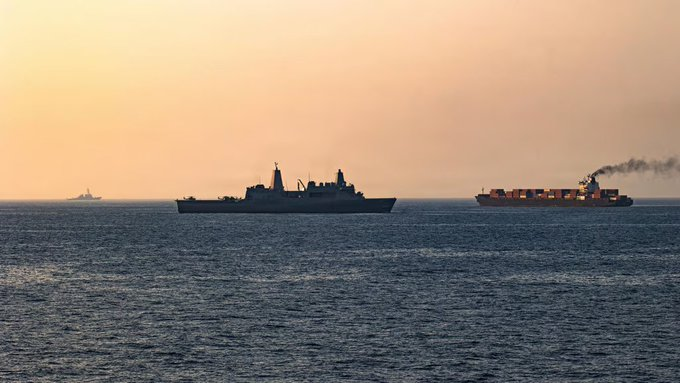
The United Kingdom is scrambling to repair its strained relationship with President Donald Trump by offering naval mine-clearing support for the Strait of Hormuz—a mission that faces a fundamental problem: Trump hasn’t actually asked for help, and he’s already declared the US blockade is being handled perfectly without European assistance.
Royal Navy divers are being prepped for mine-clearing operations, and the UK is offering autonomous mine-hunters for a proposed multinational mission. All of it was announced on day two of London-hosted talks about reopening the strategic waterway. The subtext is impossible to miss .
The Strained Relationship
Britain refused to join the US offensive campaign during the war, and Trump made his displeasure public. He dismissed the Royal Navy’s assets as “toys.” He slammed European allies as “cowards.” He threatened to leave NATO over their refusal to help in Iran .
“The UK is trying to buy back its way into Trump’s good graces. The problem is that Trump hasn’t actually asked for help. The White House has insisted for days that the blockade is being handled perfectly without European assistance.” — POLITICO
What Britain Is Offering
The UK’s proposed contribution includes:
| Asset | Details |
|---|---|
| Royal Navy divers | Being prepped for mine-clearing operations |
| Autonomous mine-hunters | Cutting-edge unmanned systems |
| Part of multinational mission | Coordinated with France and other allies |
The offers were announced during London-hosted talks about reopening the Strait of Hormuz, which has been largely restricted since the outbreak of the US-Israeli war on Iran on February 28 .
A Mission That Can’t Be Deployed
The UK is attaching a major caveat: any deployment requires a “sustained” ceasefire—which doesn’t currently exist, given that Iran just seized two foreign ships in the Strait .
The deployment paradox:
| Requirement | Current Status |
|---|---|
| Sustained ceasefire | Does not exist |
| Iranian ship seizures | Ongoing (two ships seized April 22-23) |
| US request for help | Not made |
| White House position | Blockade handled perfectly without Europe |
The London Talks: A Divided Coalition
The countries at the London meeting are split on what role the US should even play in their own initiative. The proposed multinational mission faces fundamental disagreements about its scope, leadership, and relationship to the US blockade .
Key divisions among participants:
| Issue | Divergent Views |
|---|---|
| US role | Some want US involvement; others prefer European-led mission |
| Mission scope | Mine-clearing only vs. broader security guarantee |
| Ceasefire condition | Some willing to deploy before sustained ceasefire; others not |
| Relationship to US blockade | Complementary vs. independent |
Trump’s Response: ‘We Don’t Need Your Help’
The White House has insisted for days that the blockade is being handled perfectly without European assistance. President Trump has previously dismissed European offers of help, saying that the US Navy is “doing just fine on its own.”
“They didn’t help when we needed them. Now they want to help? We don’t need their help. We’re doing just fine.” — President Donald Trump (previous statement)
The US naval blockade of Iranian ports, imposed on April 13, has been enforced by more than 10,000 US troops, 17 warships, and more than 100 aircraft . CENTCOM has reported that 31 vessels have been turned back or returned to port as part of the operation .
Britain’s Dilemma: A President Who Doesn’t Want the Help
So Britain is offering a mission it can’t deploy, for a situation that hasn’t materialized, to a president who doesn’t want the help anymore.
Britain’s strategic dilemma:
| Factor | Reality |
|---|---|
| Trump’s attitude | Feels burned by Europe’s refusal to join offensive campaign |
| US need for help | White House says none needed |
| Ceasefire status | No sustained ceasefire; Iran seizing ships |
| Deployment condition | UK requires sustained ceasefire |
| European unity | Allies divided on approach |
The Broader Context: UK-US Relations
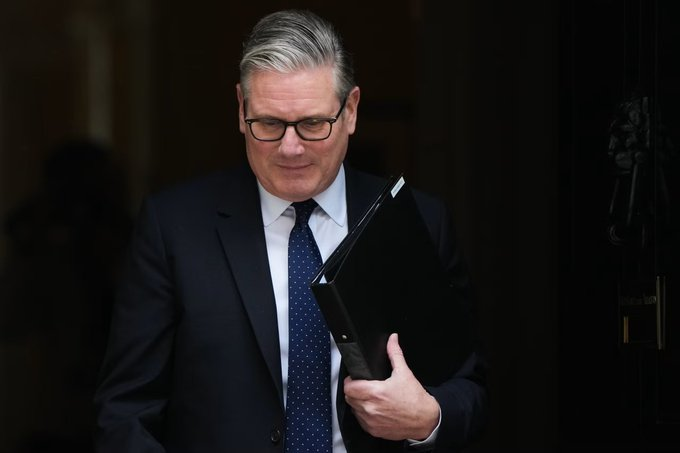
The strained relationship between London and Washington has been evident throughout the Iran war. Prime Minister Keir Starmer has refused to join offensive military action, and Trump has repeatedly criticized British reluctance .
Earlier this month, Trump told the New York Post that he was “shocked” by Italy’s refusal to help, but his frustration extends to all European allies who declined to participate in the US-Israeli campaign .
What Comes Next
As the ceasefire remains fragile and Iran continues to seize ships in the Strait, the prospects for a UK-led mine-clearing mission remain uncertain.
| Scenario | Likelihood | Implication |
|---|---|---|
| UK deploys unilaterally | Low | Would require sustained ceasefire |
| US accepts European help | Unlikely | Trump has dismissed need |
| Multinational mission proceeds without US | Possible | Would lack US coordination |
| Stalemate continues | Likely | No deployment; strained relations persist |
Britain’s attempt to mend fences with Trump reflects a broader European anxiety about the future of the transatlantic alliance. But for now, the president remains unmoved—and the Royal Navy’s mine hunters remain in port .
Frequently Asked Questions (FAQs)
1. What is Britain offering to do in the Strait of Hormuz?
The UK is offering Royal Navy divers for mine-clearing operations and autonomous mine-hunters as part of a proposed multinational mission to reopen the strait .
2. Why is Britain making this offer now?
Britain is trying to repair its strained relationship with President Trump after refusing to join the US offensive campaign during the war. Trump publicly criticized European allies, dismissing Royal Navy assets as “toys” .
3. Has the US asked for this help?
No. The White House has insisted that the blockade is being handled perfectly without European assistance .
4. What is the status of the ceasefire?
The ceasefire is fragile, and Iran has seized two foreign ships in the Strait in the past 24 hours. The UK has attached a major caveat: any deployment requires a “sustained” ceasefire .
5. Are European allies united on this mission?
No. The countries at the London meeting are split on what role the US should even play in their own initiative .
6. What is the likelihood of deployment?
Low. Britain is offering a mission it can’t deploy, for a situation that hasn’t materialized, to a president who doesn’t want the help .
7. What is the broader context of UK-US relations?
The relationship has been strained throughout the Iran war, with Prime Minister Starmer refusing to join offensive action and Trump repeatedly criticizing British reluctance .
Stay informed with Reflecto News – Your trusted source for breaking defense, diplomatic, and geopolitical intelligence. Subscribe for real-time updates on the Strait of Hormuz crisis, US-UK relations, and global security developments.
Questions people ask
What is China's current share of global manufacturing?
China now accounts for twenty eight percent of global manufacturing. This industrial output exceeds the combined manufacturing production of the United States, Japan, and Germany, making China the leading global industrial power according to recent reports.
Why were Andrew Tate and Tristan Tate arrested in Miami?
Andrew Tate and his brother Tristan Tate were taken into custody in Miami by the United States Marshals Service. They face thirty eight new charges in the United Kingdom, including rape and child pornography offences, and prosecutors are seeking their extradition.
What warning did Moscow issue about oil prices?
Kirill Dmitriev, the Chief Executive of the Russian Direct Investment Fund, warned that a tsunami of skyrocketing oil prices is approaching. Moscow describes this potential energy shock as a major threat to global markets.
What political shift is projected for Benjamin Netanyahu's coalition?
Political polls project that Prime Minister Benjamin Netanyahu's coalition is on track to lose its majority in the upcoming October election. This projection indicates a potential political shift in Jerusalem.
Why did a Russian military aircraft land in Tehran?
A Russian airborne command aircraft, widely known as a doomsday plane, landed in Tehran. The arrival of the aircraft represents a high stakes show of support from Russia for Iran during a period of heightened regional tensions.
What did President Masoud Pezeshkian claim about the United States and Israel?
Iranian President Masoud Pezeshkian claimed that the United States and Israel failed in a forty eight hour plan to topple the Iranian government. He made these statements during a televised address marking two years since his inauguration.