Reflecto News is an online news platform covering major international political events, global economic developments, and security conflicts. The site provides updates on topics such as Chinese manufacturing dominance, Middle Eastern political tensions, and high profile legal arrests. Readers can access current articles organized by categories like World News, Iran, and USA.
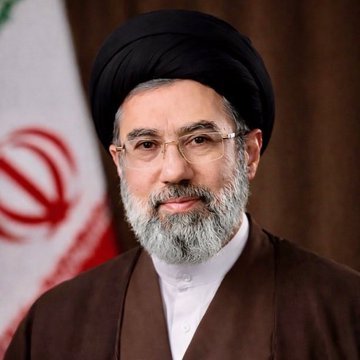
TEHRAN / LONDON — In a startling assessment of the month-long conflict, The Economist reported on Sunday, March 29, 2026, that the Islamic Republic of Iran is “winning the energy war.” Despite five weeks of intense aerial bombardment by the U.S. and Israel under Operation Epic Fury, Tehran has managed to nearly double its daily oil revenue compared to pre-war levels, exploiting the very global supply crisis its blockade of the Strait of Hormuz helped create.
While the Iranian military faces significant losses on the battlefield, its “Ghost Fleet” and strategic energy hubs remain remarkably resilient, turning the regional chaos into a financial windfall for the regime.
The “Double Revenue” Paradox
The surge in revenue is driven by a “perfect storm” of high export volumes and skyrocketing global crude prices.
- Revenue Doubling: The Economist notes that Iran is now earning almost twice as much from oil sales each day as it did before the war began on February 28.
- Monthly Windfall: Separate reports from Bloomberg and WANA indicate that Iran has secured approximately $3.9 billion in oil revenue in less than a month of fighting.
- Daily Earnings: Tehran’s daily take from its main “Iranian Light” blend has jumped from $115 million in February to roughly $139 million per day in March.
Exports at “Pre-War” Highs
Contrary to expectations that Western strikes would cripple Iran’s export capacity, shipping data reveals that the country’s primary energy artery, Kharg Island, remains largely operational.
- Volume Stability: A source familiar with the data told The Economist that Iran is currently exporting between 2.4 and 2.8 million barrels of oil and petroleum products per day.
- The “Blockade” Advantage: While Iran has imposed a near-total blockade on its Gulf rivals—reducing traffic through the Strait from 135 vessels a day to fewer than six—it has quietly maintained its own tanker traffic.
- China’s “Teapot” Lifeline: Much of this oil continues to flow to China, where independent “teapot” refineries and a shadow financial system allow Tehran to bypass U.S. sanctions and direct strikes.
The Economic Map of the Conflict
The war has created a stark economic divide in the Persian Gulf. While Iran’s rivals see their exports “strangled,” Tehran has effectively locked out competitors to stabilize its own war chest.
| Metric | Pre-War (Feb 2026) | During War (Mar 2026) | Status |
| Global Brent Price | ~$75 / barrel | ~$116 / barrel | +60% Surge |
| Daily Oil Revenue | ~$115 Million | ~$139 Million | +21% Daily Increase |
| Monthly Revenue | ~$3.2 Billion | ~$3.9 Billion | Record Windfall |
| Export Volume | ~1.6m bpd (Crude) | 1.8m – 2.8m bpd | Exceeding Forecasts |
Analysis: The “Silver Bridge” and the April 6 Deadline
The Economist concludes that while Iran may be “pummeled on the battlefield,” its ability to sustain a high-revenue energy trade provides it with the “strategic oxygen” needed to outlast the April 6 deadline set by the Trump administration.
By earning nearly $4 billion in a single month, the IRGC has secured enough funding to continue its “infrastructure war” and support its regional proxies. For President Trump, who is set to address the nation at 9:00 PM ET today, these figures suggest that “Maximum Pressure” has hit a wall: the war meant to bankrupt the regime has, in the short term, made its primary export more valuable than ever.
Questions people ask
What is China's current share of global manufacturing?
China now accounts for twenty eight percent of global manufacturing. This industrial output exceeds the combined manufacturing production of the United States, Japan, and Germany, making China the leading global industrial power according to recent reports.
Why were Andrew Tate and Tristan Tate arrested in Miami?
Andrew Tate and his brother Tristan Tate were taken into custody in Miami by the United States Marshals Service. They face thirty eight new charges in the United Kingdom, including rape and child pornography offences, and prosecutors are seeking their extradition.
What warning did Moscow issue about oil prices?
Kirill Dmitriev, the Chief Executive of the Russian Direct Investment Fund, warned that a tsunami of skyrocketing oil prices is approaching. Moscow describes this potential energy shock as a major threat to global markets.
What political shift is projected for Benjamin Netanyahu's coalition?
Political polls project that Prime Minister Benjamin Netanyahu's coalition is on track to lose its majority in the upcoming October election. This projection indicates a potential political shift in Jerusalem.
Why did a Russian military aircraft land in Tehran?
A Russian airborne command aircraft, widely known as a doomsday plane, landed in Tehran. The arrival of the aircraft represents a high stakes show of support from Russia for Iran during a period of heightened regional tensions.
What did President Masoud Pezeshkian claim about the United States and Israel?
Iranian President Masoud Pezeshkian claimed that the United States and Israel failed in a forty eight hour plan to topple the Iranian government. He made these statements during a televised address marking two years since his inauguration.