Reflecto News is an online news platform covering major international political events, global economic developments, and security conflicts. The site provides updates on topics such as Chinese manufacturing dominance, Middle Eastern political tensions, and high profile legal arrests. Readers can access current articles organized by categories like World News, Iran, and USA.
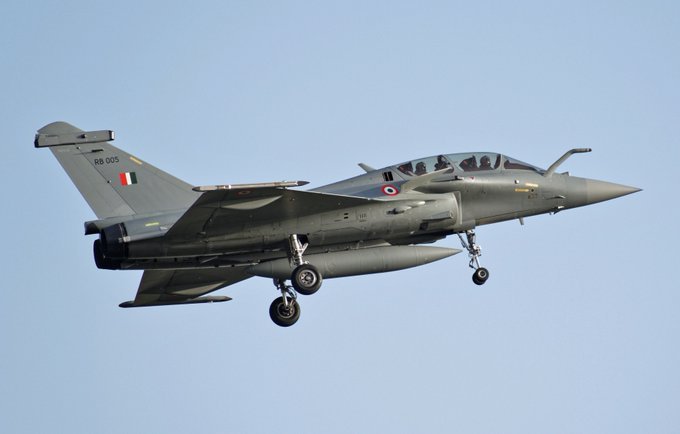

NEW DELHI / PARIS — A significant rift has emerged in the burgeoning defense partnership between India and France following reports that Paris has formally refused to transfer the critical source codes for the Rafale fighter jet. According to reports from Defence Security Asia on Tuesday, March 31, 2026, the denial strikes at the heart of India’s “Aatmanirbhar Bharat” (self-reliance) mission, potentially leaving the Indian Air Force (IAF) structurally dependent on French technical approval for the next four decades.
The development comes as India moves forward with its massive $36–$40 billion MRFA (Multi-Role Fighter Aircraft) deal to procure an additional 114 Rafale jets, a contract aimed at addressing the IAF’s critical squadron depletion.
The “Sovereignty Gap”: What is Being Withheld?
The refusal concerns the “core software architecture” that governs the aircraft’s most advanced combat systems. Without these codes, India cannot independently modify the “brain” of the aircraft.
- Thales RBE2 Radar: Access to the algorithms of the Active Electronically Scanned Array (AESA) radar is restricted, limiting India’s ability to tune sensors against specific regional threats.
- SPECTRA EW Suite: The source code for the Electronic Warfare suite—considered one of the world’s most guarded defense technologies—will remain under French lock and key.
- Mission Computer (MDPU): India will be unable to independently alter data fusion logic or sensor prioritization within the Modular Data Processing Unit.
Impact on Indigenous Integration
The lack of source code access creates a “technological bottleneck” for integrating India’s own battle-tested weaponry.
- Weaponry Hurdles: Integrating indigenous missiles like the Astra Mk1/Mk2 (Beyond-Visual-Range) or the BrahMos-NG (Cruise Missile) will now require French coordination and “approval cycles.”
- The API Compromise: To mitigate the blow, France has reportedly offered Application Programming Interfaces (APIs). Similar to a “plug adapter,” these allow Indian weapons to communicate with the jet without India seeing the underlying proprietary logic.
- Upgrade Dependency: For any future software patches or performance enhancements, New Delhi must remain in a “continuous loop” with Dassault Aviation and Thales, preventing the full “indigenization” envisioned by the Ministry of Defence.
Strategic Comparison: Russia vs. France
The denial has reignited a debate in New Delhi over its choice of primary strategic partners, especially as Russia makes a competing “unprecedented” offer.
| Feature | French Rafale (F4/F5 Standard) | Russian Su-57 (5th Gen) |
| Source Code Access | Denied (API access only) | Full Access Offered (Reported June 2025) |
| Local Production | Assembly at HAL/TATA (Ltd. Tech Transfer) | Full License Production under consideration |
| Operational Autonomy | Managed Dependency | High / Full Sovereign Control |
| Current Status | 114 jets planned (MRFA) | Advanced technical stage negotiations |
The “April 6” Geopolitical Shadow
The timing of this friction is critical. As the U.S.-Iran war enters its second month and the April 6 deadline approaches, India is facing its own energy and security pressures.
- The Energy Factor: With India’s energy crisis intensifying due to the Middle East conflict, the cost of a $40 billion jet deal with limited technology transfer is facing increased domestic scrutiny.
- The “Two-Front” Readiness: Critics argue that “managed dependency” on French software is a liability during high-intensity conflicts where rapid, independent adaptation of electronic warfare libraries is essential.
Analysis: Prudence vs. Pride
While some Indian media outlets have characterized the jets as “without a brain,” defense analysts suggest the deal remains a “strategic necessity” for air superiority over China and Pakistan. The MRFA tender is designed to build capacity incrementally; however, the refusal of source codes confirms that even for “Special Global Strategic Partners,” certain technological “crown jewels” remain off-limits.
For India, the choice is now between the battle-proven, yet “locked” Rafale, and the strategically enticing, yet technically unproven (at scale) Russian Su-57.
Questions people ask
What is China's current share of global manufacturing?
China now accounts for twenty eight percent of global manufacturing. This industrial output exceeds the combined manufacturing production of the United States, Japan, and Germany, making China the leading global industrial power according to recent reports.
Why were Andrew Tate and Tristan Tate arrested in Miami?
Andrew Tate and his brother Tristan Tate were taken into custody in Miami by the United States Marshals Service. They face thirty eight new charges in the United Kingdom, including rape and child pornography offences, and prosecutors are seeking their extradition.
What warning did Moscow issue about oil prices?
Kirill Dmitriev, the Chief Executive of the Russian Direct Investment Fund, warned that a tsunami of skyrocketing oil prices is approaching. Moscow describes this potential energy shock as a major threat to global markets.
What political shift is projected for Benjamin Netanyahu's coalition?
Political polls project that Prime Minister Benjamin Netanyahu's coalition is on track to lose its majority in the upcoming October election. This projection indicates a potential political shift in Jerusalem.
Why did a Russian military aircraft land in Tehran?
A Russian airborne command aircraft, widely known as a doomsday plane, landed in Tehran. The arrival of the aircraft represents a high stakes show of support from Russia for Iran during a period of heightened regional tensions.
What did President Masoud Pezeshkian claim about the United States and Israel?
Iranian President Masoud Pezeshkian claimed that the United States and Israel failed in a forty eight hour plan to topple the Iranian government. He made these statements during a televised address marking two years since his inauguration.