Reflecto News is an online news platform covering major international political events, global economic developments, and security conflicts. The site provides updates on topics such as Chinese manufacturing dominance, Middle Eastern political tensions, and high profile legal arrests. Readers can access current articles organized by categories like World News, Iran, and USA.
North Korean leader claims production of weapons-grade nuclear material has more than doubled over past five years, as Pyongyang accelerates program in defiance of UN sanctions and stalled diplomacy.
SEOUL — North Korean leader Kim Jong Un has unveiled a new facility designed to produce fuel for nuclear weapons, announcing that his country will strengthen its nuclear forces “at an exponential rate” in response to what he described as escalating military threats from the United States and South Korea .
State-run Korean Central News Agency (KCNA) reported that Kim visited the newly launched nuclear material production facility on Wednesday, accompanied by senior ruling party officials, to inspect its operations and review long-term production plans . KCNA described the facility as employing “more sophisticated technology” but did not disclose its location or when it began operations .
The unveiling represents the second time in less than two years that North Korea has publicly disclosed a covert uranium enrichment facility — an unmistakable signal to Washington and Seoul that Pyongyang has no intention of relinquishing its nuclear deterrent .
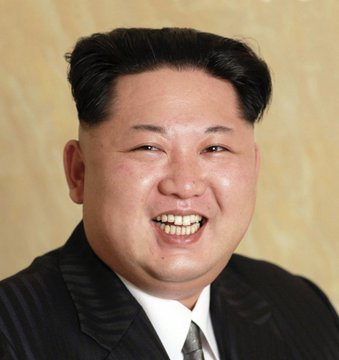
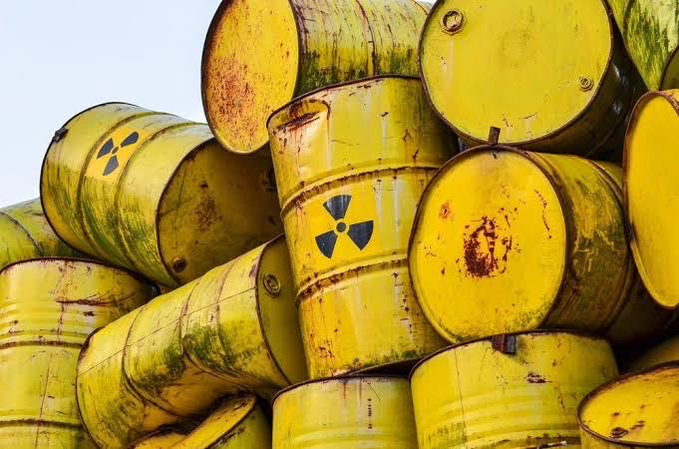
‘Exponential’ Growth in Nuclear Capabilities
During his visit to the facility, Kim declared that North Korea had finalized plans to “exponentially” strengthen its nuclear forces and expand its stockpile of nuclear weapons . State media images showed Kim walking through what appeared to be a large centrifuge hall — rows of cylindrical silver tubes and pipes used to enrich uranium for weapons-grade material .
“The urgency for bolstering up the country’s nuclear war deterrent, both in quality and quantity, has grown because of confrontations with the most ferocious enemies,” Kim was quoted as saying, an apparent reference to the United States and South Korea .
According to KCNA, Kim claimed that North Korea’s capacity to produce weapons-grade nuclear material has more than doubled compared with five years ago . Independent verification of this claim is not possible, but international observers have noted a significant acceleration in North Korean nuclear activities.
Following a meeting at the facility, Kim said that he and other top officials “confirmed the order of priority for implementing the ambitious future plan designed to beef up our state’s nuclear forces at an exponential rate” .
KCNA quoted Kim as calling the development “a historic event that has set up an epochal milestone in rapidly upgrading our nuclear capabilities” .
Strategic Messaging: A Defiant Message to Trump and the West
The public disclosure of the new nuclear fuel facility is widely seen as a calculated message from Pyongyang to the incoming US administration and the wider international community.
North Korea has accelerated its nuclear expansion since high-stakes diplomacy between Kim and US President Donald Trump collapsed in 2019 . Since then, Kim has consistently rejected offers to restart dialogue from both Washington and Seoul, declaring Pyongyang’s path toward nuclear armament “irreversible” .
The timing of this announcement is particularly significant. According to a recent Congressional Research Service report, US defense officials testified in April 2026 that “North Korea’s nuclear forces are increasingly capable of targeting the US homeland, and its missile forces can strike South Korea and Japan with nuclear or conventional warheads” . The 2026 National Defense Strategy described these forces as “growing in size and sophistication” and presenting “a clear and present danger of nuclear attack on the American homeland” .
Kim framed the nuclear program as a defensive necessity against what he called “the most ferocious enemies,” arguing that growing security challenges require North Korea to accelerate the development of its nuclear capabilities .
“Potential threats and unpredictable long-term crises further highlight the urgency” of expanding the nuclear deterrent “both in quality and quantity and in a sustained and accelerated way,” Kim said .
International Monitoring and Concerns
International Atomic Energy Agency (IAEA) Director General Rafael Grossi told reporters in April that his agency had confirmed “a rapid increase” in activities at nuclear facilities in North Korea . Grossi characterized the advances as “very serious” in terms of North Korea’s ability to produce nuclear weapons, noting the probable addition of new uranium enrichment facilities .
Last September, South Korean Unification Minister Chung Dong-young said that North Korea was operating a total of four uranium enrichment facilities, including the Yongbyon nuclear complex, and that these facilities were operating continuously every day . North Korea retains the capability to produce both highly enriched uranium and plutonium for nuclear weapons .
Estimates of North Korea’s existing nuclear arsenal vary widely. A senior South Korean official told lawmakers in 2018 that the country possessed between 20 and 60 nuclear weapons, while some experts now estimate the stockpile may exceed 100 warheads . Annual production capacity is believed to be between six and 18 additional weapons .
North Korea’s Five-Year Nuclear Strategy
Kim also revealed that the upcoming Ninth Party Congress will adopt a new five-year plan aimed at further strengthening the nation’s nuclear forces . According to KCNA, the strategy includes expanding nuclear material production capacity and continuing to increase the number of nuclear weapons in line with decisions already made by the leadership .
The North Korean leader delivered policy guidance on future nuclear activities at an “important consultative meeting for bolstering up the nuclear forces” held during his visit . He stated that both tactical and strategic requirements had been fully considered in shaping the country’s deterrence strategy .
“Today we have updated the digits that are critical for our nuclear activities,” Kim said at the meeting, adding that Pyongyang had “confirmed the order of priority” for a plan to “beef up our state’s nuclear forces at an exponential rate” .
Nuclear Arsenal as ‘Guarantor of Regime Security’
North Korea’s nuclear ambitions are rooted in a strategic calculus that has remained consistent for years. According to the US Intelligence Community’s 2025 Annual Threat Assessment, Kim views nuclear weapons as a “guarantor of regime security” and has “no intention” to renounce them .
Pyongyang has long framed its nuclear program as a defensive necessity against what Kim describes as “US-led military threats” . The country withdrew from the Nuclear Non-Proliferation Treaty (NPT) in 1993 and has since conducted six nuclear tests, prompting multiple rounds of United Nations sanctions .
Although North Korea has not conducted a nuclear test since 2017, it has continued to expand its inventory of nuclear-capable missiles with ranges sufficient to strike US allies in Asia as well as the American mainland . Congress could examine US policies toward North Korea, including the implementation of sanctions, diplomatic efforts, and changes to US and allied force posture .
Frequently Asked Questions (FAQs)
Q1: What new facility did North Korea unveil?
A: North Korea unveiled a new facility to produce fuel for nuclear weapons, specifically for enriching weapons-grade uranium. State media images showed a large centrifuge hall, indicating the plant is likely used to enrich uranium for nuclear bombs .
Q2: Where is the new facility located?
A: KCNA did not disclose the location of the facility or when it began operations. North Korea is believed to operate uranium enrichment facilities at multiple locations, including Yongbyon, Kusong, and Kangson, with some reports suggesting a fourth facility .
Q3: What did Kim Jong Un say about North Korea’s nuclear plans?
A: Kim vowed to strengthen the country’s nuclear forces “at an exponential rate,” claiming that weapons-grade nuclear material production capacity has more than doubled compared with five years ago. He announced a new five-year nuclear development strategy to be adopted at the upcoming Ninth Party Congress .
Q4: How large is North Korea’s nuclear arsenal?
A: Estimates vary widely. A 2018 assessment suggested North Korea possessed 20-60 nuclear weapons, while some experts now believe the stockpile may exceed 100 warheads. Annual production capacity is estimated at between six and 18 additional weapons .
Q5: What has been the international response?
A: IAEA Director General Rafael Grossi confirmed “a rapid increase” in activities at North Korean nuclear facilities, describing the advances as “very serious.” The United States, South Korea, and Japan have reaffirmed their commitment to the complete denuclearization of North Korea, but diplomatic efforts have been stalled since 2019 .
Q6: Why is North Korea accelerating its nuclear program?
A: Kim frames the nuclear program as a defensive necessity against “escalating US-led military threats.” According to US intelligence assessments, Kim views nuclear weapons as a “guarantor of regime security” and has “no intention” to renounce them .
This is a developing story. Reflecto News will continue to provide updates on North Korea’s nuclear program, international responses, and any developments in diplomatic efforts.
Questions people ask
What is China's current share of global manufacturing?
China now accounts for twenty eight percent of global manufacturing. This industrial output exceeds the combined manufacturing production of the United States, Japan, and Germany, making China the leading global industrial power according to recent reports.
Why were Andrew Tate and Tristan Tate arrested in Miami?
Andrew Tate and his brother Tristan Tate were taken into custody in Miami by the United States Marshals Service. They face thirty eight new charges in the United Kingdom, including rape and child pornography offences, and prosecutors are seeking their extradition.
What warning did Moscow issue about oil prices?
Kirill Dmitriev, the Chief Executive of the Russian Direct Investment Fund, warned that a tsunami of skyrocketing oil prices is approaching. Moscow describes this potential energy shock as a major threat to global markets.
What political shift is projected for Benjamin Netanyahu's coalition?
Political polls project that Prime Minister Benjamin Netanyahu's coalition is on track to lose its majority in the upcoming October election. This projection indicates a potential political shift in Jerusalem.
Why did a Russian military aircraft land in Tehran?
A Russian airborne command aircraft, widely known as a doomsday plane, landed in Tehran. The arrival of the aircraft represents a high stakes show of support from Russia for Iran during a period of heightened regional tensions.
What did President Masoud Pezeshkian claim about the United States and Israel?
Iranian President Masoud Pezeshkian claimed that the United States and Israel failed in a forty eight hour plan to topple the Iranian government. He made these statements during a televised address marking two years since his inauguration.