Reflecto News is an online news platform covering major international political events, global economic developments, and security conflicts. The site provides updates on topics such as Chinese manufacturing dominance, Middle Eastern political tensions, and high profile legal arrests. Readers can access current articles organized by categories like World News, Iran, and USA.
MOSCOW — The Russian Ministry of Health has officially confirmed that the country’s first personalized mRNA-based therapeutic cancer vaccine has been administered to a patient. The announcement, made on Wednesday, April 1, 2026, marks a pivotal shift in Russia’s medical strategy, moving from experimental laboratory trials to active clinical application in its state-guaranteed healthcare system.
The vaccine, developed by a consortium of leading scientific institutions—including the Gamaleya National Research Center, the Blokhin National Medical Research Center of Oncology, and the National Medical Research Radiological Center—is designed to “train” a patient’s own immune system to recognize and destroy specific tumor markers.
How the “Neooncovac” System Works
Unlike traditional vaccines that prevent infection, this is a therapeutic vaccine tailored to the genetic profile of an individual’s tumor.
- Personalized Sequencing: Doctors extract a sample of the patient’s tumor and perform genetic sequencing to identify unique mutations (neoantigens).
- AI-Driven Design: Using artificial neural networks, the system designs a custom mRNA sequence within hours.
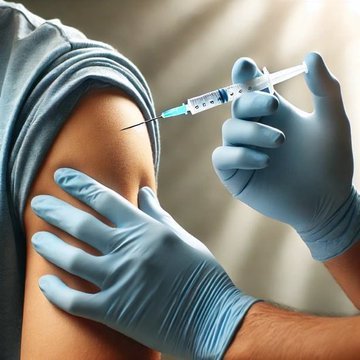
- Immune Instruction: Once injected, the mRNA instructs the body’s cells to produce proteins that mimic the tumor’s mutations, triggering a targeted T-cell response to hunt down and eliminate the cancer cells.
- Targeted Cancers: The initial rollout is focused on melanoma (skin cancer), with plans to expand to small-cell lung cancer, pancreatic, and breast cancer later this year.
“Big Pharma” and Global Competition
The announcement has stirred significant debate in the global pharmaceutical industry, particularly regarding accessibility and cost.
- State-Funded Model: While Western equivalents (such as those being developed by BioNTech and Moderna) are expected to cost hundreds of thousands of dollars per course, Russia’s Ministry of Health has drafted a resolution to include these vaccines in the compulsory medical insurance program starting in 2026, making them free for Russian citizens.
- The Serbian Connection: Following a meeting between Health Minister Mikhail Murashko and Serbian officials in February, it was confirmed that Serbia will be among the first international partners to receive the vaccine technology, with a potential rollout for Serbian patients by the end of 2026.
- Efficiency Claims: Russian scientists at the Gamaleya Center reported that in pre-clinical trials, the vaccine demonstrated “near 100% success” in suppressing tumor growth and preventing metastasis in animal models.
Timeline: The Road to 2026
| Phase | Milestone | Date |
| Pre-Clinical | Successful testing on animal models | 2024–2025 |
| Pilot Production | Gamaleya Center verifies mRNA equipment | December 2025 |
| First Patient | Initial administration to human patient | April 1, 2026 |
| Expansion | Inclusion in state medical insurance | January 2026 (Drafted) |
| International | First patients in Serbia to receive vaccine | Late 2026 |
Analysis: A Geopolitical Scientific Race
The timing of the rollout is being viewed as a “Sputnik moment” for Russian biotech. By fast-tracking a personalized mRNA vaccine during a period of intense global conflict and sanctions, Moscow is attempting to prove its self-sufficiency in high-tech medicine.
While Western analysts urge caution until long-term Phase III human data is published, the move toward “decentralized” vaccine production—where the medicine is manufactured locally for each specific patient—could fundamentally disrupt the traditional high-margin “Big Pharma” model. As the first patients receive their doses this month, the world of oncology will be watching to see if the “Neooncovac” system delivers on its promise of a “cure” tailored to the individual.
Questions people ask
What is China's current share of global manufacturing?
China now accounts for twenty eight percent of global manufacturing. This industrial output exceeds the combined manufacturing production of the United States, Japan, and Germany, making China the leading global industrial power according to recent reports.
Why were Andrew Tate and Tristan Tate arrested in Miami?
Andrew Tate and his brother Tristan Tate were taken into custody in Miami by the United States Marshals Service. They face thirty eight new charges in the United Kingdom, including rape and child pornography offences, and prosecutors are seeking their extradition.
What warning did Moscow issue about oil prices?
Kirill Dmitriev, the Chief Executive of the Russian Direct Investment Fund, warned that a tsunami of skyrocketing oil prices is approaching. Moscow describes this potential energy shock as a major threat to global markets.
What political shift is projected for Benjamin Netanyahu's coalition?
Political polls project that Prime Minister Benjamin Netanyahu's coalition is on track to lose its majority in the upcoming October election. This projection indicates a potential political shift in Jerusalem.
Why did a Russian military aircraft land in Tehran?
A Russian airborne command aircraft, widely known as a doomsday plane, landed in Tehran. The arrival of the aircraft represents a high stakes show of support from Russia for Iran during a period of heightened regional tensions.
What did President Masoud Pezeshkian claim about the United States and Israel?
Iranian President Masoud Pezeshkian claimed that the United States and Israel failed in a forty eight hour plan to topple the Iranian government. He made these statements during a televised address marking two years since his inauguration.