Despite weeks of naval operations and Trump’s boasts of a swift clearance, US forces have yet to locate or neutralize a single explosive device as the strategic waterway remains paralyzed by the threat of Iranian mines.
THE PERSIAN GULF / WASHINGTON — In a potentially devastating revelation regarding the state of the US naval blockade and the Iran war, the Associated Press (AP) reported on Saturday that US military forces, including specialized mine-hunting units, have so far failed to locate or destroy a single explosive mine in the Strait of Hormuz .
This stark admission comes after more than six weeks of US efforts to regain control of the world’s most critical oil chokepoint. Despite President Donald Trump declaring weeks ago that mine-sweeping operations were “starting” and would be “tripled up,” the Pentagon’s inability to clear the mines has left the waterway largely closed, resulting in surging global energy prices and a massive disruption to the global economy .
The report confirms the worst fears of military analysts: that the Strait of Hormuz — through which approximately 20 percent of the world’s oil transits — may remain paralyzed for the foreseeable future, creating a “phantom blockade” that benefits no one but Tehran .
Key Context: The strait has been effectively closed for over two months after Iran deployed dozens of advanced naval mines in retaliation for the joint US-Israeli strikes that began on February 28. Tehran has stated the waterway will remain closed until the US-led war ends, which has created the largest disruption to energy supplies in decades .
The Technical Hurdle: A Mysterious ‘Phantom’ Minefield
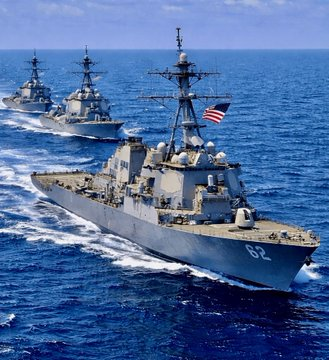
The AP report highlights a catastrophic intelligence failure for the US military. Even though US Navy destroyers and advanced mine-sweeping vessels have been scouring the Gulf for weeks, they have found nothing.
The primary reason for this failure appears to be the specific technology and chaotic tactics used by the Islamic Revolutionary Guard Corps (IRGC) Navy.
1. The ‘Haphazard’ Deployment
According to US officials who spoke to the AP and other outlets, the mines were laid “haphazardly” by small, fast-moving Iranian boats .
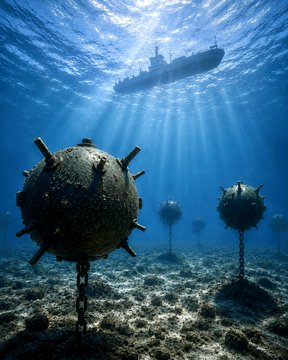
Iranian forces deployed what are believed to be “remote-floating” or GPS-guided mines. Unlike traditional naval mines that are anchored to the seabed in known coordinates, these advanced devices can be deployed by small boats without requiring precise placement. They can remain stationary, float in unpredictable patterns, or potentially be activated remotely .
Crucially, due to the haphazard method of deployment, Iran may not even know exactly where all of its own mines are. Reports have surfaced that Tehran is struggling to locate the explosives it laid, as many may have drifted from their original positions due to sea currents or were never accurately recorded .
2. The ‘Needle in a Haystack’ Problem
The AP report confirms that finding these “phantom” mines is akin to a needle in a haystack. The search area is massive, covering hundreds of square kilometers of deep and murky water .
While the US Navy possesses advanced sonar and unmanned underwater vehicles (UUVs), these systems are designed to locate known minefields. Searching an area for mines that may not be present, or may have drifted, is a monumentally slow process .
Contradictions in the Pentagon
The AP’s findings put the Pentagon in a difficult position. For weeks, officials have been publicly dismissing reports of a slow clearance rate, insisting the operation would be swift.
Earlier this month, Pentagon spokesperson Sean Parnell denied a Washington Post report that it might take six months to clear the Strait, calling it “false” and “dishonest journalism” . Parnell insisted that a “six-month closure is an impossibility” .
However, the AP’s latest report suggests that unless the mines are magically removed or drift away on their own, the closure could indeed last for months. The mine clearance process is inherently slow because it requires vessels to move at very slow speeds to scan the seabed, making them vulnerable to attack.
Military experts have warned that even the threat of a single remaining mine is enough to invalidate war-risk insurance for commercial vessels, effectively keeping global shipping out of the strait .
Iran’s Strategy: Deniability and Asymmetric Warfare
Iran has not officially claimed responsibility for the mines, nor have they provided a map of their locations. This allows Tehran to maintain a “strategic ambiguity” over the strait.
The IRGC has declared a massive 1,400-square-kilometer “danger zone” in the waterway, warning that any vessel entering without Iranian permission does so at its own risk .
The AP report suggests that Iran is content to let the strait remain closed. While Iran is also losing billions due to the US blockade, Tehran views the mine threat as its ultimate leverage. By scattering cheap, hard-to-detect explosives, Iran has effectively blockaded the Gulf’s oil exports for a fraction of the cost the US is spending to try to clear them .
The Bottom Line: The strait is effectively closed. Even if the US finds 99% of the mines, the 1% that remains hidden is enough to keep oil tankers away.
Impact on Ceasefire and Economy
This naval stalemate comes as diplomatic efforts, mediated by Pakistan, have shown limited progress. The US has demanded that Iran clear the mines and reopen the strait as a pre-condition for sanctions relief. Iran has refused, stating the strait will not fully open until the US naval blockade of Iranian ports is lifted and the war ends .
The deadlock has caused oil prices to remain stubbornly high. With the summer driving season approaching in the United States, the inability to break the bottleneck in the Gulf is becoming a major political liability for President Trump .
Frequently Asked Questions (FAQs)
Q1: What did the AP report reveal about US efforts in the Strait of Hormuz?
A: The AP reported that after weeks of intense naval activity, the US has been unable to find or destroy any of the mines Iran is suspected of laying. This confirms that the waterway remains highly dangerous and effectively closed to large-scale commercial shipping due to the “phantom” threat of explosives.
Q2: Why can’t the US find the mines?
A: There are two main reasons. First, the mines are advanced, potentially remote-floating or GPS-guided devices. Second, they were laid “haphazardly” by small boats, meaning they could be anywhere, and many may have drifted. Even Iran is reportedly struggling to locate them.
Q3: Did the Pentagon predict this difficulty?
A: No. The Pentagon has been publicly dismissing reports of slow mine clearance. Spokesperson Sean Parnell previously called reports of a six-month timeline “false,” insisting the closure was “an impossibility.” The AP report contradicts those optimistic assessments.
Q4: When will the Strait be fully reopened?
A: According to military experts cited by the AP, it is impossible to say. If US forces locate the minefields immediately, clearance could take weeks. However, given that they have found nothing so far, the timeline could extend into months, potentially keeping oil prices high for the rest of the year.
Q5: How does this relate to the ceasefire?
A: The mines are a central issue in the US-Iran ceasefire negotiations. The US demands the mines be cleared so the strait can reopen. Iran refuses to clear them or provide a map of their locations until the US ends its naval blockade of Iranian ports and the war ends. The stalemate is a major obstacle to peace.
This is a developing story. Reflecto News will continue to provide updates on the status of the Strait of Hormuz, the ongoing mine clearance efforts, and the diplomatic negotiations in Pakistan.