Reflecto News is an online news platform covering major international political events, global economic developments, and security conflicts. The site provides updates on topics such as Chinese manufacturing dominance, Middle Eastern political tensions, and high profile legal arrests. Readers can access current articles organized by categories like World News, Iran, and USA.
JUST IN: In a strongly worded Truth Social post, President Donald Trump escalated his rhetoric against Iran, declaring that the US military has barely begun its work and explicitly warning that bridges and electric power plants are next on the target list if Tehran does not quickly reach a deal to end the war.
By Reflecto News Staff
April 3, 2026
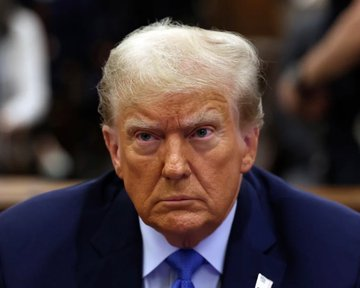
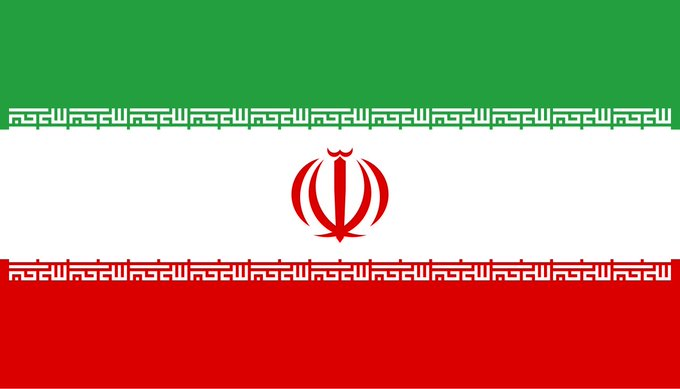
WASHINGTON – President Trump posted late Thursday that “Our Military, the greatest and most powerful (by far!) anywhere in the World, hasn’t even started destroying what’s left in Iran. Bridges next, then Electric Power Plants!” He added that Iran’s new regime leadership “knows what has to be done, and has to be done, FAST!”
The post came shortly after US-Israeli strikes destroyed a major bridge in Karaj, which Trump highlighted with a video and the comment that it was “never to be used again — Much more to follow!” He also urged Iran “to make a deal before it is too late, and there is nothing left of what still could become a great country.”
Trump’s Escalating Warnings
This latest statement builds on Trump’s recent prime-time address in which he vowed to hit Iran “extremely hard” over the next 2–3 weeks. By signaling that current operations represent only the beginning and explicitly naming civilian-adjacent infrastructure like bridges and power plants, the president is increasing pressure on Tehran while tying further destruction to the absence of a negotiated settlement.
Trump has previously threatened to “obliterate” Iranian power plants and oil infrastructure if demands — particularly full reopening of the Strait of Hormuz — are not met.
Recent Context of Strikes on Infrastructure
The warning follows:
- The collapse of the prominent B1 Bridge near Karaj after US-Israeli strikes, which Iranian officials described as a major engineering achievement.
- Complete shutdown of production lines at Mobarakeh Steel Company, Iran’s largest steel producer, due to heavy damage from repeated airstrikes.
- Damage to other industrial and dual-use sites across Isfahan and other provinces.
These actions have already caused significant economic disruption, compounding the effects of Iran’s selective “toll booth” regime in the Strait of Hormuz.
Iranian and International Backdrop
Iranian leaders are expected to denounce the threats as aggression against civilian infrastructure. The army chief recently warned that “no enemy soldier will survive” any ground invasion, while Foreign Minister Abbas Araghchi has repeatedly told Trump to “change his approach” and stated that “no one can set deadlines for us.”
President Masoud Pezeshkian continues to stress that Iran “harbors no enmity towards ordinary Americans.”
On the diplomatic front:
- The UK is hosting a meeting of around 35 countries to discuss reopening the Strait of Hormuz.
- Germany has urged China to press Iran toward negotiations.
- China has blamed US-Israeli operations as the root cause of Hormuz disruptions.
Strategic and Humanitarian Implications
Targeting or threatening bridges and power plants raises serious concerns about civilian impact, including potential blackouts, disrupted transportation, and broader economic collapse. Power plants supply electricity to millions of Iranians, while bridges are vital for daily movement and logistics.
Military analysts note that such infrastructure can have dual-use value (supporting military movement or production), but widespread strikes on them risk crossing into territory widely viewed as disproportionate or destabilizing.
The redeployment of the USS Gerald R. Ford supercarrier and the doubled A-10 Warthog fleet provide the US with substantial capacity for sustained operations if the campaign broadens.
Looking Ahead
Trump’s latest warning intensifies the stakes as the 2–3 week window of heightened action he outlined begins. Whether it forces Iranian concessions, provokes stronger retaliation, or complicates ongoing diplomatic efforts (including the UK meeting and Chinese involvement) will define the next phase of Operation Epic Fury.
Global energy markets remain highly sensitive, with Brent crude already volatile due to Hormuz restrictions and fears of further escalation.
Reflecto News will monitor any official Iranian response, developments from the UK-hosted meeting, potential new strikes, and impacts on civilian infrastructure and the Iranian economy.
Related Coverage on Reflecto News:
- President Trump Vows to Hit Iran “Extremely Hard” Over Next 2–3 Weeks
- Mobarakeh Steel Company Shuts Down All Production Lines After Strikes
- B1 Bridge in Karaj Collapses Following US-Israeli Strikes
- USS Gerald R. Ford Redeployed to Support Operations
- UK Hosts Meeting of 35 Countries on Reopening Strait of Hormuz
- China Blames US-Israeli Actions for Hormuz Disruptions
This report is based on President Trump’s Truth Social post and related statements, along with ongoing coverage of Operation Epic Fury.
Questions people ask
What is China's current share of global manufacturing?
China now accounts for twenty eight percent of global manufacturing. This industrial output exceeds the combined manufacturing production of the United States, Japan, and Germany, making China the leading global industrial power according to recent reports.
Why were Andrew Tate and Tristan Tate arrested in Miami?
Andrew Tate and his brother Tristan Tate were taken into custody in Miami by the United States Marshals Service. They face thirty eight new charges in the United Kingdom, including rape and child pornography offences, and prosecutors are seeking their extradition.
What warning did Moscow issue about oil prices?
Kirill Dmitriev, the Chief Executive of the Russian Direct Investment Fund, warned that a tsunami of skyrocketing oil prices is approaching. Moscow describes this potential energy shock as a major threat to global markets.
What political shift is projected for Benjamin Netanyahu's coalition?
Political polls project that Prime Minister Benjamin Netanyahu's coalition is on track to lose its majority in the upcoming October election. This projection indicates a potential political shift in Jerusalem.
Why did a Russian military aircraft land in Tehran?
A Russian airborne command aircraft, widely known as a doomsday plane, landed in Tehran. The arrival of the aircraft represents a high stakes show of support from Russia for Iran during a period of heightened regional tensions.
What did President Masoud Pezeshkian claim about the United States and Israel?
Iranian President Masoud Pezeshkian claimed that the United States and Israel failed in a forty eight hour plan to topple the Iranian government. He made these statements during a televised address marking two years since his inauguration.