Reflecto News is an online news platform covering major international political events, global economic developments, and security conflicts. The site provides updates on topics such as Chinese manufacturing dominance, Middle Eastern political tensions, and high profile legal arrests. Readers can access current articles organized by categories like World News, Iran, and USA.
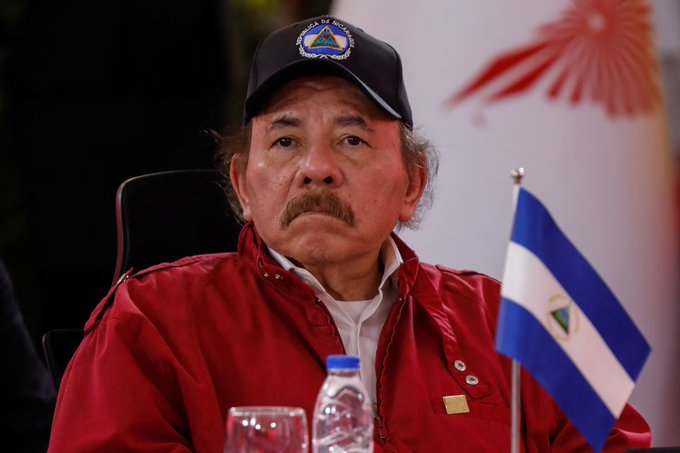
MANAGUA — In a speech marking the 47th anniversary of the 1979 Sandinista Revolution, Nicaraguan President Daniel Ortega announced that the country will no longer hold presidential elections, explicitly ending any pretense of democratic transition and solidifying the authoritarian regime he has built over nearly two decades .
Standing before thousands of state employees in Managua, the 80-year-old leader declared: “There will be no more elections here so that they (the opposition parties) can try to seize the government, seize power” . He added that the Sandinista-controlled National Assembly would pass laws to “build a wall, a barrier, against the coup plotters and the traitors who sell out their country” .
“The days when parties backed by the Yankees (United States) and the Somocistas would return to power are over — never again,” Ortega said, referring to the U.S.-backed Somoza family dictatorship that his revolution overthrew in 1979 .
A Long Road to Absolute Power
Ortega first rose to power after the Sandinista Revolution toppled Anastasio Somoza in 1979. After losing the 1990 election to Violeta Barrios de Chamorro, he returned to the presidency in 2007 and has since consolidated control over all branches of government through a combination of repression and legal maneuvering .
Nicaragua was scheduled to hold general elections in November 2026. However, Ortega pushed through a constitutional amendment in early 2025 that extended the presidential term from five to six years and elevated his wife, Rosario Murillo, from vice president to co-president — a change widely condemned by the United Nations, the Organization of American States, and the European Union . That reform had already pushed the next scheduled election to November 2027 . Sunday’s announcement suggests even that contest may not take place.
Since mass anti-government protests in 2018, which UN-linked organizations say resulted in the deaths of more than 350 people, the Ortega-Murillo regime has systematically dismantled democratic institutions . The 2021 presidential election, in which Ortega claimed nearly 76% of the vote, was widely viewed as illegitimate after the government arrested all major opposition candidates and criminalized dissent .
Opposition and International Response
Opposition leaders and human rights organizations condemned the announcement as the final burial of Nicaraguan democracy. Felix Maradiaga, a 2021 presidential candidate who was arrested and later exiled to the United States in 2023, told The New York Times: “Ortega buried Nicaraguan democracy a long time ago. This is simply an expression that demonstrates unequivocally how he has dropped the mask of the supposed legality he tried to maintain” .
Juan Sebastián Chamorro, another 2021 candidate who was imprisoned and later released to the U.S., said the announcement reveals Ortega’s plan to consolidate a single-party system similar to China and Cuba . The opposition party Renacer stated: “The regime stops pretending that political competition exists and publicly confirms that for years it has not governed by the consent of citizens, but by force” .
The Trump administration, which has sanctioned more than 2,350 Nicaraguan officials and described the Ortega government as the “Murillo-Ortega dictatorship,” has not yet issued a formal response to Sunday’s announcement . The State Department previously accused Murillo of having “invented” the co-presidency position “without elections, without mandate, and without legitimacy” .
Frequently Asked Questions (FAQs)
Q1: What exactly did Daniel Ortega announce regarding elections in Nicaragua?
A: Ortega declared that Nicaragua will no longer hold presidential elections, saying the opposition will never again be allowed to reach power through the ballot box. He stated that the Sandinista-controlled National Assembly would pass laws to “build a wall” against the opposition .
Q2: When was the next presidential election in Nicaragua scheduled?
A: Nicaragua was originally scheduled to hold general elections in November 2026. However, a constitutional reform in early 2025 extended the presidential term from five to six years, pushing the next election to November 2027. Ortega’s latest announcement suggests even that election may be canceled .
Q3: Who is Rosario Murillo, and what is her role?
A: Rosario Murillo is Ortega’s wife and was the Vice President of Nicaragua from 2017 until February 2025. She was elevated to “co-president” through a constitutional reform in early 2025, a move that has been widely criticized by the UN, the OAS, the European Union, and the United States .
Q4: What has been the international reaction to Ortega’s rule?
A: The United States does not recognize Ortega’s presidency and has sanctioned more than 2,350 Nicaraguan officials. The UN and OAS have condemned constitutional changes that eliminated checks and balances. The U.S. State Department has described the government as the “Murillo-Ortega dictatorship” .
Q5: Why does Ortega say he is eliminating elections?
A: Ortega has framed the move as necessary to prevent what he calls “coup plotters” and U.S.-backed opposition from returning to power. He has accused the opposition of wanting to profit from government positions and has claimed that U.S. support for his adversaries is an attempt to destabilize Nicaragua .
Questions people ask
What is China's current share of global manufacturing?
China now accounts for twenty eight percent of global manufacturing. This industrial output exceeds the combined manufacturing production of the United States, Japan, and Germany, making China the leading global industrial power according to recent reports.
Why were Andrew Tate and Tristan Tate arrested in Miami?
Andrew Tate and his brother Tristan Tate were taken into custody in Miami by the United States Marshals Service. They face thirty eight new charges in the United Kingdom, including rape and child pornography offences, and prosecutors are seeking their extradition.
What warning did Moscow issue about oil prices?
Kirill Dmitriev, the Chief Executive of the Russian Direct Investment Fund, warned that a tsunami of skyrocketing oil prices is approaching. Moscow describes this potential energy shock as a major threat to global markets.
What political shift is projected for Benjamin Netanyahu's coalition?
Political polls project that Prime Minister Benjamin Netanyahu's coalition is on track to lose its majority in the upcoming October election. This projection indicates a potential political shift in Jerusalem.
Why did a Russian military aircraft land in Tehran?
A Russian airborne command aircraft, widely known as a doomsday plane, landed in Tehran. The arrival of the aircraft represents a high stakes show of support from Russia for Iran during a period of heightened regional tensions.
What did President Masoud Pezeshkian claim about the United States and Israel?
Iranian President Masoud Pezeshkian claimed that the United States and Israel failed in a forty eight hour plan to topple the Iranian government. He made these statements during a televised address marking two years since his inauguration.