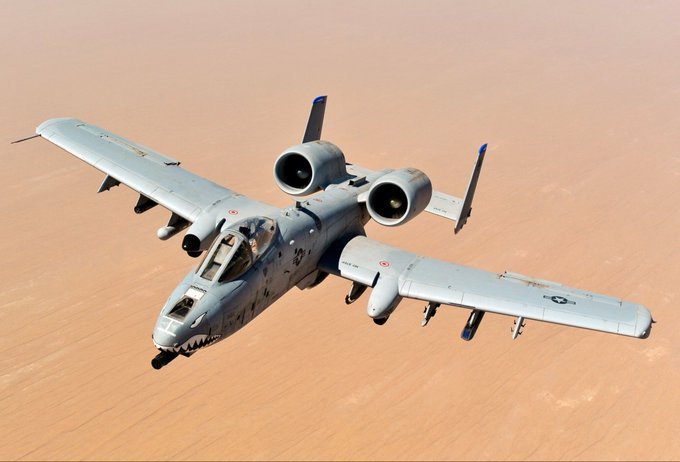
JUST IN: Amid escalating tensions with Iran and ongoing Operation Epic Fury, the United States is significantly boosting its close air support capabilities in the region by sending an additional 18 A-10 Thunderbolt II “Warthog” attack aircraft, effectively doubling its current A-10 presence according to reports.
By Reflecto News Staff April 2, 2026
WASHINGTON / MIDDLE EAST – The U.S. Air Force is reinforcing its forward-deployed airpower in the U.S. Central Command (CENTCOM) area of responsibility with 18 additional A-10 Warthogs, a move that will roughly double the number of these rugged ground-attack jets already operating in the theater. The deployment, involving aircraft from Air National Guard units in Michigan and Idaho, comes as part of a broader U.S. military buildup to counter Iranian threats, including fast-attack boats in the Strait of Hormuz and Iranian-backed militias in Iraq.
The New York Times and other outlets have highlighted the transatlantic movement of these jets, which stopped over at RAF Lakenheath in the United Kingdom before proceeding to undisclosed bases in the Middle East.
What Is the A-10 Warthog?
The A-10 Thunderbolt II, affectionately nicknamed the “Warthog” for its ugly but tough appearance, is a specialized close air support (CAS) aircraft designed primarily to destroy armored vehicles, tanks, and ground targets while providing protection to friendly troops.
Key features include:
- A powerful 30mm GAU-8/A Avenger Gatling gun capable of firing 3,900 rounds per minute of depleted uranium armor-piercing shells.
- Heavily armored cockpit and redundant systems that allow it to survive direct hits from anti-aircraft fire.
- Excellent low-speed maneuverability and long loiter time, making it ideal for extended patrols over contested areas.
- Ability to carry a wide array of munitions, including rockets (APKWS II), precision-guided bombs (JDAM), and air-to-air missiles (AIM-9 Sidewinder) for self-defense.
First flown in the 1970s, the A-10 proved its worth during the 1991 Gulf War, flying thousands of sorties against Iraqi forces. Despite repeated retirement attempts by the Air Force in favor of more modern multi-role fighters, the Warthog remains highly valued for missions where precision, survivability, and sustained presence are critical.
Details of the Deployment
According to reports, approximately 12 A-10s were already operating in the Middle East prior to this surge. The addition of 18 more — 12 from the 107th Fighter Squadron (Michigan Air National Guard) and 6 from the 190th Fighter Squadron (Idaho Air National Guard’s 124th Fighter Wing) — will effectively double the fleet in the region.
- The jets staged through Pease Air National Guard Base, New Hampshire, and RAF Lakenheath, UK, with aerial refueling support from KC-135 Stratotankers.
- Over 300 airmen from supporting units are involved in the rotation, which is expected to last several months depending on mission needs.
- This deployment builds on earlier movements of A-10s from Idaho in late March 2025 and reflects a pattern of sustained presence since at least 2023.
Strategic Context: Operation Epic Fury and Iran Tensions
The timing of this reinforcement is linked to heightened U.S.-Iran confrontation. Operations under Operation Epic Fury reportedly began in late February 2026, involving strikes and patrols against Iranian fast-attack watercraft in the Strait of Hormuz and actions targeting Iranian-backed militias in Iraq.
U.S. officials, including the Chairman of the Joint Chiefs of Staff, have publicly confirmed the A-10’s role in “hunting and killing fast attack watercraft” and providing close air support in high-threat environments. The Warthog’s ability to fly low and slow makes it particularly effective against small, agile boats that pose challenges to faster jets and naval assets.
This buildup occurs against a backdrop of:
- Failed or stalled nuclear negotiations with Iran.
- Regional proxy conflicts involving groups like the Houthis in Yemen and militias in Iraq/Syria.
- Broader U.S. force posture enhancements, including carrier deployments and other aircraft surges.
The A-10’s deployment sends a clear signal of U.S. commitment to deterring aggression while maintaining capabilities for ground support and maritime interdiction.
Why the A-10 Matters in This Theater
In modern warfare dominated by stealth fighters and drones, the A-10 stands out for its:
- Survivability: Thick titanium “bathtub” armor protects the pilot from ground fire.
- Cost-effectiveness: Lower operating costs compared to fifth-generation aircraft for certain missions.
- Psychological impact: The distinctive “BRRRRT” sound of its cannon has demoralized adversaries for decades.
However, the aircraft faces an uncertain future. The U.S. Air Force has long planned to retire the entire A-10 fleet (currently around 200-280 aircraft remaining) as early as fiscal year 2026, transitioning the CAS role to F-35s, F-16s, and other platforms. Congressional resistance and ongoing operational demands in places like Syria and now against Iranian assets have repeatedly delayed full retirement.
This latest deployment may represent one of the final major surges of Warthogs to the Middle East before the type begins phasing out.
Reactions and Implications
U.S. Perspective: Pentagon officials describe the move as a prudent force protection and deterrence measure. It bolsters CENTCOM’s ability to respond rapidly to threats without over-relying on high-value stealth assets for every mission.
Iranian and Regional View: Tehran and its allies are likely to view the increased A-10 presence as provocative. Iranian state media has historically portrayed such deployments as signs of aggression, while proxy groups may adjust tactics to counter low-flying attack aircraft.
Global Implications: Doubling A-10 strength enhances U.S. flexibility in a volatile region but also raises questions about escalation risks. Allies like Israel and Gulf states may welcome the added capability, while concerns linger over potential spillover into wider conflict.
For everyday observers, the Warthog’s return in force underscores a simple truth: even in an era of advanced technology, the need for proven, battle-tested platforms that can deliver devastating firepower up close remains relevant.
Looking Ahead
As the additional 18 Warthogs integrate into operations, analysts will watch closely for their impact on maritime security in the Strait of Hormuz and stability in Iraq. Whether this deployment leads to de-escalation through strengthened deterrence or contributes to further tension will depend on diplomatic efforts alongside military posturing.
Reflecto News will continue monitoring developments in U.S. military movements, Iran relations, and operations in the Middle East.
Related Coverage on Reflecto News:
- U.S.-Iran Tensions: Latest Developments in Operation Epic Fury
- The Future of the A-10 Warthog: Retirement Plans vs. Operational Reality
- Naval Buildup in the Persian Gulf: Carriers and Destroyers on Station
This article draws from multiple defense and aviation reports, including details first highlighted in major outlets like the New York Times.