Reflecto News is an online news platform covering major international political events, global economic developments, and security conflicts. The site provides updates on topics such as Chinese manufacturing dominance, Middle Eastern political tensions, and high profile legal arrests. Readers can access current articles organized by categories like World News, Iran, and USA.
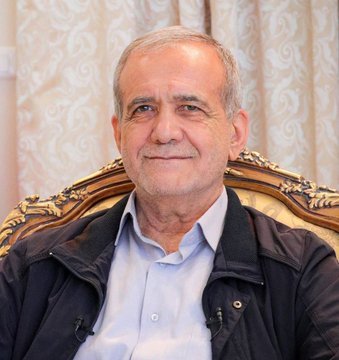
JUST IN: In a significant diplomatic overture amid escalating U.S.-Iran tensions, President Masoud Pezeshkian explicitly states that Tehran harbors no ill will toward ordinary American people, drawing a clear distinction between civilians and government policies.
By Reflecto News Staff April 2, 2026
TEHRAN – Iranian President Masoud Pezeshkian has issued a notable statement separating Iran’s stance toward the American government from its view of U.S. civilians, signaling a potential opening for de-escalation even as bilateral relations remain fraught.
“Iran holds no hostility toward American civilians,” Pezeshkian declared in remarks carried by state media and shared widely on official channels. The statement comes at a time of heightened regional volatility, ongoing sanctions, and stalled nuclear negotiations, positioning the reformist president as a voice of moderation within Iran’s complex political landscape.
Who Is Masoud Pezeshkian?
Masoud Pezeshkian, a heart surgeon and longtime parliamentarian, was elected president in July 2024 as a reformist candidate promising greater engagement with the West and economic relief for Iranians battered by sanctions. Unlike hardline predecessors, Pezeshkian has repeatedly advocated for dialogue, describing himself as a bridge-builder who prioritizes the Iranian people’s well-being over ideological confrontation.
His background as a war veteran from the Iran-Iraq conflict and a critic of corruption has lent him credibility across factions, yet his moderate tone has occasionally drawn fire from conservative elements within the Islamic Republic’s power structure, including the Revolutionary Guards.
Context of the Statement
The president’s latest comments build on earlier overtures. In September 2024, shortly after taking office, Pezeshkian urged Americans to “end their hostility” because “the Iranian nation is not hostile to them.” The fresh emphasis on civilians appears designed to humanize the message and counter narratives of blanket anti-Americanism that have dominated Iranian state rhetoric since the 1979 Islamic Revolution.
Analysts suggest the timing is deliberate. With U.S.-Iran relations strained by past Israeli strikes, reported U.S. involvement in regional incidents, and economic pressures inside Iran, Pezeshkian may be attempting to appeal directly to American public opinion and policymakers who favor diplomacy over confrontation. The statement also differentiates between the U.S. government—which Iran routinely accuses of aggression—and everyday Americans, a nuance rarely highlighted in official Iranian discourse.
Historical Backdrop: Decades of Hostility
U.S.-Iran relations have been adversarial since the 1979 revolution, when revolutionaries seized the U.S. Embassy in Tehran and held 52 American diplomats hostage for 444 days. The U.S. responded with sanctions that have only grown tighter over decades.
Key flashpoints include:
- The 1980s “Tanker War” in the Persian Gulf.
- Iran’s nuclear program, which led to the 2015 Joint Comprehensive Plan of Action (JCPOA) under President Obama.
- The 2018 U.S. withdrawal from the JCPOA under President Trump, followed by “maximum pressure” sanctions.
- Assassinations of Iranian officials, cyber-attacks, and proxy conflicts across the Middle East.
Recent years have seen further deterioration, including reported U.S. and Israeli strikes on Iranian targets in 2025 and Iranian missile responses. Despite this, Pezeshkian’s administration has consistently signaled willingness to return to negotiations if mutual trust can be rebuilt.
What the Statement Means for Diplomacy
By explicitly shielding American civilians from the rhetoric of enmity, Pezeshkian is employing classic diplomatic signaling:
- Humanizing Iran: The move counters portrayals of Iran as a monolithic threat and reminds global audiences that ordinary Iranians and Americans share common aspirations for peace and prosperity.
- Pressure on Washington: It subtly invites the U.S. administration—currently led by President Donald Trump—to reciprocate by distinguishing between Iranian civilians and the government.
- Domestic Balancing Act: The president must navigate hardline criticism at home while projecting strength abroad. Framing the message around “civilians” allows him to maintain revolutionary credentials while opening a door for talks.
Experts believe the statement could pave the way for back-channel communications or renewed indirect talks in Oman or Qatar, traditional mediators between the two sides.
Reactions and Global Implications
Inside Iran: Reformist media outlets have praised the remarks as “pragmatic and people-centered,” while some conservative voices warn against perceived weakness. The Supreme Leader’s office has not yet issued an official reaction, though past patterns suggest it will endorse the distinction without softening the regime’s overall critique of U.S. policy.
In the United States: Early indications from State Department spokespeople echo past responses—welcoming any de-escalatory language while insisting Iran must first verifiably curb its nuclear activities and regional proxy support. Public opinion polls in the U.S. have long shown that most Americans favor diplomacy with Iran over military confrontation, a sentiment Pezeshkian appears eager to tap.
Regional and International Response: Gulf states, Israel, and European powers are watching closely. Any softening in Tehran-Washington rhetoric could ease tensions in the Strait of Hormuz and reduce the risk of wider conflict. China and Russia, Iran’s key partners, have historically supported diplomatic solutions that preserve Iranian sovereignty.
Broader Significance for Global Stability
This is not merely a rhetorical flourish. In an era of great-power competition, proxy wars, and economic uncertainty, distinguishing between governments and civilians can lower the temperature of conflict and create space for humanitarian and economic cooperation.
Iran’s economy continues to suffer under sanctions, with inflation and currency devaluation affecting millions. For American civilians, the statement underscores that Iranians do not view them as enemies—potentially softening attitudes toward sanctions relief or people-to-people exchanges in education, medicine, and culture.
Looking Ahead
President Pezeshkian’s declaration arrives at a crossroads. Whether it leads to concrete diplomatic progress or remains symbolic will depend on reciprocal gestures from Washington and the internal dynamics of both nations.
As Reflecto News continues to monitor developments, one thing is clear: in the complex theater of international relations, words that separate people from policies can sometimes prove more powerful than missiles.
Reflecto News will provide updates as more details emerge, including any official White House or Iranian Foreign Ministry response. Follow us for live coverage of U.S.-Iran relations, Middle East diplomacy, and global security.
Questions people ask
What is China's current share of global manufacturing?
China now accounts for twenty eight percent of global manufacturing. This industrial output exceeds the combined manufacturing production of the United States, Japan, and Germany, making China the leading global industrial power according to recent reports.
Why were Andrew Tate and Tristan Tate arrested in Miami?
Andrew Tate and his brother Tristan Tate were taken into custody in Miami by the United States Marshals Service. They face thirty eight new charges in the United Kingdom, including rape and child pornography offences, and prosecutors are seeking their extradition.
What warning did Moscow issue about oil prices?
Kirill Dmitriev, the Chief Executive of the Russian Direct Investment Fund, warned that a tsunami of skyrocketing oil prices is approaching. Moscow describes this potential energy shock as a major threat to global markets.
What political shift is projected for Benjamin Netanyahu's coalition?
Political polls project that Prime Minister Benjamin Netanyahu's coalition is on track to lose its majority in the upcoming October election. This projection indicates a potential political shift in Jerusalem.
Why did a Russian military aircraft land in Tehran?
A Russian airborne command aircraft, widely known as a doomsday plane, landed in Tehran. The arrival of the aircraft represents a high stakes show of support from Russia for Iran during a period of heightened regional tensions.
What did President Masoud Pezeshkian claim about the United States and Israel?
Iranian President Masoud Pezeshkian claimed that the United States and Israel failed in a forty eight hour plan to topple the Iranian government. He made these statements during a televised address marking two years since his inauguration.