Reflecto News is an online news platform covering major international political events, global economic developments, and security conflicts. The site provides updates on topics such as Chinese manufacturing dominance, Middle Eastern political tensions, and high profile legal arrests. Readers can access current articles organized by categories like World News, Iran, and USA.
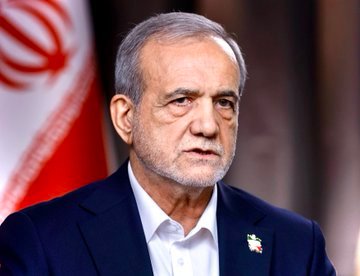
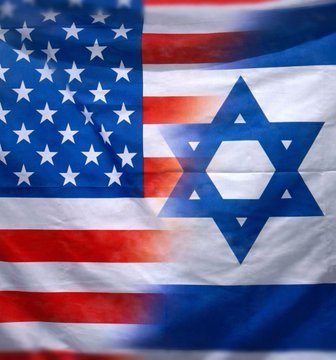
JUST IN: Amid ongoing military operations in Operation Epic Fury, Iranian President Masoud Pezeshkian claims the United States has joined the conflict primarily as a proxy for Israel, acting under Israeli influence and control rather than independent American interests.
By Reflecto News Staff April 2, 2026
TEHRAN – Iranian President Masoud Pezeshkian has sharply criticized the United States, asserting that Washington entered the current conflict with Iran as a proxy force for Israel, driven by Israeli “influence and control” over U.S. policy. The remarks, delivered in recent statements and carried by Iranian state media, come as U.S. and Israeli forces continue strikes under Operation Epic Fury, which began on February 28, 2026.
Pezeshkian’s accusation echoes longstanding Iranian narratives about the U.S.-Israel relationship while highlighting Tehran’s view of the ongoing campaign as externally orchestrated aggression rather than a purely American initiative.
Details of Pezeshkian’s Statement
In his comments, the Iranian president alleged that the U.S. decision to engage militarily stemmed from Israel’s inability to achieve its objectives alone, forcing Washington to intervene on Israel’s behalf. He described the United States as acting under the sway of Israeli interests, a theme that aligns with previous Iranian rhetoric framing American actions as subservient to the “Zionist regime.”
This latest statement builds on earlier remarks by Pezeshkian, including condemnations of U.S. strikes on Iranian nuclear and military sites, where he portrayed Washington as “the main factor behind” Israeli hostility. The president has repeatedly drawn a distinction between ordinary American civilians—who he has said Iran holds no hostility toward—and U.S. government policies allegedly shaped by external lobbies and influence.
Background: Operation Epic Fury and Escalating Conflict
Operation Epic Fury, launched by the United States in coordination with Israel on February 28, 2026, involves large-scale strikes targeting Iranian missile facilities, air defenses, nuclear-related sites, naval assets, and leadership targets. The operation followed months of heightened tensions, stalled nuclear negotiations, and retaliatory actions involving Iranian proxies across the region.
Key developments include:
- Initial waves of strikes that reportedly degraded significant portions of Iran’s ballistic missile arsenal and air defense systems.
- Deployment of additional U.S. assets, including the recent doubling of the A-10 Warthog fleet in the Middle East for close air support and maritime interdiction missions against Iranian fast-attack boats.
- Iranian retaliatory missile and drone strikes targeting U.S. and allied positions, as well as disruptions in the Strait of Hormuz.
The conflict has resulted in significant casualties and infrastructure damage on multiple sides, with both Washington and Tehran accusing the other of escalation.
Pezeshkian’s Position and Domestic Context
As a reformist-leaning president elected in 2024, Masoud Pezeshkian has often advocated for dialogue and economic relief. However, the realities of the ongoing war have placed him in a challenging position, balancing calls for resistance with earlier overtures toward de-escalation and appeals directly to the American public.
His accusation of U.S. proxy involvement serves multiple purposes:
- Framing the Narrative: Portraying the war as Israel-driven helps rally domestic support and delegitimize U.S. actions in the eyes of regional and international audiences.
- Distinguishing Civilians from Policy: Consistent with his prior statement that Iran holds “no hostility toward American civilians,” Pezeshkian appears to aim criticism squarely at policymakers while attempting to drive a wedge between the U.S. government and its public.
- Internal Politics: In a system where hardline elements, including the Islamic Revolutionary Guard Corps (IRGC), wield significant influence, such strong rhetoric helps maintain unity amid wartime pressures.
U.S. and Israeli Perspective
U.S. officials have justified Operation Epic Fury as necessary self-defense and collective defense of Israel, citing Iranian threats including missile programs, nuclear ambitions, and support for regional proxy groups. The Pentagon has emphasized the operation’s objectives: neutralizing imminent dangers, dismantling terror infrastructure, and preventing Iran from acquiring nuclear weapons.
Israeli leaders have described their involvement as essential to counter existential threats from Iranian missiles and proxies. Both nations reject characterizations of the U.S. role as “proxy” action, instead framing the partnership as a shared strategic response to common threats.
The recent reinforcement of A-10 Warthogs—adding 18 aircraft to roughly double the fleet—underscores U.S. commitment to sustained operations in high-threat environments, particularly for countering maritime and ground targets.
Historical Context of U.S.-Iran and U.S.-Israel Relations
U.S.-Iran relations have been adversarial since the 1979 Islamic Revolution. Decades of sanctions, proxy conflicts, and disputes over Iran’s nuclear program have defined the relationship. The 2015 JCPOA nuclear deal offered a brief period of diplomacy, but its collapse in 2018 led to renewed maximum-pressure policies.
Iran has long accused the U.S. of being unduly influenced by pro-Israel lobbies, a claim routinely dismissed by American officials as conspiracy rhetoric. The close U.S.-Israel alliance, rooted in shared democratic values, intelligence cooperation, and strategic interests, remains a cornerstone of U.S. Middle East policy.
Implications for Diplomacy and Regional Stability
Pezeshkian’s statement arrives at a critical juncture:
- Escalation Risks: Strong rhetoric could complicate any back-channel efforts for ceasefires or negotiations, especially as military operations continue.
- Public Opinion: By appealing to American frustration with foreign policy priorities, the Iranian leader seeks to erode domestic support for prolonged engagement.
- Regional Dynamics: Gulf states, already impacted by Iranian retaliatory actions, monitor developments closely. Any perception of U.S. “proxy” involvement may affect alliances and energy security concerns in the Strait of Hormuz.
Analysts note that while such accusations are standard in Iranian discourse, they highlight the deep mistrust that hinders diplomatic progress. Previous attempts at indirect talks in Oman or elsewhere have repeatedly stalled over issues of verification, sanctions relief, and regional behavior.
Looking Ahead
As Operation Epic Fury progresses and the U.S. maintains enhanced military posture—including the bolstered A-10 presence—the coming weeks will test whether military pressure leads to concessions or further entrenchment.
President Pezeshkian’s remarks reinforce Iran’s defiant stance while simultaneously signaling a desire to separate the American people from their government’s actions. Whether this duality opens any path for dialogue or merely deepens divisions remains to be seen.
Reflecto News will continue to provide updates on U.S.-Iran developments, military movements in the Middle East, and diplomatic responses from all parties involved.
Related Coverage on Reflecto News:
- U.S. Doubles A-10 Warthog Fleet in the Middle East Amid Operation Epic Fury
- Iranian President Pezeshkian: No Hostility Toward American Civilians
- Operation Epic Fury: Objectives, Progress, and Regional Impact
- The Future of U.S.-Iran Nuclear Negotiations in Wartime
This article is based on official statements, international reporting, and developments in the ongoing conflict.
Questions people ask
What is China's current share of global manufacturing?
China now accounts for twenty eight percent of global manufacturing. This industrial output exceeds the combined manufacturing production of the United States, Japan, and Germany, making China the leading global industrial power according to recent reports.
Why were Andrew Tate and Tristan Tate arrested in Miami?
Andrew Tate and his brother Tristan Tate were taken into custody in Miami by the United States Marshals Service. They face thirty eight new charges in the United Kingdom, including rape and child pornography offences, and prosecutors are seeking their extradition.
What warning did Moscow issue about oil prices?
Kirill Dmitriev, the Chief Executive of the Russian Direct Investment Fund, warned that a tsunami of skyrocketing oil prices is approaching. Moscow describes this potential energy shock as a major threat to global markets.
What political shift is projected for Benjamin Netanyahu's coalition?
Political polls project that Prime Minister Benjamin Netanyahu's coalition is on track to lose its majority in the upcoming October election. This projection indicates a potential political shift in Jerusalem.
Why did a Russian military aircraft land in Tehran?
A Russian airborne command aircraft, widely known as a doomsday plane, landed in Tehran. The arrival of the aircraft represents a high stakes show of support from Russia for Iran during a period of heightened regional tensions.
What did President Masoud Pezeshkian claim about the United States and Israel?
Iranian President Masoud Pezeshkian claimed that the United States and Israel failed in a forty eight hour plan to topple the Iranian government. He made these statements during a televised address marking two years since his inauguration.