Reflecto News is an online news platform covering major international political events, global economic developments, and security conflicts. The site provides updates on topics such as Chinese manufacturing dominance, Middle Eastern political tensions, and high profile legal arrests. Readers can access current articles organized by categories like World News, Iran, and USA.
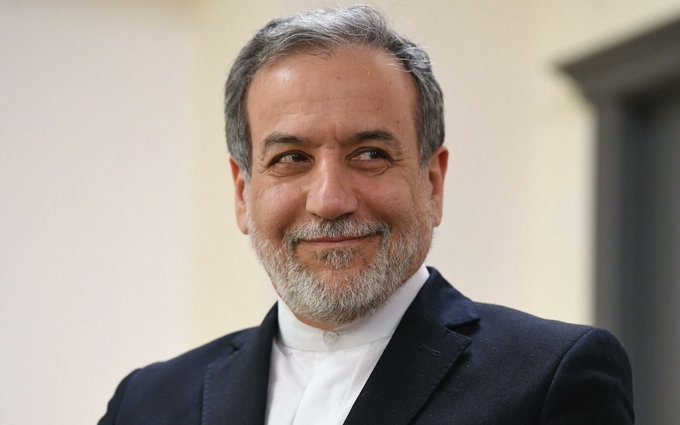
TEHRAN — In a sharp de-escalation of diplomatic expectations, Iranian Foreign Minister Abbas Araghchi and Ministry spokespersons confirmed on Tuesday, March 31, 2026, that Iran has not accepted any part of the 15-point peace proposal recently floated by the Trump administration. Araghchi clarified that while messages have been received via international intermediaries, Tehran has neither responded to the U.S. points nor submitted a formal counter-proposal through those channels.
The statement serves as a cold reality check to recent reports from Washington suggesting that a deal was “close” or that direct negotiations were underway.
The “No Direct Talks” Mandate
The Iranian Foreign Ministry has moved to dismantle the narrative of a maturing peace process, emphasizing that the current state of engagement remains indirect and highly skeptical.
- Rejection of the 15 Points: Foreign Ministry spokesperson Esmaeil Baghaei described the U.S. proposal as “unrealistic, illogical, and excessive.” He indicated that the framework, which reportedly includes total denuclearization and severe restrictions on Iran’s missile program, is a “non-starter” for the current leadership.
- The Mediation Barrier: Araghchi stressed that while Iran is “sending and receiving messages” through mediators—primarily Pakistan—there have been no direct negotiations with U.S. officials.
- The Islamabad Track: Addressing the quadrilateral meetings held in Pakistan (involving Turkey, Egypt, and Saudi Arabia), Tehran clarified that while it respects the regional effort to “cool down the situation,” Iran has not officially participated in those sessions.
“Resistance Over Negotiation”
Araghchi’s remarks reinforce a “principled position” of continued resistance as long as the U.S. and Israel continue their kinetic campaign.
- Skepticism of Sincerity: Iranian officials pointed to the “failed history” of the June 2025 and February 2026 talks, which they claim ended with U.S. strikes despite ongoing dialogue. “The end of the war will occur when Iran decides, not when Trump envisions it,” an official told state media.
- The Nuclear Threat: Amidst the diplomatic stalemate, the Iranian parliament has begun discussing a potential withdrawal from the Non-Proliferation Treaty (NPT), a move that would represent a total collapse of international nuclear oversight.
- Regional Integration: Araghchi noted that any peace deal must include all “fronts,” implying that a ceasefire in Iran cannot occur without a simultaneous halt to Israeli operations in Lebanon and against pro-Iranian groups in Iraq.
Conflicting Signals from Washington
The Foreign Minister’s “negative response” stands in stark contrast to the optimism projected by the White House over the last 48 hours.
- Trump’s Confidence: President Donald Trump told reporters on Monday that he was “pretty sure” of a deal, suggesting that the Iranian leadership “wants to make a deal so badly but they’re afraid to say it.”
- The Qalibaf Factor: Washington continues to claim it has opened a channel with Parliamentary Speaker Bagher Qalibaf, a figure the U.S. views as more pragmatic. Tehran has dismissed these reports as “psychological warfare” intended to create internal division.
| Negotiation Pillar | Iranian Position (March 31, 2026) | U.S. Position (Trump Admin) |
| Direct Dialogue | Denied (Messages only) | Claimed (Indirect & Back-channel) |
| The 15-Point Plan | Rejected (Unrealistic) | Under Review (Productive) |
| Nuclear Program | Considering NPT Withdrawal | Demands Total Dismantling |
| Strait of Hormuz | Demands “Natural Legal Right” | “Will open one way or another” |
Analysis: A High-Stakes Stalemate
With the April 6 deadline just six days away, the gap between the two sides remains cavernous. Araghchi’s refusal to submit formal conditions suggests that Tehran is currently prioritizing “battlefield leverage”—including the threat to target U.S.-linked companies and the continued blockade of the Strait of Hormuz—over a diplomatic solution that it views as a “veiled surrender.”
Unless the China-Pakistan 5-Point Plan can bridge the distance between Araghchi’s “resistance” and Trump’s “maximum pressure,” the conflict appears headed for the “decisive phase” promised by the Pentagon.
Questions people ask
What is China's current share of global manufacturing?
China now accounts for twenty eight percent of global manufacturing. This industrial output exceeds the combined manufacturing production of the United States, Japan, and Germany, making China the leading global industrial power according to recent reports.
Why were Andrew Tate and Tristan Tate arrested in Miami?
Andrew Tate and his brother Tristan Tate were taken into custody in Miami by the United States Marshals Service. They face thirty eight new charges in the United Kingdom, including rape and child pornography offences, and prosecutors are seeking their extradition.
What warning did Moscow issue about oil prices?
Kirill Dmitriev, the Chief Executive of the Russian Direct Investment Fund, warned that a tsunami of skyrocketing oil prices is approaching. Moscow describes this potential energy shock as a major threat to global markets.
What political shift is projected for Benjamin Netanyahu's coalition?
Political polls project that Prime Minister Benjamin Netanyahu's coalition is on track to lose its majority in the upcoming October election. This projection indicates a potential political shift in Jerusalem.
Why did a Russian military aircraft land in Tehran?
A Russian airborne command aircraft, widely known as a doomsday plane, landed in Tehran. The arrival of the aircraft represents a high stakes show of support from Russia for Iran during a period of heightened regional tensions.
What did President Masoud Pezeshkian claim about the United States and Israel?
Iranian President Masoud Pezeshkian claimed that the United States and Israel failed in a forty eight hour plan to topple the Iranian government. He made these statements during a televised address marking two years since his inauguration.