Reflecto News is an online news platform covering major international political events, global economic developments, and security conflicts. The site provides updates on topics such as Chinese manufacturing dominance, Middle Eastern political tensions, and high profile legal arrests. Readers can access current articles organized by categories like World News, Iran, and USA.
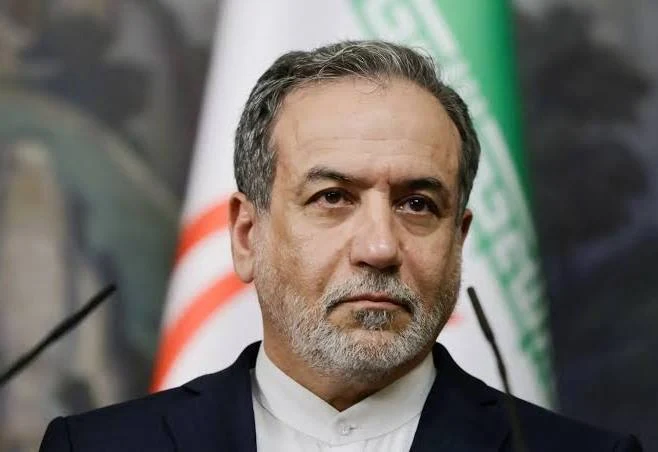
TEHRAN — In a definitive hardening of Iran’s diplomatic stance, Foreign Minister Abbas Araghchi declared on Tuesday, March 31, 2026, that the Islamic Republic is “prepared for any ground confrontation” and will not accept a limited ceasefire. Speaking to state media, Araghchi dismissed rumors of active negotiations with the United States, clarifying that while “warnings and viewpoints” are being exchanged, a formal peace process does not exist.
The statement serves as a direct rebuttal to recent optimism from the Trump administration regarding a nearing settlement before the April 6 deadline.
The “Witkoff” Channel: Messages, Not Missions
Araghchi addressed the reported back-channel communications involving Steven Witkoff, the U.S. Special Envoy to the Middle East, emphasizing that these exchanges should not be mistaken for diplomacy.
- Warnings, Not Proposals: Araghchi confirmed that Iran continues to receive messages from Witkoff through regional intermediaries. However, he described these as “warnings or mutual viewpoints” rather than constructive proposals.
- Ministry Oversight: He stressed that all message exchanges are strictly coordinated between the Foreign Ministry and Iran’s security institutions, ensuring a unified “revolutionary front” against external pressure.
- No “Specific Party” Talks: The Foreign Minister flatly denied that formal negotiations are underway with any specific individual or nation, including the much-discussed “Qalibaf track.”
A Total War Footing: “No Ceasefire”
Perhaps the most significant portion of Araghchi’s address was the rejection of a “piecemeal” peace.
- Demand for a Complete End: “Iran will not agree to a ceasefire,” Araghchi stated. Instead, Tehran is calling for a “complete end to the war across the entire region,” implying that hostilities must cease in Lebanon, Gaza, Iraq, and Yemen simultaneously for Iran to stand down.
- The Ground War Warning: Addressing the buildup of U.S. and Israeli forces, he warned adversaries not to “miscalculate” Iran’s resolve. “We are prepared for any ground confrontation,” he asserted, suggesting that Iran’s conventional and proxy forces are ready for a multi-front land war if the air campaign escalates further.
- Regional Conflict Linkage: By demanding a regional halt, Araghchi is effectively linking the security of the Strait of Hormuz to the withdrawal of Israeli forces from Southern Lebanon—a condition the Netanyahu government has previously rejected.
Strategic Context: The April 6 Countdown
Araghchi’s rhetoric appears designed to counter the Trump administration’s “Maximum Pressure 2.0” tactics as the conflict enters its second month.
- The IRGC Ultimatum: The Foreign Minister’s comments coincide with the IRGC’s 8:00 PM (April 1) deadline targeting 18 U.S. companies, including Apple and Nvidia.
- The “Islamabad Track” Tension: While Pakistan continues to push its 15-point peace plan, Araghchi’s refusal to submit counter-proposals suggests Tehran believes it still holds significant “asymmetric leverage” through the global energy and tech blockade.
| Key Diplomatic Metric | Status (March 31, 2026) |
| Ceasefire Status | Rejected by Iran |
| Primary Condition | Total end to war across the “entire region” |
| Ground War Readiness | “Fully Prepared” |
| U.S. Communications | Warnings exchanged via Witkoff; No negotiations |
| Deadline | April 6, 2026 |
Analysis: The Brink of Escalation
Araghchi’s defiant tone indicates that Iran’s leadership may be pivoting toward a “total war” narrative to force the West into broader concessions. By refusing a ceasefire and preparing for ground combat, Tehran is signaling that the “decisive phase” promised by Secretary of War Pete Hegseth will be met with a level of resistance that could engulf the entire Middle East.
With only six days remaining until the President’s deadline, the gap between a “Mission Accomplished” moment and a catastrophic regional escalation has never been narrower.
Questions people ask
What is China's current share of global manufacturing?
China now accounts for twenty eight percent of global manufacturing. This industrial output exceeds the combined manufacturing production of the United States, Japan, and Germany, making China the leading global industrial power according to recent reports.
Why were Andrew Tate and Tristan Tate arrested in Miami?
Andrew Tate and his brother Tristan Tate were taken into custody in Miami by the United States Marshals Service. They face thirty eight new charges in the United Kingdom, including rape and child pornography offences, and prosecutors are seeking their extradition.
What warning did Moscow issue about oil prices?
Kirill Dmitriev, the Chief Executive of the Russian Direct Investment Fund, warned that a tsunami of skyrocketing oil prices is approaching. Moscow describes this potential energy shock as a major threat to global markets.
What political shift is projected for Benjamin Netanyahu's coalition?
Political polls project that Prime Minister Benjamin Netanyahu's coalition is on track to lose its majority in the upcoming October election. This projection indicates a potential political shift in Jerusalem.
Why did a Russian military aircraft land in Tehran?
A Russian airborne command aircraft, widely known as a doomsday plane, landed in Tehran. The arrival of the aircraft represents a high stakes show of support from Russia for Iran during a period of heightened regional tensions.
What did President Masoud Pezeshkian claim about the United States and Israel?
Iranian President Masoud Pezeshkian claimed that the United States and Israel failed in a forty eight hour plan to topple the Iranian government. He made these statements during a televised address marking two years since his inauguration.