Reflecto News is an online news platform covering major international political events, global economic developments, and security conflicts. The site provides updates on topics such as Chinese manufacturing dominance, Middle Eastern political tensions, and high profile legal arrests. Readers can access current articles organized by categories like World News, Iran, and USA.
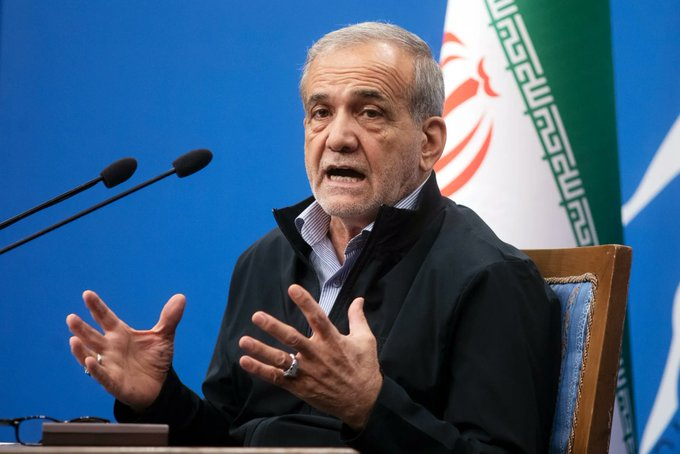
TEHRAN — In a landmark diplomatic signal that has sent ripples through global energy markets, Iranian President Masoud Pezeshkian confirmed on Tuesday, March 31, 2026, that Iran is prepared to end the month-long conflict with the United States and Israel. However, the President emphasized that any ceasefire is strictly contingent upon receiving binding international guarantees that “aggression will not happen again.”
The announcement marks the first concrete “off-ramp” offered by the Iranian executive branch since Operation Epic Fury began on February 28, 2026.
The Mandate for “Dignity and Security”
Speaking during a high-level cabinet meeting in Tehran, President Pezeshkian framed the potential for peace not as a retreat, but as a strategic necessity centered on the protection of the Iranian state.
- The Core Demand: “Iran does not seek war and is ready to end it,” Pezeshkian stated, “but only in exchange for formal security guarantees protecting the country from further attacks.”
- National Interest: The President stressed that any final agreement must “guarantee the security and interests of the Iranian people,” particularly focusing on the restoration of civilian infrastructure such as the Tofigh Daru pharmaceutical plant and regional desalination hubs.
- The “National Unity” Narrative: Pezeshkian credited the “resistance of the army” and “national unity” for allowing Iran to negotiate from a position of resilience rather than collapse.
The Three Pillars of the Iranian Proposal
According to sources close to the “Islamabad Track”—the primary diplomatic channel mediated by Pakistan—Tehran’s demands are structured around three non-negotiable pillars:
- Non-Aggression Pacts: A formal, multi-lateral treaty ensuring that U.S. and Israeli forces will not resume kinetic operations or “targeted assassinations” against Iranian leadership.
- Sovereign Recognition: Explicit acknowledgment of Iran’s territorial integrity and its “legitimate rights” under international law.
- Infrastructure Reparations: A framework for the reconstruction of “dual-use” civilian facilities destroyed during the five-week air campaign.
Market Reaction: A “Sigh of Relief” for Oil
The President’s comments immediately impacted a global economy reeling from the closure of the Strait of Hormuz.
- Crude Oil: WTI Crude slipped back toward the $101 mark, dropping nearly 4% as traders began to price in a potential reopening of the Persian Gulf shipping lanes.
- Equities: The S&P 500 surged over 160 points, reflecting investor hope that the “infrastructure war” threatened by the IRGC might be averted.
The “April 6” Deadline and Diplomatic Obstacles
Despite Pezeshkian’s overture, significant hurdles remain before a ceasefire can be implemented:
- The Trump Ultimatum: President Donald Trump has set a firm April 6 deadline for a regional settlement, threatening to “obliterate” the Kharg Island oil terminal if a deal is not reached.
- The Internal Rift: While Pezeshkian talks peace, the IRGC has simultaneously labeled 18 U.S. companies (including Apple, Google, and Nvidia) as “legitimate targets” starting April 1.
- The “Qalibaf” Dispute: Tehran continues to deny U.S. claims of direct negotiations with Parliamentary Speaker Bagher Qalibaf, insisting that all talks must go through the official Pakistani mediators.
| Key Peace Metric | Current Status (March 31, 2026) |
| Iran’s Primary Demand | Binding Security Guarantees |
| U.S. Primary Demand | Total Denuclearization & Exit from Lebanon |
| Mediation Hub | Islamabad, Pakistan |
| Global Impact | 11,000+ flights disrupted; Oil ~$101/bbl |
| Countdown to Deadline | 6 Days Remaining |
Expert Analysis: A Race Against Time
Diplomatic analysts suggest that Pezeshkian’s statement is a “calculated plea” to the international community—specifically China and Russia—to facilitate the guarantees Iran seeks. With Secretary of War Pete Hegseth warning of a “decisive phase” and the IDF pushing toward the Litani River, the window for a negotiated settlement is closing rapidly.
The coming 48 hours will be critical as the China-Pakistan 5-Point Plan is presented to the UN Security Council, offering a potential framework that aligns with Pezeshkian’s demand for “sovereignty and protection.”
Questions people ask
What is China's current share of global manufacturing?
China now accounts for twenty eight percent of global manufacturing. This industrial output exceeds the combined manufacturing production of the United States, Japan, and Germany, making China the leading global industrial power according to recent reports.
Why were Andrew Tate and Tristan Tate arrested in Miami?
Andrew Tate and his brother Tristan Tate were taken into custody in Miami by the United States Marshals Service. They face thirty eight new charges in the United Kingdom, including rape and child pornography offences, and prosecutors are seeking their extradition.
What warning did Moscow issue about oil prices?
Kirill Dmitriev, the Chief Executive of the Russian Direct Investment Fund, warned that a tsunami of skyrocketing oil prices is approaching. Moscow describes this potential energy shock as a major threat to global markets.
What political shift is projected for Benjamin Netanyahu's coalition?
Political polls project that Prime Minister Benjamin Netanyahu's coalition is on track to lose its majority in the upcoming October election. This projection indicates a potential political shift in Jerusalem.
Why did a Russian military aircraft land in Tehran?
A Russian airborne command aircraft, widely known as a doomsday plane, landed in Tehran. The arrival of the aircraft represents a high stakes show of support from Russia for Iran during a period of heightened regional tensions.
What did President Masoud Pezeshkian claim about the United States and Israel?
Iranian President Masoud Pezeshkian claimed that the United States and Israel failed in a forty eight hour plan to topple the Iranian government. He made these statements during a televised address marking two years since his inauguration.