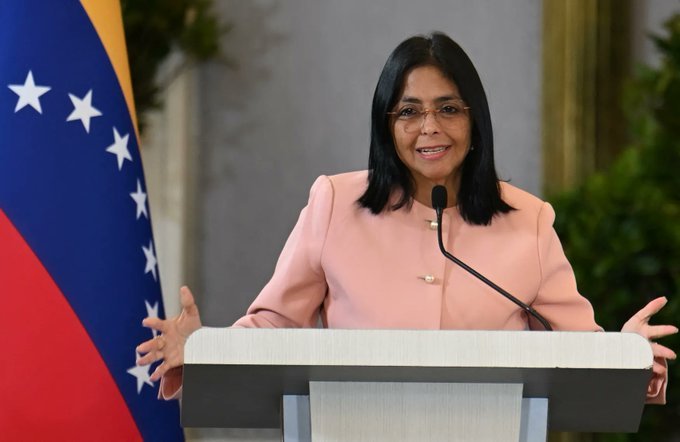
JUST IN: In a significant step toward normalizing relations and boosting Venezuela’s oil sector, the United States has delisted interim President Delcy Rodríguez from its sanctions roster, signaling continued support for the post-Maduro transitional government amid broader efforts to reopen Venezuela’s energy industry to American and international investment.
By Reflecto News Staff
April 2, 2026
WASHINGTON / CARACAS – The U.S. Department of the Treasury’s Office of Foreign Assets Control (OFAC) has officially removed Delcy Eloina Rodríguez Gómez, Venezuela’s acting president since January 2026, from the Specially Designated Nationals (SDN) list. The move lifts asset-blocking measures and visa restrictions that had been in place against her for years, reflecting Washington’s growing cooperation with the interim administration following the U.S. capture and extradition of former President Nicolás Maduro.
This delisting is the latest in a series of sanctions relief measures aimed at encouraging economic recovery, increasing oil production, and countering the influence of adversarial powers in Venezuela’s energy sector.
Background: From Sanctions Target to Interim Leader
Delcy Rodríguez, a longtime Maduro ally and former vice president, was sworn in as interim president on January 5, 2026, shortly after U.S. forces captured Nicolás Maduro and his wife Cilia Flores in Operation Absolute Resolve on January 3, 2026. Maduro was subsequently extradited to the United States to face narco-terrorism charges.
Initially sanctioned under Executive Order 13692 for her role in the Maduro government’s policies — including alleged undermining of democratic institutions, human rights concerns, and public corruption — Rodríguez had been a prominent target of U.S. pressure. However, her swift cooperation with the Trump administration post-transition has shifted the dynamic. She has overseen:
- Release of hundreds of political prisoners.
- Passage of new laws opening the oil sector to privatization and foreign investment, ending PDVSA’s monopoly.
- Cabinet reshuffles, including replacement of senior military commanders tied to the previous regime.
- Diplomatic overtures to restore full U.S.-Venezuela ties, including reopening the American embassy in Caracas.
U.S. officials, including President Trump, have publicly noted Rodríguez’s willingness to work with Washington on oil sales, proceeds management, and limiting the role of countries like China and Russia in the sector.
Details of the Delisting and Sanctions Relief
The removal from the SDN list means U.S. persons can now engage in transactions involving Rodríguez without needing specific OFAC licenses for her personally. This builds on earlier steps, such as:
- Issuance of general licenses allowing major oil companies (Chevron, BP, Shell, Eni, Repsol) broad operational scope in Venezuela.
- Unfreezing of certain Venezuelan funds and easing of oil trade restrictions.
- Authorization for direct PDVSA sales to U.S. buyers and global markets under regulated conditions.
Analysts view the delisting as both a reward for cooperation and a pragmatic move to stabilize Venezuela’s economy, which has suffered hyperinflation, infrastructure decay, and massive emigration under years of sanctions and mismanagement.
Strategic and Economic Implications
Venezuela holds the world’s largest proven oil reserves. Reviving production and exports is a priority for the interim government and a key U.S. interest:
- Energy Security: Increased Venezuelan crude can help diversify global supply and reduce reliance on other producers.
- Investment Opportunities: New legislation allows greater private and foreign control over projects, with independent arbitration mechanisms to attract capital.
- Regional Stability: Sanctions relief is tied to expectations of further reforms, prisoner releases, and steps toward eventual democratic elections.
For Rodríguez, the gesture strengthens her position domestically and internationally as she navigates the delicate transition. She has repeatedly called for the full lifting of remaining sanctions, arguing they harm ordinary Venezuelans and regional economies.
Critics, however, caution that rapid relief risks rewarding continuity of Chavista elements without deeper institutional changes. Some opposition figures and exiled Venezuelans express skepticism about the interim leadership’s commitment to genuine democratization.
Reactions
U.S. Perspective: Administration officials describe the delisting as part of a “carrots and sticks” approach that has already yielded results in oil sector openness and reduced adversarial influence.
Venezuelan Government: Interim President Rodríguez has welcomed the step while continuing to urge complete sanctions removal. She has promoted investment opportunities at international summits and emphasized a “new agenda of cooperation” with the United States.
International Community: The European Union has also signaled moves toward lifting its own sanctions on Rodríguez. Regional neighbors, including Colombia, have engaged in productive talks on economic integration.
Oil Markets and Industry: Energy companies are closely monitoring developments, with several already expanding operations under the new licenses.
Broader Context in 2026
This development occurs against a backdrop of shifting U.S. foreign policy priorities in Latin America, including efforts to counter external powers in the Western Hemisphere. It parallels other global tensions, such as the ongoing Operation Epic Fury in the Middle East, where energy security remains a critical concern.
Whether the delisting leads to sustained recovery or serves as a temporary bridge will depend on Rodríguez’s ability to deliver on reforms while managing internal power dynamics and public expectations.
Reflecto News will continue tracking U.S.-Venezuela relations, sanctions policy updates, and developments in Venezuela’s oil industry.
Related Coverage on Reflecto News:
- Operation Absolute Resolve: The Capture of Nicolás Maduro and Transition in Venezuela
- Venezuela’s Oil Sector Reopens: Opportunities and Risks for Investors
- U.S. Sanctions Policy in Latin America: Recent Shifts and Impacts
This report draws from official U.S. Treasury actions, statements by Venezuelan and American officials, and international reporting on the post-Maduro transition.