Reflecto News is an online news platform covering major international political events, global economic developments, and security conflicts. The site provides updates on topics such as Chinese manufacturing dominance, Middle Eastern political tensions, and high profile legal arrests. Readers can access current articles organized by categories like World News, Iran, and USA.
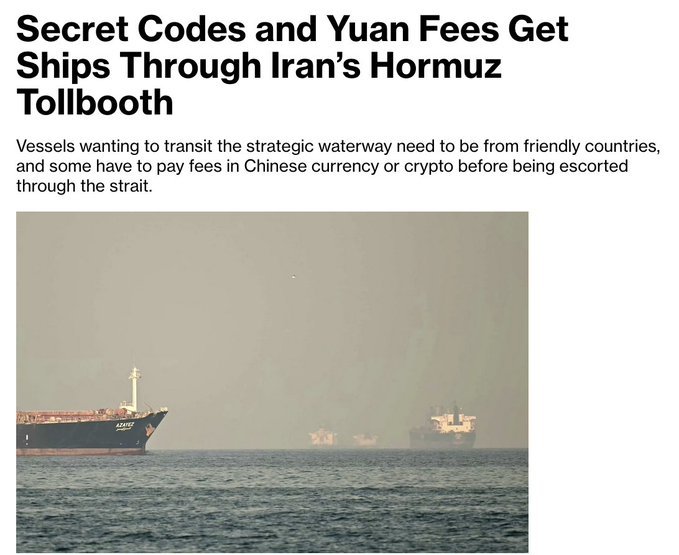
JUST IN: As maritime traffic through the world’s most critical oil chokepoint remains severely restricted during the ongoing US-Israeli military campaign, Iran has effectively established a de facto “toll booth” system. Friendly or neutral vessels can transit the Strait of Hormuz — but only after submitting detailed information to IRGC-linked intermediaries, passing geopolitical vetting, and paying fees, according to shipping intelligence reports including Bloomberg and Lloyd’s List.
By Reflecto News Staff
April 2, 2026
STRAIT OF HORMUZ – With much of the global shipping lane effectively disrupted since the launch of Operation Epic Fury on February 28, 2026, Iran has formalized a selective transit mechanism enforced by the Islamic Revolutionary Guard Corps (IRGC). Ships from countries not aligned with the United States or Israel can gain approval for passage by navigating a bureaucratic and financial process, turning a longstanding strategic threat into a revenue-generating checkpoint.
Shipping analysts describe the arrangement as a “de facto toll booth regime,” where vessels must provide ownership details, cargo manifests, crew lists, and destinations to approved intermediaries linked to the IRGC. Approved ships receive a permit code and, in many cases, a naval escort for safe transit.
How the “Toll Booth” System Works
According to detailed reporting from Lloyd’s List Intelligence and Bloomberg:
- Submission Requirements: Operators must transmit comprehensive documentation via IRGC-approved channels, including vessel ownership, cargo type and volume, route details, and full crew information.
- Geopolitical Vetting: Background checks assess affiliations with “enemy” nations (primarily the US, Israel, and their close allies). Ships linked to hostile parties are turned back or threatened.
- Fee Structure: Tolls reportedly start at around $1 per barrel for oil tankers, though some reports cite flat fees reaching up to $2 million per voyage depending on vessel size and cargo value. Oil shipments appear prioritized.
- Payment Methods: Transactions are conducted in Chinese yuan or cryptocurrency (including stablecoins), allowing Iran to bypass Western financial sanctions.
- Approval and Escort: Successful applicants receive a unique permit code. IRGC naval vessels often provide escort through Iranian-controlled waters, with some ships instructed to temporarily reflag to friendly nations such as Pakistan to facilitate clearance.
- Selective Passage: At least two vessels have confirmed paying tolls, while others — including some Indian-flagged LPG carriers — have reportedly passed following diplomatic negotiations.
This system has enabled a trickle of traffic, primarily eastbound toward China and other Asian markets, while the majority of commercial shipping has ground to a near-halt.
Strategic and Economic Context
The Strait of Hormuz normally carries about 20-21% of global oil consumption and significant volumes of liquefied natural gas. Since the outbreak of intensified conflict under Operation Epic Fury — which has included strikes on Iranian missile bases (such as in Isfahan), naval assets, and IRGC infrastructure — Iran has leveraged its geographic position to disrupt flows, retaliating against US-Israeli actions.
By instituting this toll regime, Tehran achieves multiple objectives:
- Revenue Generation: Fees provide hard currency (or yuan/crypto equivalents) at a time when sanctions and war damage have strained the Iranian economy.
- Maintaining Leverage: Selective passage rewards allies like China (Iran’s top oil customer) while punishing adversaries, reinforcing Iran’s narrative of resistance.
- Control Without Full Closure: A complete blockade risks broader international military intervention; the toll system allows partial flow under Iranian terms.
- Sanctions Evasion: Use of yuan and crypto circumvents dollar-dominated banking systems.
Iranian parliament is reportedly drafting legislation to formalize these tolls, which would legally codify the IRGC’s current practices.
Impact on Global Shipping and Energy Markets
- Disrupted Traffic: Maritime transits have dropped dramatically, with thousands of vessels delayed or rerouted. Some ships hug the Iranian coast under approved corridors.
- Oil Price Volatility: Reduced flows from Persian Gulf producers have contributed to higher global energy prices, affecting everything from gasoline to industrial feedstocks.
- Diplomatic Maneuvering: Countries such as India, China, Pakistan, Malaysia, and others are negotiating directly with Tehran for guaranteed safe passage for their fleets.
- US Response: President Donald Trump and administration officials have called on affected nations to deploy warships to reopen the strait, emphasizing that the US will not bear the full burden of securing the waterway.
The recent US deployment of additional A-10 Warthog aircraft supports maritime interdiction and close air support capabilities in the region, underscoring Washington’s focus on countering Iranian naval threats.
Reactions from Key Players
Iranian Side: Officials frame the system as legitimate oversight of waters under Iranian influence, consistent with President Masoud Pezeshkian’s and the new Supreme Leader Mojtaba Khamenei’s emphasis on national sovereignty amid conflict. The Foreign Minister has highlighted stability under the leadership.
United States and Israel: The arrangement is viewed as extortion and a violation of international maritime norms. US calls for multinational naval escorts aim to challenge Iran’s control without direct confrontation over every vessel.
China and Other Buyers: Beijing, which relies heavily on Iranian and Gulf oil, benefits from prioritized access but faces pressure to balance relations with both Tehran and Washington.
Shipping Industry: Insurers and operators express concern over rising risks, with some vessels opting for longer, costlier routes around Africa.
Broader Implications in the Ongoing Conflict
This “toll booth” development adds a new economic layer to the military campaign. While US-Israeli strikes have degraded Iranian missile and air defense capabilities, Iran retains asymmetric tools — including naval harassment, mines, and now formalized transit fees — to influence global energy security.
The system also intersects with earlier Iranian messaging: President Pezeshkian’s statements distinguishing American civilians from government policy, and accusations that the US acts as Israel’s proxy. By monetizing the strait, Iran seeks to sustain its position even as it faces sustained airstrikes.
Analysts warn that without a resolution to the wider conflict, the toll regime could persist or evolve, potentially setting a precedent for other chokepoints in future geopolitical tensions.
Looking Ahead
As Operation Epic Fury continues and diplomatic back-channels remain limited, the future of Hormuz transit will likely depend on military developments, international naval presence, and negotiations over sanctions, nuclear issues, and regional proxies.
Whether Iran’s toll system becomes a permanent feature or a temporary wartime measure remains uncertain. For now, it represents a pragmatic — if provocative — adaptation by Tehran to maintain influence over one of the planet’s most vital arteries.
Reflecto News will continue monitoring shipping data, official statements, and any shifts in US or Iranian policy regarding the Strait of Hormuz.
Related Coverage on Reflecto News:
- Operation Epic Fury: Aftermath of Strikes on IRGC Missile Base in Isfahan
- US Doubles A-10 Warthog Fleet in the Middle East
- Iranian President Pezeshkian Accuses US of Acting as Israel’s Proxy
- Supreme Leader Mojtaba Khamenei Reported in Good Health
This report is based on shipping intelligence from Lloyd’s List, Bloomberg, and other verified industry and media sources covering developments in the Strait of Hormuz during the 2026 conflict.
Questions people ask
What is China's current share of global manufacturing?
China now accounts for twenty eight percent of global manufacturing. This industrial output exceeds the combined manufacturing production of the United States, Japan, and Germany, making China the leading global industrial power according to recent reports.
Why were Andrew Tate and Tristan Tate arrested in Miami?
Andrew Tate and his brother Tristan Tate were taken into custody in Miami by the United States Marshals Service. They face thirty eight new charges in the United Kingdom, including rape and child pornography offences, and prosecutors are seeking their extradition.
What warning did Moscow issue about oil prices?
Kirill Dmitriev, the Chief Executive of the Russian Direct Investment Fund, warned that a tsunami of skyrocketing oil prices is approaching. Moscow describes this potential energy shock as a major threat to global markets.
What political shift is projected for Benjamin Netanyahu's coalition?
Political polls project that Prime Minister Benjamin Netanyahu's coalition is on track to lose its majority in the upcoming October election. This projection indicates a potential political shift in Jerusalem.
Why did a Russian military aircraft land in Tehran?
A Russian airborne command aircraft, widely known as a doomsday plane, landed in Tehran. The arrival of the aircraft represents a high stakes show of support from Russia for Iran during a period of heightened regional tensions.
What did President Masoud Pezeshkian claim about the United States and Israel?
Iranian President Masoud Pezeshkian claimed that the United States and Israel failed in a forty eight hour plan to topple the Iranian government. He made these statements during a televised address marking two years since his inauguration.