Reflecto News is an online news platform covering major international political events, global economic developments, and security conflicts. The site provides updates on topics such as Chinese manufacturing dominance, Middle Eastern political tensions, and high profile legal arrests. Readers can access current articles organized by categories like World News, Iran, and USA.
President issues stark ultimatum while simultaneously announcing he paused a major military strike at the request of Gulf allies who believe a deal is now within reach.
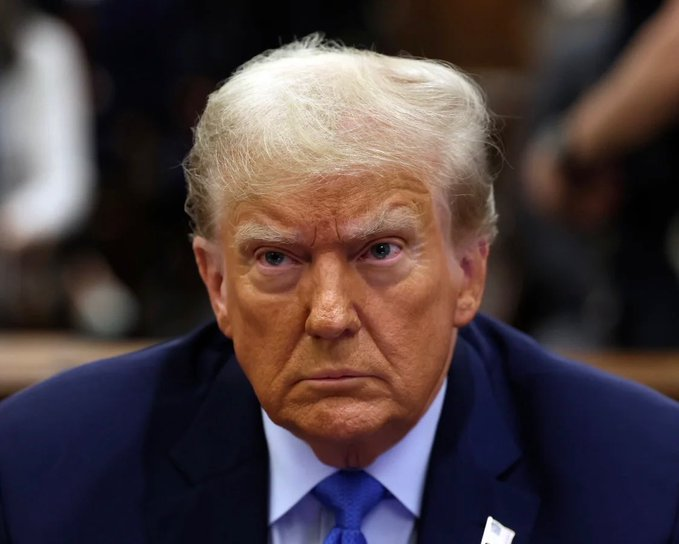
WASHINGTON / TEHRAN — President Donald Trump issued a stark warning to Tehran on Sunday, declaring that “the Clock is Ticking” for Iran to reach a nuclear deal with the United States before facing devastating consequences .
“For Iran, the Clock is Ticking, and they better get moving, FAST, or there won’t be anything left of them. TIME IS OF THE ESSENCE!” Trump wrote on his Truth Social platform .
Yet in a dramatic twist that encapsulates the high-stakes brinkmanship of the current diplomatic moment, Trump simultaneously announced that he had called off a major military strike against Iran—slated for Tuesday—at the urgent request of Gulf leaders who believe a negotiated resolution is now possible .
The Ultimatum: “Iran Knows What’s Going to Happen”
Trump’s warning came as the fragile ceasefire—brokered by Pakistan on April 8—shows increasing signs of strain. The truce halted the initial 40-day US-Israeli bombing campaign that began on February 28, but talks in Islamabad have failed to produce a lasting agreement .
“We are not making a lot of progress,” a senior US official told Axios earlier this week, warning that negotiations might continue “through bombs” if Iran does not alter its position .
The president’s latest social media post made clear that patience in Washington is wearing thin. While Trump did not set a specific deadline, the message was unambiguous: Iran knows what is coming if it does not relent .
The Strike That Wasn’t—For Now
Despite the bellicose rhetoric, Trump announced on Monday that he had instructed the US military to stand down from a “scheduled attack” on Iran at the request of key Gulf allies .
According to Trump’s Truth Social post, the Emir of Qatar, the Crown Prince of Saudi Arabia, and the President of the United Arab Emirates personally appealed to him to hold off, arguing that “serious negotiations are now taking place” and that, in their assessment as “great leaders and allies, a deal will be made” .
“This deal will include, importantly, NO NUCLEAR WEAPONS FOR IRAN!” Trump wrote .
However, the president added that he has “further instructed them to be prepared to go forward with a full, large scale assault of Iran, on a moment’s notice, in the event that an acceptable Deal is not reached” . No such attack had been publicly announced prior to Trump’s statement, and it remains unclear whether formal preparations had been made .
The Sticking Points: Nuclear Program and Sanctions
At the heart of the stalemate remain fundamental disagreements over Iran’s nuclear program, frozen assets, and the reopening of the Strait of Hormuz—the strategic waterway through which approximately 20 percent of the world’s oil normally passes.
| US Demand | Iran’s Position |
|---|---|
| Suspension of uranium enrichment | Insists on “right” to enrich for peaceful purposes |
| Transfer of 400kg enriched uranium stockpile | Demands nuclear issues be deferred to later talks |
| Reopening of Strait of Hormuz | Conditions reopening on broader agreement |
| No war reparations | Demands compensation for US-Israeli strikes |
According to Iranian media reports, the US has presented a five-point proposal that includes demanding Iran keep only one nuclear site in operation and transfer its entire stockpile of highly enriched uranium to the United States . The US has reportedly refused to release “even 25 percent” of Iranian frozen assets held abroad or pay any war reparations .
Iran’s Mehr news agency described the US conditions as “excessive,” noting that “the United States, offering no tangible concessions, wants to obtain concessions that it failed to obtain during the war, which will lead to an impasse in the negotiations” .
Diplomatic Channels Remain Open—For Now
Despite the deadlock, diplomatic backchannels remain active. Iranian Foreign Ministry spokesperson Esmaeil Baghaei confirmed Monday that Tehran’s views had been “conveyed to the American side through Pakistan” . A Pakistani source confirmed that Islamabad, which has served as the primary mediator since hosting the only round of peace talks last month, had shared the latest Iranian proposal with Washington .
However, the same source suggested that progress has been difficult. The sides “keep changing their goalposts,” the Pakistani source told Reuters, adding: “We don’t have much time” .
Iran’s Foreign Minister Abbas Araghchi has expressed skepticism about US intentions. “We are in doubt about their seriousness,” Araghchi told reporters during a BRICS meeting in New Delhi last week. “But the moment we feel that they are serious and they are ready for a fair and balanced deal, we will certainly proceed in the course of negotiations” .
Iran’s Military Posture: “Ready to Pull the Trigger”
Tehran has matched Washington’s threats with warnings of its own. Iran’s top joint military command, Khatam al-Anbiya, declared that the armed forces are “ready to pull the trigger” in the event of any renewed US attack .
“Any renewed aggression and invasion … will be responded to quickly, decisively, powerfully, and extensively,” the commander of Khatam al-Anbiya, Ali Abdollahi, was quoted as saying by Iran’s Tasnim news agency .
The back-and-forth comes amid reports that the United States and Israel “are engaged in intense preparations, the largest since the ceasefire took effect,” for a possible renewal of attacks on Iran this week, according to two Middle East officials cited by The New York Times .
Regional Tensions Escalate
The diplomatic brinkmanship has unfolded against a backdrop of escalating regional violence. Over the weekend, a drone strike sparked a fire at the United Arab Emirates’ Barakah Nuclear Power Plant—the Arabian Peninsula’s only nuclear facility . The UAE confirmed that three drones had entered its airspace from the “western border direction,” with two intercepted and one striking an electrical generator outside the plant’s inner perimeter .
The UAE’s presidential adviser, Anwar Gargash, appeared to implicitly point toward Iran or its regional proxies, condemning the attack as a “dangerous escalation” .
Saudi Arabia also reported intercepting three drones that had entered its airspace from Iraq, a potential launch point for Iran-backed militias .
What Comes Next
The coming days will determine whether diplomacy can be salvaged or whether the region returns to full-scale war:
| Scenario | Likelihood | Key Factors |
|---|---|---|
| Diplomatic breakthrough | Uncertain | Iran would need to offer concessions on nuclear program |
| Extended ceasefire | Moderate | Gulf allies may broker temporary face-saving measures |
| Renewed US-Israeli strikes | Possible | If Iran rejects US terms or continues nuclear advancements |
| Full-scale regional war | Low but rising | Escalation could draw in Gulf states and Hezbollah |
Trump told reporters that the Gulf leaders who requested the pause had assured him “they think that they are getting very close to making a deal” and asked him to hold off for “two or three days” .
For now, the ceasefire holds—but barely. And as the clock ticks toward an uncertain deadline, Tehran knows exactly what Trump has promised will happen if the talks fail.
Frequently Asked Questions (FAQs)
Q1: What exactly did Trump say about Iran?
A: Trump warned on Truth Social that “the Clock is Ticking” for Iran and that if they don’t “get moving, FAST, there won’t be anything left of them.” He also claimed that Iran “knows what’s going to happen soon” if a deal isn’t reached .
Q2: Was the US about to attack Iran?
A: Trump announced on Monday that he had called off a “scheduled attack” on Iran at the request of Qatari, Saudi, and Emirati leaders. However, no such attack had been publicly announced prior to his statement, and it remains unclear whether formal preparations had been made .
Q3: What would a deal between the US and Iran look like?
A: The US is demanding that Iran suspend uranium enrichment, transfer its stockpile of highly enriched uranium, and reopen the Strait of Hormuz. Iran has insisted on deferring nuclear issues to later talks and has demanded the release of frozen assets and war reparations .
Q4: Is the ceasefire still in place?
A: Yes, the ceasefire brokered by Pakistan on April 8 remains officially in place, though it is described as “very shaky” by Iranian officials. Sporadic attacks have continued, including a drone strike on the UAE’s Barakah nuclear plant .
Q5: How has Iran responded to Trump’s threats?
A: Iran’s military has declared it is “ready to pull the trigger” in the event of any renewed US attack, warning that any aggression will be met with a “quick, decisive, powerful, and extensive” response .
Q6: What role are Gulf states playing in the negotiations?
A: Qatar, Saudi Arabia, and the UAE have actively intervened to prevent a military escalation, with their leaders personally asking Trump to delay a planned attack to allow more time for diplomacy .
This is a developing story. Reflecto News will continue to provide updates on US-Iran negotiations, the status of the ceasefire, and any military developments.
Questions people ask
What is China's current share of global manufacturing?
China now accounts for twenty eight percent of global manufacturing. This industrial output exceeds the combined manufacturing production of the United States, Japan, and Germany, making China the leading global industrial power according to recent reports.
Why were Andrew Tate and Tristan Tate arrested in Miami?
Andrew Tate and his brother Tristan Tate were taken into custody in Miami by the United States Marshals Service. They face thirty eight new charges in the United Kingdom, including rape and child pornography offences, and prosecutors are seeking their extradition.
What warning did Moscow issue about oil prices?
Kirill Dmitriev, the Chief Executive of the Russian Direct Investment Fund, warned that a tsunami of skyrocketing oil prices is approaching. Moscow describes this potential energy shock as a major threat to global markets.
What political shift is projected for Benjamin Netanyahu's coalition?
Political polls project that Prime Minister Benjamin Netanyahu's coalition is on track to lose its majority in the upcoming October election. This projection indicates a potential political shift in Jerusalem.
Why did a Russian military aircraft land in Tehran?
A Russian airborne command aircraft, widely known as a doomsday plane, landed in Tehran. The arrival of the aircraft represents a high stakes show of support from Russia for Iran during a period of heightened regional tensions.
What did President Masoud Pezeshkian claim about the United States and Israel?
Iranian President Masoud Pezeshkian claimed that the United States and Israel failed in a forty eight hour plan to topple the Iranian government. He made these statements during a televised address marking two years since his inauguration.