Published on Reflecto News | World News | Defense & Energy Security
Italy has formally announced its readiness to deploy up to four naval vessels, including two minesweepers, as part of an international coalition to clear the Strait of Hormuz. The operation, announced by Navy Chief of Staff Admiral Giuseppe Berutti Bergotto, aims to restore safe passage through the strategic waterway, which has been largely closed since the outbreak of the US-Israeli war on Iran on February 28, 2026 .
Approximately 20% of the world’s oil and liquefied natural gas normally passes through the Strait, and the disruption has caused the largest oil supply shock in history . The deployment, part of a broader “multinational peaceful mission” organized by France and the UK, would see the Italian ships depart from La Spezia and take about four weeks to reach the area .

The Contingency Plan: Minesweepers, Escorts, and Logistics
Admiral Berutti Bergotto outlined the specific composition of the Italian naval group in an interview with state broadcaster RAI .
“The contingency plan drawn up by the Chief of the Defence Staff envisages a group consisting of two minesweepers, an escort vessel and a logistics vessel.” — Admiral Giuseppe Berutti Bergotto, Italian Navy Chief of Staff
Planned Italian Naval Group:
| Vessel Type | Number | Role |
|---|---|---|
| Minesweepers (Minehunters) | 2 | Detection and neutralization of naval mines |
| Escort Vessel | 1 | Protection of minesweepers and logistics ship |
| Logistics Vessel | 1 | Re-supply and operational support |
Italian Minehunters: Built for the Mission
Italy currently operates eight minehunters in its fleet, consisting of the Lerici-class and the larger, more modern Gaeta-class variants . These ships are specifically designed to operate in high-risk minefields.
- Advanced Sonar: They are equipped with hull-mounted or variable-depth sonars (like the Thales 2093) to detect mines on the seabed .
- Remotely Operated Vehicles (ROVs): The ships carry specialized drones (ROVs) to investigate and destroy mines without risking crew safety. Two ROVs are typically carried per vessel .
- Low Magnetic Signature: The ships are constructed with materials that minimize their own magnetic and acoustic signatures to avoid detonating mines .
International Coalition: A ‘Peaceful Mission’ Under EU Leadership
The Italian deployment is not a unilateral action. It is part of an international coalition actively organized by France and the United Kingdom as a “multinational peaceful mission” distinct from the direct US-Israeli war effort. The goal is to secure the strait for commercial shipping once diplomatic conditions allow .
“We are part of an international coalition, and other nations will also send minesweepers.” — Admiral Giuseppe Berutti Bergotto
Coalition Partners with Specific Mine-Clearing Capabilities:
- United Kingdom: Royal Navy divers and autonomous mine-hunters
- France: Naval assets and planning leadership
- Belgium: Mine-countermeasure vessels
- Netherlands: Mine-clearing capabilities
- Germany: Contributions discussed at Paris meeting
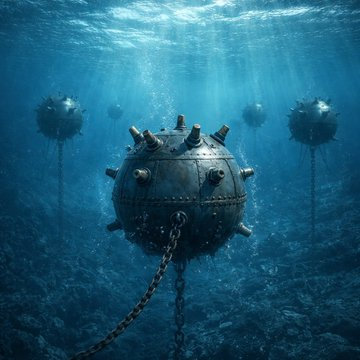
The mission aims to clear the Strait of Hormuz, which is littered with naval mines planted by Iran. However, a significant operational challenge for the coalition is the lack of a “sustained ceasefire.” While a formal truce is in place, both the US and Iran continue to seize commercial vessels in the Gulf, creating a volatile security environment.
Parliamentary Approval Required
Italy’s involvement is not yet final. Defence Minister Guido Crosetto confirmed to parliament that the government will seek formal parliamentary approval before the navy is authorized to sail . Parliament must approve the extension of the mission beyond the typical national defense scope, as it involves a high-risk, long-term deployment to a war zone.
A Race Against Time: The Threat of Prolonged Disruption
The urgency of the mission is underscored by the potential for long-term economic damage. The Washington Post reported that the Pentagon estimated to the House Armed Services Committee that clearing the strait could take up to six months . Pentagon officials quickly disputed this timeline, but the conflicting assessments highlight the severity of the mining threat. The Italian deployment is a crucial part of a multi-national effort to restore freedom of navigation as quickly as possible.
Frequently Asked Questions (FAQs)
1. Why is Italy sending minesweepers to the Strait of Hormuz?
Italy is sending minesweepers as part of an international coalition to clear naval mines from the waterway. This is intended to restore safe passage for global oil and gas shipments and stabilize energy markets, which have seen prices surge due to the war .
2. Does this mean Italy is joining the war against Iran?
No. Italy has consistently refused to join offensive military actions against Iran. This mission is strictly described as a “peaceful,” post-conflict stabilization operation to clear mines and allow humanitarian shipping .
3. How long will it take for the Italian ships to arrive?
The ships will sail from the port of La Spezia on the northwestern coast of Italy. According to the navy chief, the voyage to the Gulf region will take approximately four weeks .
4. What is the “international coalition” Italy is joining?
The coalition is led primarily by France and the UK. Other European nations with mine-clearing capabilities, such as the Netherlands, Belgium, and Germany, are also expected to contribute assets .
5. Does Italy have enough minesweepers for such a mission?
Yes. Italy has a fleet of 10-12 specialized minehunters. It maintains a significant mine-countermeasure capability to project power into the Mediterranean and beyond .
6. When will the Italian ships actually deploy?
While the navy is ready, deployment depends on two factors: final approval from the Italian Parliament and the establishment of a “sustained ceasefire” by the warring parties to ensure the safety of the minesweepers .
Stay informed with Reflecto News – Your trusted source for breaking defense, energy, and geopolitical intelligence. Subscribe for real-time updates on the Strait of Hormuz crisis and global energy markets.