Reflecto News is an online news platform covering major international political events, global economic developments, and security conflicts. The site provides updates on topics such as Chinese manufacturing dominance, Middle Eastern political tensions, and high profile legal arrests. Readers can access current articles organized by categories like World News, Iran, and USA.
In explosive interview, the US president says he “cut a deal” that saved the Jewish state, slamming his ally as ungrateful
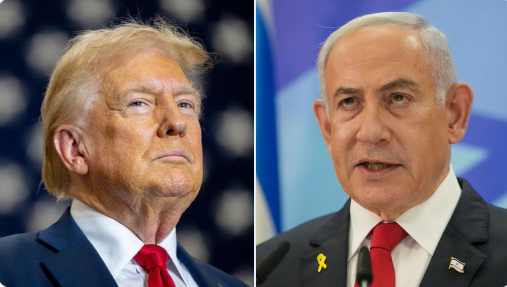
WASHINGTON — President Donald Trump has described Israeli Prime Minister Benjamin Netanyahu as a “very difficult guy” and insisted that despite Israel’s objections to the emerging US-Iran nuclear framework, the Israeli leader “should be very thankful to us” for eliminating the Iranian nuclear threat.
In an interview taped Friday with Fox News’ Sean Hannity and scheduled to air Sunday, Trump defended his administration’s high-stakes negotiations with Tehran, warning that without US action, “Israel wouldn’t be around.”
“Benjamin is a very difficult guy. He’s a very difficult person to deal with,” Trump said, according to excerpts released by Fox. “But he should be very thankful to us, because we did something that probably wouldn’t have happened if it wasn’t for us. And they agree with it. They agree with many of the concepts. But they never want to say it.”
The interview marks the latest chapter in a turbulent relationship between two leaders whose alliance has been tested repeatedly during the four-month war with Iran. Just days ago, news emerged that Trump had called Netanyahu “fucking crazy” during a tense phone call [citation:previous coverage].
‘Israel Wouldn’t Be Around’
Trump’s most striking comment went directly to the existential threat Iran has long posed to Israel.
“If Iran had a nuclear weapon, Israel wouldn’t be around,” Trump said. “It wouldn’t be there. I’m telling you, they wouldn’t be around. And we cut a deal — we came along, we cut a deal, and we did things that were very tough.”
The president was referring to the new US-Iran memorandum of understanding finalized over the weekend, in which Tehran commits “indefinitely” to never produce or acquire a nuclear weapon [citation:previous coverage].
Under the framework:
- Iran will dilute its entire stockpile of 60 percent enriched uranium — material just one step from weapons grade — inside its own territory under international supervision
- The Strait of Hormuz will reopen to commercial shipping
- The US naval blockade on Iranian ports will be lifted
- Iran will receive access to $25 billion in frozen assets, released in phases tied to compliance
The deal has drawn sharp criticism from Israeli officials, who argue that it does not go far enough. Key Israeli concerns include:
| Israeli Concern | Deal Provision |
|---|---|
| Uranium export demanded | Uranium diluted inside Iran, not removed |
| Missile program must be addressed | Not part of agreement |
| “Sunset clauses” must be eliminated | Indefinite commitment, but verification details delayed to 60‑day talks |
| Snapback mechanism required | US says performance‑based; Israel skeptical |
Despite the administration’s insistence that Israel has approved the deal, leaked comments from Israeli officials suggest deep unease. “The uranium extraction became dilution, the missile program is not in the agreement at all, and the issue of an Iranian nuclear site at Parchin remains unresolved,” an Israeli official told The Times of Israel.
‘They Want to Be the Face of Defeating Iran’
Trump’s comments reflect a wider frustration within the White House that Israel has not publicly embraced a deal that the administration views as a historic achievement.
“They want to be the face of defeating Iran, but it’s not going to happen. It’s the United States,” Trump said.
The president emphasized the overwhelming military superiority the US brought to bear in the conflict: “We have so much equipment over there that you don’t even know about. We could destroy them, and we don’t want to do that.”
Trump also pointed to the recent deployment of US naval assets, including the USS Nimitz carrier group, as a demonstration of American resolve in the region.
“They can’t believe what we have in the Middle East,” Trump said. “They just can’t believe it. It’s a beautiful sight … It would be a very bad day for them if they do something. I hope they don’t. They haven’t, and hopefully they won’t. We’ll get a deal.”
A Pattern of Tensions
The Fox interview adds to a growing list of public and private friction between the two leaders during the Iran war.
Earlier this month, reports emerged of a tense phone call in which Trump told Netanyahu: “You’re fucking crazy. You’d be in prison if it weren’t for me. I’m saving your ass. Everybody hates you now” [citation:previous coverage].
Netanyahu has consistently downplayed the significance of such exchanges, describing them as “tactical disagreements” within a strong alliance.
However, the Israeli leader’s public skepticism about the Iran deal has clearly tested the patience of the White House. In recent weeks, Trump has:
- Accused Israel of prolonging the war to secure political gains
- Delayed delivery of precision-guided munitions to Israel pending a review of their use in Lebanon
- Publicly warned Israel against launching a preemptive strike on Iran without US approval
Strategic Divergence: Deal vs. Dismantlement
At the heart of the US-Israel tension is a fundamental strategic disagreement.
Israel wants Iran’s nuclear infrastructure physically destroyed and its stockpile of enriched uranium removed from the country. The emerging US-Iran deal, by contrast, relies on dilution inside Iran and a verification regime that will be negotiated over 60 days.
Israel also insists that Iran’s ballistic missile program and its support for regional proxies — Hezbollah, the Houthis, and militias in Iraq and Syria — must be addressed as part of any final settlement. The current MOU focuses narrowly on the nuclear file.
The US administration has taken the position that once Iran’s nuclear program is neutralized, Tehran’s regional influence will naturally diminish.
“If they’re moving toward the 21st‑century economy, they’re not going to be doing the things they have been doing, because those things are very expensive,” the senior US official said in a briefing on the deal [citation:previous coverage].
‘He Would Be in Prison’
Trump did not forget to mention Netanyahu’s legal troubles. The Israeli prime minister is currently on trial for corruption charges — allegations he denies.
“I saved him, I saved Bibi,” Trump said, using Netanyahu’s nickname. “He would be in prison. He would be in prison.”
This is not the first time Trump has made such a claim. During the tense phone call earlier this month, Trump reportedly told Netanyahu: “You’d be in prison if it weren’t for me. I’m saving your ass” [citation:previous coverage].
The comments reflect the extent to which Trump views the US-Israel relationship as dependent on his personal support for Netanyahu’s political survival — a dynamic that has both strengthened and complicated the alliance.
What Comes Next
Despite the friction, the US-Israel alliance remains intact, and the Iran deal is moving forward regardless of Israeli objections.
- The memorandum of understanding is expected to be signed digitally in the coming days
- Iran has agreed to maintain its nuclear status quo during a 60‑day technical negotiation period
- The Strait of Hormuz will reopen, and the US blockade will be lifted within 30 days
The full text of the agreement is scheduled to be released after the signing, which could take place in Geneva or virtually.
Trump’s broadside against Netanyahu is unlikely to be the last. But with the Iran deal now finalized, the president’s attention appears to be turning elsewhere — even as he makes clear that he expects the Israeli leader to show more gratitude for an agreement that, in Trump’s view, saved the Jewish state from potential annihilation.
As Trump put it: “If Iran had a nuclear weapon, Israel wouldn’t be around. It wouldn’t be there.”
Frequently Asked Questions (FAQs)
Q1: What did President Trump say about Prime Minister Netanyahu?
A: Trump called Netanyahu a “very difficult guy” and a “very difficult person to deal with.” He also claimed he saved Netanyahu from prison and that the Israeli leader “should be very thankful to us” for the Iran nuclear deal .
Q2: What was Trump’s most striking warning about Iran and Israel?
A: Trump stated: “If Iran had a nuclear weapon, Israel wouldn’t be around. It wouldn’t be there. I’m telling you, they wouldn’t be around” .
Q3: Why is Israel unhappy with the US-Iran deal?
A: Israeli officials are concerned that the deal allows Iran to dilute its enriched uranium inside the country rather than exporting it, does not address Iran’s ballistic missile program, and leaves verification details to be negotiated over 60 days. Israel also wanted “sunset clauses” eliminated .
Q4: Has Trump made similar comments about Netanyahu before?
A: Yes. Earlier this month, reports emerged that Trump called Netanyahu “fucking crazy” during a tense phone call, reportedly telling him: “You’d be in prison if it weren’t for me. I’m saving your ass” [citation:previous coverage].
Q5: Does the US-Iran deal have Israel’s approval?
A: The Trump administration has stated that Israel is among the countries that have approved the framework. However, leaked comments from Israeli officials suggest deep unease, with one official telling the Times of Israel that the deal “does not meet Israel’s security needs” .
This is a developing story. Reflecto News will continue to provide updates on US-Israel relations, the implementation of the Iran nuclear deal, and the 60‑day technical negotiations between Washington and Tehran.
Questions people ask
What is China's current share of global manufacturing?
China now accounts for twenty eight percent of global manufacturing. This industrial output exceeds the combined manufacturing production of the United States, Japan, and Germany, making China the leading global industrial power according to recent reports.
Why were Andrew Tate and Tristan Tate arrested in Miami?
Andrew Tate and his brother Tristan Tate were taken into custody in Miami by the United States Marshals Service. They face thirty eight new charges in the United Kingdom, including rape and child pornography offences, and prosecutors are seeking their extradition.
What warning did Moscow issue about oil prices?
Kirill Dmitriev, the Chief Executive of the Russian Direct Investment Fund, warned that a tsunami of skyrocketing oil prices is approaching. Moscow describes this potential energy shock as a major threat to global markets.
What political shift is projected for Benjamin Netanyahu's coalition?
Political polls project that Prime Minister Benjamin Netanyahu's coalition is on track to lose its majority in the upcoming October election. This projection indicates a potential political shift in Jerusalem.
Why did a Russian military aircraft land in Tehran?
A Russian airborne command aircraft, widely known as a doomsday plane, landed in Tehran. The arrival of the aircraft represents a high stakes show of support from Russia for Iran during a period of heightened regional tensions.
What did President Masoud Pezeshkian claim about the United States and Israel?
Iranian President Masoud Pezeshkian claimed that the United States and Israel failed in a forty eight hour plan to topple the Iranian government. He made these statements during a televised address marking two years since his inauguration.