Reflecto News is an online news platform covering major international political events, global economic developments, and security conflicts. The site provides updates on topics such as Chinese manufacturing dominance, Middle Eastern political tensions, and high profile legal arrests. Readers can access current articles organized by categories like World News, Iran, and USA.
The president denounced a bipartisan Senate War Powers resolution as “aid and comfort” to Tehran and criticized Republican defectors, while insisting U.S. leverage in negotiations remains undiminished.
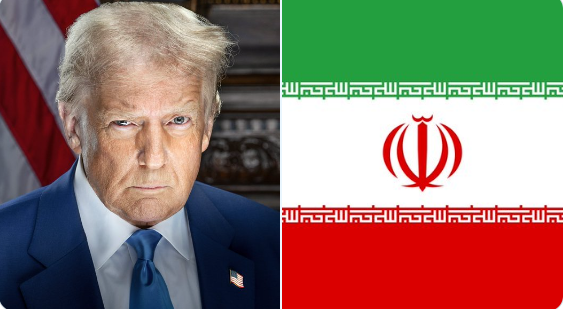
WASHINGTON — President Donald Trump declared on Tuesday that the United States has Iran “on the ropes” and that the Islamic Republic is “willing to give us practically anything” after months of military pressure and diplomatic negotiations, while simultaneously lashing out at the Senate for what he called a “poorly timed and meaningless” vote that he said undermined his negotiating position .
In a post on Truth Social, Trump wrote: “So, I have Iran on the ‘ropes,’ ready to go down for the fall, willing to give us practically anything, and for the first time in decades, respecting the hell out of the United States and its President, ME” .
The president’s remarks came just hours after the U.S. Senate voted 50-48 in favor of a War Powers resolution directing Trump to halt or seek congressional approval for any further military action against Iran . The measure had already passed the House earlier this month, marking the first time since the War Powers Act of 1973 that both chambers of Congress have approved such a directive .
The Senate Vote: A Rebuke on Two Fronts
The vote represented a rare bipartisan rebuke of the administration’s military authority, with four Republican senators—Susan Collins, Lisa Murkowski, Rand Paul, and Bill Cassidy—breaking ranks to join Democrats in supporting the resolution . Democratic Senator John Fetterman was the lone member of his party to vote against the measure .
While the resolution is largely symbolic—it does not carry the force of law and does not require the president’s signature—the vote exposed growing unease in Congress over the conflict, which began on February 28 when the United States and Israel launched military action against Iran . Senate Democratic Leader Chuck Schumer reportedly said the war would be remembered as “one of the worst foreign policy forays America has ever made” .
The White House downplayed the vote, with a spokesperson telling media outlets that the resolution “has no significance” as it was a concurrent resolution that “does not go to the president and have no force of law” . The administration has also argued that the resolution was unnecessary because “hostilities terminated with the ceasefire on April 7th” .
Trump’s Fury: “Four Republican Losers”
Trump directed his sharpest criticism at the four Republican senators who supported the resolution, calling them “Republican Losers” who voted “with the Dumocrats” . He accused them of providing “aid and comfort” to Iran by sending a confusing signal to Tehran’s leadership at a sensitive moment in negotiations .
“These Senators have just made my job more difficult,” Trump wrote, “but I will get it done, one way or the other, because I always get it done!” .
The president claimed that Iranian officials had asked U.S. representatives “what does that all mean?” following the vote , suggesting that the congressional action had sowed confusion in Tehran and complicated the administration’s diplomatic efforts.
Diplomatic Context: Negotiations Continue
Trump’s characterization of Iran as being “on the ropes” comes against the backdrop of ongoing negotiations between Washington and Tehran. Last week, the two sides signed a memorandum of understanding that initiated a 60-day period for negotiating a broader agreement addressing Iran’s nuclear program .
The deal has already yielded tangible results, including the resumption of Iranian oil exports and the phased lifting of the U.S. naval blockade . The Senate vote, however, raised questions about Washington’s leverage as talks with Tehran continue .
Iran’s Reaction: Denials and Warnings
Iran has pushed back against Trump’s characterization of its negotiating position. Tehran has denied reports that it has agreed to some of the U.S. demands and warned against what it called “exaggerations” about its willingness to make concessions .
Iranian officials have also linked the progress of negotiations to developments in Lebanon and the status of Israeli military operations in the region, insisting that any final agreement must address all fronts of the conflict .
What Comes Next: Negotiations and Congressional Oversight
With the Senate vote now behind him, Trump is expected to continue his push for a final deal with Iran. The vote highlights growing tensions between the executive and legislative branches over the conduct of the war.
The resolution’s symbolic passage may embolden Democrats and some Republicans to seek more concrete limits on Trump’s military authority, especially as the administration is expected to ask Congress to authorize tens of billions of dollars to pay for the war .
For now, Trump’s message is clear: he believes he has Tehran in a position of weakness, and he intends to capitalize on it—whether Congress is with him or not.
Frequently Asked Questions (FAQs)
Q1: What did President Trump say about Iran’s negotiating position?
A: Trump claimed that Iran is “on the ropes” and “willing to give us practically anything,” stating that Tehran is “respecting the hell out of the United States and its President, ME” for “the first time in decades.”
Q2: What was the Senate vote about?
A: The Senate voted 50-48 in favor of a War Powers resolution directing President Trump to halt U.S. military action against Iran unless Congress approves further operations. It was passed in a bipartisan vote with four Republicans joining Democrats in support .
Q3: Does the Senate resolution have any legal force?
A: No. The resolution is a concurrent resolution that does not require the president’s signature and does not carry the force of law. It is largely symbolic but reflects growing congressional unease about the conflict .
Q4: Why did Trump say the Senate vote “made my job more difficult”?
A: Trump argued that the vote sent the wrong message to Iran at a sensitive moment in negotiations, “emboldening” Tehran and confusing its leadership about the U.S. position. He called the vote “aid and comfort” to Iran .
Q5: What is the current status of US-Iran negotiations?
A: The two sides signed a memorandum of understanding last week, initiating a 60-day period for negotiating a broader deal over Iran’s nuclear program. The U.S. has already begun lifting aspects of its naval blockade and allowing Iranian oil exports to resume .
This is a developing story. Reflecto News will continue to provide updates on US-Iran negotiations and congressional oversight of the conflict.
Questions people ask
What is China's current share of global manufacturing?
China now accounts for twenty eight percent of global manufacturing. This industrial output exceeds the combined manufacturing production of the United States, Japan, and Germany, making China the leading global industrial power according to recent reports.
Why were Andrew Tate and Tristan Tate arrested in Miami?
Andrew Tate and his brother Tristan Tate were taken into custody in Miami by the United States Marshals Service. They face thirty eight new charges in the United Kingdom, including rape and child pornography offences, and prosecutors are seeking their extradition.
What warning did Moscow issue about oil prices?
Kirill Dmitriev, the Chief Executive of the Russian Direct Investment Fund, warned that a tsunami of skyrocketing oil prices is approaching. Moscow describes this potential energy shock as a major threat to global markets.
What political shift is projected for Benjamin Netanyahu's coalition?
Political polls project that Prime Minister Benjamin Netanyahu's coalition is on track to lose its majority in the upcoming October election. This projection indicates a potential political shift in Jerusalem.
Why did a Russian military aircraft land in Tehran?
A Russian airborne command aircraft, widely known as a doomsday plane, landed in Tehran. The arrival of the aircraft represents a high stakes show of support from Russia for Iran during a period of heightened regional tensions.
What did President Masoud Pezeshkian claim about the United States and Israel?
Iranian President Masoud Pezeshkian claimed that the United States and Israel failed in a forty eight hour plan to topple the Iranian government. He made these statements during a televised address marking two years since his inauguration.