Reflecto News is an online news platform covering major international political events, global economic developments, and security conflicts. The site provides updates on topics such as Chinese manufacturing dominance, Middle Eastern political tensions, and high profile legal arrests. Readers can access current articles organized by categories like World News, Iran, and USA.
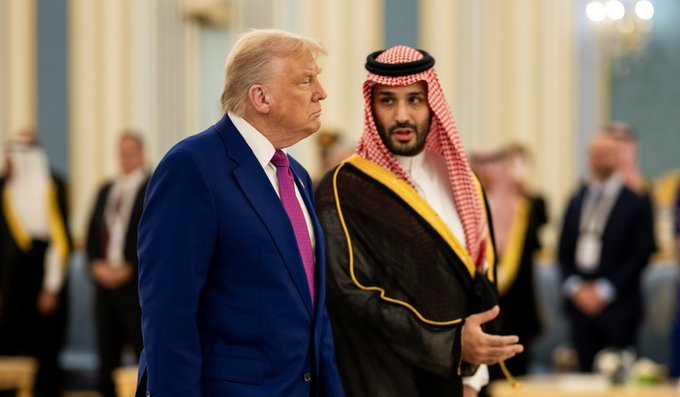
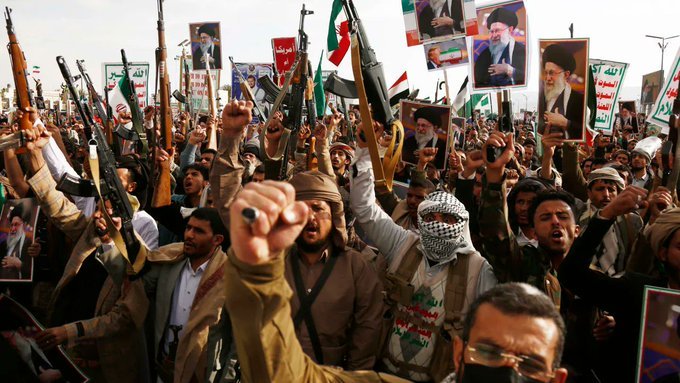
WASHINGTON / RIYADH — A startling divide has emerged within the anti-Iran coalition as the war enters its second month. According to a report by Axios on Wednesday, April 1, 2026, senior advisers to President Donald Trump have described their Saudi counterparts as “extraordinarily hawkish,” with one official remarking that the Saudi leadership “sounds like Mark Levin“—the firebrand American conservative known for advocating a scorched-earth policy against the Iranian regime.
The report reveals that while the Trump administration is actively seeking an “off-ramp” to meet its April 6 deadline, Saudi Arabia is pushing for the U.S. to “wipe the threat off the globe” before any ceasefire is signed.
The “Historic Opportunity” Doctrine
The shift in Saudi rhetoric marks a dramatic departure from the Kingdom’s initial caution at the start of Operation Epic Fury.
- No “Half-Measures”: Crown Prince Mohammed bin Salman has reportedly told White House officials that ending the war now would be a “strategic failure.” The Saudis argue that unless Iran’s clerical leadership is dismantled and its ballistic missile “cities” are neutralized, the Kingdom will face decades of asymmetrical retaliation once U.S. forces withdraw.
- The “Levin” Comparison: The Axios source noted that the Saudis are now more aggressive than many in the “America First” inner circle. “They aren’t just asking for a better deal; they’re asking for the end of the Islamic Republic as a political entity,” the adviser said.
- Pressure on the “Off-Ramp”: This hawkishness is complicating President Trump’s efforts to finalize a 15-point peace plan. While Trump has stated that “regime change is not the goal,” Riyadh is privately insisting that regime change is the only guarantee of security.
The UAE: The “Most Hawkish” Ally?
While Saudi Arabia provides the ideological push, the United Arab Emirates (UAE) is reportedly the most eager for a ground escalation.
- Ground Invasion Push: Emirati diplomats have conveyed that they are ready to support a ground operation to secure the Iranian coast and the Strait of Hormuz. Having faced over 2,300 missile and drone attacks since February 28, Abu Dhabi views a “kinetic reopening” of the shipping lanes as a survival necessity.
- The “Guarantor” Role: As reported earlier today, the UAE is pushing for a UN Resolution to justify force, offering to lead mine-clearing and coastal security operations—a move that would allow the U.S. to begin its projected 2-3 week withdrawal.
The Strategic Paradox
The irony of the current situation is not lost on Washington. Saudi Arabia—a country that relies on American weapons and hosts U.S. bases—is now the primary advocate for expanding the war, even as the U.S. looks to exit.
| Actor | Current Objective | Stance on Iranian Regime |
| United States | Secure a “Deal” by April 6; Exit by late April | “Not looking for regime change” |
| Saudi Arabia | “Decisive defeat”; Neutralize all proxies | Pushing for total dismantling of the clerical leadership |
| UAE | Reopen Strait of Hormuz via force if necessary | “No longer an acceptable feature of the landscape” |
| Iran (Tehran) | Breaking the blockade; Forcing U.S. exit | Defiant; Waiting for “Ground War” |
Analysis: A Coalition at Odds
The “Mark Levin” comparison underscores a brewing crisis in the alliance. President Trump, who campaigned on ending “forever wars,” now finds himself pressured by his closest regional allies to finish a job he claims is already “practically done.”
For the Saudis and Emiratis, the calculation is simple: they cannot afford to live next door to a “wounded but still venomous” Iran. However, for a White House focused on 9:00 PM ET addresses and domestic “affordability,” the appetite for a total regional overhaul is rapidly vanishing. As the clock ticks toward the April 6 deadline, the question is no longer just how the war ends, but whether the U.S. can leave without alienating the very allies it went to war to protect.
Questions people ask
What is China's current share of global manufacturing?
China now accounts for twenty eight percent of global manufacturing. This industrial output exceeds the combined manufacturing production of the United States, Japan, and Germany, making China the leading global industrial power according to recent reports.
Why were Andrew Tate and Tristan Tate arrested in Miami?
Andrew Tate and his brother Tristan Tate were taken into custody in Miami by the United States Marshals Service. They face thirty eight new charges in the United Kingdom, including rape and child pornography offences, and prosecutors are seeking their extradition.
What warning did Moscow issue about oil prices?
Kirill Dmitriev, the Chief Executive of the Russian Direct Investment Fund, warned that a tsunami of skyrocketing oil prices is approaching. Moscow describes this potential energy shock as a major threat to global markets.
What political shift is projected for Benjamin Netanyahu's coalition?
Political polls project that Prime Minister Benjamin Netanyahu's coalition is on track to lose its majority in the upcoming October election. This projection indicates a potential political shift in Jerusalem.
Why did a Russian military aircraft land in Tehran?
A Russian airborne command aircraft, widely known as a doomsday plane, landed in Tehran. The arrival of the aircraft represents a high stakes show of support from Russia for Iran during a period of heightened regional tensions.
What did President Masoud Pezeshkian claim about the United States and Israel?
Iranian President Masoud Pezeshkian claimed that the United States and Israel failed in a forty eight hour plan to topple the Iranian government. He made these statements during a televised address marking two years since his inauguration.