Reflecto News is an online news platform covering major international political events, global economic developments, and security conflicts. The site provides updates on topics such as Chinese manufacturing dominance, Middle Eastern political tensions, and high profile legal arrests. Readers can access current articles organized by categories like World News, Iran, and USA.
Riyadh expresses full solidarity with Abu Dhabi following attack on Barakah facility, as Gulf states rally against escalating Iran-aligned drone warfare.
RIYADH / ABU DHABI — Saudi Arabia has strongly condemned the drone strike that targeted an electrical generator at the Barakah Nuclear Power Plant in the United Arab Emirates, describing the attack as a direct threat to the security and stability of the entire region .
In an official statement released on Sunday, the Saudi Foreign Ministry expressed its full solidarity with the UAE and announced its support for “all measures taken to preserve the sovereignty, security and territorial integrity” of the Emirati nation . The ministry characterized the strike as an unacceptable act of aggression that endangers civilian infrastructure .
The condemnation came shortly after the UAE reported that three drones had entered its airspace from the “western border direction,” with two intercepted and one striking an electrical generator outside the inner perimeter of the Barakah plant in the Al Dhafra region of Abu Dhabi .
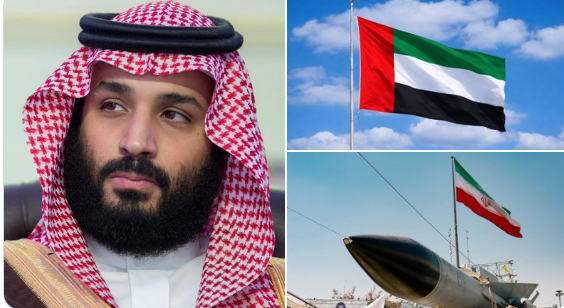
Gulf Coordination Intensifies Following Attack
In a sign of close Gulf coordination, UAE Foreign Minister Sheikh Abdullah bin Zayed Al Nahyan received a phone call from his Saudi counterpart, Prince Faisal bin Farhan, following the attack. The two officials reviewed safety measures and discussed joint responses to the escalating drone threat, according to the Saudi Press Agency .
The diplomatic outreach extended beyond bilateral channels. The UAE Foreign Ministry has also been in contact with foreign ministers from Kuwait, Qatar, Morocco, Egypt, and Bahrain to discuss the situation, reflecting the attack’s broader implications for regional security .
Kuwait, for its part, issued a separate condemnation, stating that “targeting peaceful nuclear energy facilities is a clear violation of international law and poses a risk to civilians, the environment, and security” .
Saudi Intercepts Its Own Drone Threat
While condemning the attack on the UAE, Saudi Arabia was also dealing with its own security incident. The Saudi Defense Ministry announced that its air defenses intercepted and destroyed three drones that had entered Saudi airspace from Iraq .
Defense Ministry spokesman Major General Turki Al-Maliki stated that the kingdom “reserves the right to respond at the appropriate time and place” and would take “the necessary operational measures to respond to any attempt to violate its sovereignty and security” .
Barakah Plant: No Radiological Release, No Injuries
Despite the gravity of the strike, UAE authorities and the International Atomic Energy Agency (IAEA) have confirmed that the Barakah plant remains safe and operational .
| Detail | Information |
|---|---|
| Target | Electrical generator outside inner perimeter |
| Damage | Fire at generator site (contained) |
| Casualties | None reported |
| Radiological Release | None |
| Plant Status | All units operating normally |
| Emergency Power | Diesel generators active for Unit 3 |
The Abu Dhabi Media Office confirmed that “radiological safety levels were unaffected and there were no injuries” . The Federal Authority for Nuclear Regulation (FANR) added that “the fire did not affect the safety of the power plant or the readiness of its essential systems” .
IAEA Director General Rafael Mariano Grossi expressed “grave concern” over the incident and issued an urgent call for “maximum military restraint” near any nuclear facility to avoid the danger of a nuclear accident .
Implicit Attribution: Iran or Proxies in Focus
No party has formally claimed responsibility for the attack. The UAE Ministry of Defense stated that investigations are ongoing to determine the source, with updates to be provided upon completion .
However, UAE presidential adviser Anwar Gargash appeared to implicitly point toward Iran or its regional proxies, posting on X: “The terrorist targeting of the Barakah clean nuclear power plant, whether carried out by the principal perpetrator or through one of its agents, represents a dangerous escalation” .
The context supports such suspicions. Iran has repeatedly targeted the UAE and other Gulf states with drones and missiles throughout the ongoing war that began with US-Israeli strikes on Iran on February 28 . Iran has also accused the UAE and other US allies in the Gulf of allowing US forces to carry out attacks from their territory .
Iranian-backed armed groups equipped with drones are based in Iraq, while Tehran’s allies in Yemen—the Houthi rebels—also possess combat-grade UAVs and have targeted the UAE in the past .
The Barakah Plant: A Strategic Target
The Barakah Nuclear Power Plant is not an ordinary energy facility. Located approximately 200 kilometers west of Abu Dhabi near the borders with Saudi Arabia and Qatar, it is the first and only nuclear power plant on the Arabian Peninsula and the second nuclear facility in the Middle East after Iran’s Bushehr plant .
Key facts about the facility:
| Attribute | Details |
|---|---|
| Location | Al Dhafra region, Abu Dhabi |
| Reactor Type | Four APR-1400 units (Korean-designed) |
| Construction Cost | Approximately $20 billion |
| Operations Began | Unit 1 in 2020; Unit 4 in September 2024 |
| Power Output | Supplies up to 25% of UAE’s electricity needs |
This was the first time the Barakah plant had been directly targeted during the current conflict, though the Houthis claimed to have targeted the plant while it was under construction in 2017—a claim Abu Dhabi denied at the time .
The Ceasefire Context: A Fragile Truce
Sunday’s attack represents a significant test of the fragile ceasefire brokered through Pakistani mediation that took effect on April 8. While major hostilities have been scaled down, sporadic attacks have continued .
Diplomatic efforts to end the war remain stalled. Washington has called for Tehran to dismantle its nuclear program and lift its hold on the Strait of Hormuz, while Iran has demanded compensation for war damage, an end to a US blockade of Iranian ports, and a halt to fighting on all fronts, including in Lebanon .
US President Donald Trump, whose harsh rhetoric has failed to break the stalemate, warned on Sunday: “For Iran, the Clock is Ticking, and they better get moving, FAST, or there won’t be anything left of them. TIME IS OF THE ESSENCE” .
What Comes Next
Several developments will determine the trajectory following this escalation:
- Attribution Announcement: The UAE’s investigation into the source of the drones—expected to conclude in the coming days—will determine whether formal blame is placed on Iran or specific proxy groups .
- Potential Retaliation: The UAE has affirmed its “full right to respond” to the attack “in a manner that ensures their sovereignty and national security in accordance with international law” . Any Emirati retaliation would mark a significant escalation.
- Ceasefire Stability: If the attack is formally attributed to Iran, the incident could derail already-stalled peace talks and potentially trigger broader military responses.
- Enhanced Gulf Cooperation: The coordinated condemnations and diplomatic consultations among Gulf states suggest a unified stance, potentially leading to joint security measures against drone threats .
Frequently Asked Questions (FAQs)
Q1: What exactly did Saudi Arabia say about the attack on the UAE nuclear plant?
A: Saudi Arabia’s foreign ministry condemned the strike as “a threat to the security and stability of the region.” The kingdom expressed full solidarity with the UAE and announced its support for “all measures taken to preserve the sovereignty, security and territorial integrity” of the UAE .
Q2: Did Saudi Arabia also face drone attacks on the same day?
A: Yes. Saudi Arabia’s Defense Ministry announced that its air defenses intercepted and destroyed three drones that had entered Saudi airspace from Iraq. The ministry reserved the right to respond at an appropriate time and place .
Q3: Who is believed to be behind the attack on the Barakah plant?
A: No party has formally claimed responsibility. However, UAE presidential adviser Anwar Gargash appeared to implicitly point toward Iran or its regional proxies, stating that the attack represents a dangerous escalation “whether carried out by the principal perpetrator or through one of its agents” .
Q4: Was the Barakah nuclear plant damaged, and was there any radiation leak?
A: The drone struck an electrical generator outside the inner perimeter of the plant, causing a fire that was contained. There was no damage to the reactor or nuclear systems, no radiological release, and no injuries. The plant continues to operate normally .
Q5: How has the international community responded?
A: The IAEA expressed “grave concern” and called for “maximum military restraint” near any nuclear facility. The Gulf Cooperation Council condemned the attack, and individual nations including Kuwait, Bahrain, Qatar, Morocco, Egypt, and Bahrain have also issued condemnations .
Q6: How does this affect the existing ceasefire?
A: The attack represents a significant test of the fragile April 8 ceasefire. While major hostilities have been scaled down, sporadic attacks have continued. If formally attributed to Iran or its proxies, the incident could derail already-stalled peace talks .
This is a developing story. Reflecto News will continue to provide updates on the investigation into the drone strike, the UAE’s response, and the ongoing diplomatic efforts to maintain regional stability.
Questions people ask
What is China's current share of global manufacturing?
China now accounts for twenty eight percent of global manufacturing. This industrial output exceeds the combined manufacturing production of the United States, Japan, and Germany, making China the leading global industrial power according to recent reports.
Why were Andrew Tate and Tristan Tate arrested in Miami?
Andrew Tate and his brother Tristan Tate were taken into custody in Miami by the United States Marshals Service. They face thirty eight new charges in the United Kingdom, including rape and child pornography offences, and prosecutors are seeking their extradition.
What warning did Moscow issue about oil prices?
Kirill Dmitriev, the Chief Executive of the Russian Direct Investment Fund, warned that a tsunami of skyrocketing oil prices is approaching. Moscow describes this potential energy shock as a major threat to global markets.
What political shift is projected for Benjamin Netanyahu's coalition?
Political polls project that Prime Minister Benjamin Netanyahu's coalition is on track to lose its majority in the upcoming October election. This projection indicates a potential political shift in Jerusalem.
Why did a Russian military aircraft land in Tehran?
A Russian airborne command aircraft, widely known as a doomsday plane, landed in Tehran. The arrival of the aircraft represents a high stakes show of support from Russia for Iran during a period of heightened regional tensions.
What did President Masoud Pezeshkian claim about the United States and Israel?
Iranian President Masoud Pezeshkian claimed that the United States and Israel failed in a forty eight hour plan to topple the Iranian government. He made these statements during a televised address marking two years since his inauguration.