Reflecto News is an online news platform covering major international political events, global economic developments, and security conflicts. The site provides updates on topics such as Chinese manufacturing dominance, Middle Eastern political tensions, and high profile legal arrests. Readers can access current articles organized by categories like World News, Iran, and USA.
Nearly four decades after Italian voters overwhelmingly rejected nuclear energy, Premier Giorgia Meloni announces a legal framework to reintroduce next-generation reactors by this summer, citing the Iran war and energy independence
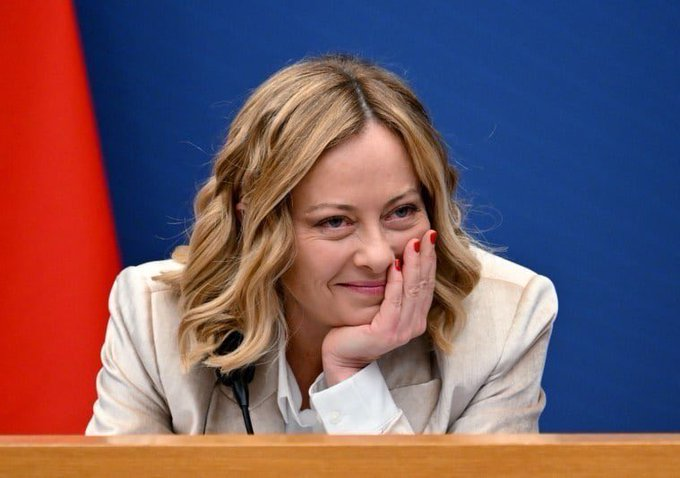
ROME — In a landmark policy shift that breaks with nearly four decades of Italian energy orthodoxy, Prime Minister Giorgia Meloni announced on Wednesday that her government will approve a legal framework this summer to restart nuclear power generation in the country .
The announcement marks the most significant attempt to reverse Italy’s nuclear ban since the 2011 referendum, in which 94 percent of voters rejected the construction of any new nuclear reactors following the Fukushima Daiichi disaster . Italy phased out nuclear energy following a referendum held after the 1986 Chernobyl accident and closed its last two operating plants—Caorso and Trino Vercellese—in 1990 .
Meloni framed the initiative as a necessary response to mounting economic pressure linked to geopolitical instability, specifically citing the ongoing war involving Iran, which her government says is contributing to higher energy costs and broader strain on the Italian economy .
“Clearly, the situation we find ourselves in — with a particularly complex international economic framework and ongoing geopolitical tensions — is affecting growth, energy costs, the competitiveness of businesses and the purchasing power of households,” Meloni told the Senate during a question time .
The Framework: What Italy’s Nuclear Return Will Look Like
The government’s plan centers on next-generation Small Modular Reactors (SMRs) developed by the private sector, rather than the large traditional nuclear plants that Italians rejected in previous referendums . This technological shift is central to the government’s strategy to overcome public opposition by presenting nuclear energy as safer, more flexible, and more efficient than the reactors of the past.
According to the Nuclear Delegation Bill currently under parliamentary review, the government has set specific targets and timelines for the nuclear revival :
| Scenario | Target Capacity by 2050 | Share of Electricity Demand |
|---|---|---|
| Conservative | 7.5 – 8.5 GW | ~11% |
| Optimistic | 16 GW | ~22% |
This capacity would be equivalent to building between 6 and 7 new nuclear plants in the conservative scenario, or significantly more in the optimistic projection . However, the government has confirmed that no new nuclear plants will be built during the current legislative term . Instead, the focus is on creating the legal and regulatory conditions for future development.
The government plans to pass enabling legislation for the nuclear initiative later this year, with implementing decrees to be adopted within 12 months of the law’s entry into force . The legislative package includes :
- €67.5 million in funding allocated for 2027-2029 to restart administrative procedures for new nuclear plants
- €7.5 million for public awareness campaigns (€1.5 million in 2025, €6 million in 2026) to build public support
- Establishment of an independent Nuclear Safety Authority
- Development of a National Programme for Sustainable Nuclear Power
- Strengthening of scientific and industrial research on nuclear technologies
Why Now? The Geopolitical and Economic Drivers
Meloni’s nuclear push comes at a moment of profound energy upheaval in Europe. The ongoing US-Israeli war with Iran, which began on February 28, has disrupted global energy markets and sent natural gas prices soaring. Italy, which imports more than 50 percent of its electricity from gas and depends on foreign sources for approximately 86 percent of its total energy needs, is particularly vulnerable .
The energy crisis has exposed the strategic risks of Italy’s heavy reliance on imported fossil fuels. Unlike France, which generates about 70 percent of its electricity from nuclear power, Italy has no domestic nuclear generation and must import nuclear-generated electricity from France .
Meloni explicitly tied the nuclear initiative to the broader geopolitical situation. “You know that the government — whether you agree or not — has been working on this from the beginning, from the gas release to the nuclear measures,” she told the Senate .
Beyond energy security, the government sees nuclear power as essential to meeting European decarbonization targets by 2050. The bill explicitly frames the reintroduction of nuclear energy within the context of European decarbonization policies and energy security objectives .
The Small Modular Reactor Revolution
The government is not planning to revive the large nuclear plants that Italians rejected in 1987 and 2011. Instead, the policy focuses on Small Modular Reactors (SMRs) , a new generation of nuclear technology that differs fundamentally from traditional reactors .
Key characteristics of SMRs:
- Smaller scale: Designed to power a single city or a large industrial facility, rather than an entire region
- Modular design: Components can be factory-built and assembled on-site, reducing construction time and costs
- Enhanced safety features: Advanced passive safety systems that do not require active operator intervention
- Lower upfront investment: More accessible to private sector financing than large-scale plants
However, critics note that SMR technology remains largely unproven at commercial scale. As of 2024, only three SMRs were operational worldwide — one in China and two in Russia — with many other projects suspended due to lack of funds or still in embryonic development .
Italy’s Environment and Energy Security Minister Gilberto Pichetto Fratin acknowledged the technological timeline, stating that the government’s goal is not to purchase SMRs during the current legislative term but to “create the legal conditions” for Italy to have nuclear production in the future .
The Political Battle: Mixed Reactions in Parliament
Meloni’s announcement drew sharply divided reactions from opposition parties during the Senate debate, reflecting the enduring polarization of the nuclear issue in Italian politics .
In Support
Carlo Calenda, leader of the centrist Azione party, broadly welcomed the focus on energy but warned that the scale of the crisis required a more comprehensive strategy for businesses, arguing that limited measures would not be enough .
Skeptical
Stefano Patuanelli of the Five Star Movement — a party that built much of its political identity on opposition to nuclear power — raised concerns about the government’s reliance on SMRs. He argued that these reactors could generate significantly more nuclear waste and deliver energy at higher costs than renewable alternatives .
Critical
Former Premier Matteo Renzi, leader of Italia Viva, took a more critical tone, questioning the government’s overall economic and geopolitical strategy and accusing it of being unprepared for the scale of the energy crisis linked to tensions in the Middle East .
The Public Opinion Challenge
Perhaps the greatest obstacle to Meloni’s plan is not in Parliament but in the polling booth. Italy has twice rejected nuclear power through popular referendums — first in 1987 following Chernobyl, and again in 2011 following Fukushima . In the 2011 referendum, 94 percent of voters rejected the construction of any new nuclear reactors .
Recent polling suggests that public opinion has not shifted dramatically. A survey conducted in early 2026 found that approximately three out of four Italians oppose the construction of new nuclear plants . According to the poll:
- 59 percent said they were “very opposed” to new nuclear construction
- 17 percent said they were “fairly opposed”
- Total opposition: 75+ percent
The survey also found that 69 percent of Italians believe the solution to energy dependence is “exclusively renewable energy,” and 70 percent said they would be ready to vote in a referendum to block government nuclear plans .
The Waste Question: Italy’s Unresolved Nuclear Legacy
One of the most complex obstacles to Italy’s nuclear ambitions is what to do with radioactive waste — both from future reactors and from the country’s past nuclear program.
Italy currently has no permanent national repository for radioactive waste, despite this being a legal obligation under European Union directives . The country’s four decommissioned nuclear plants continue to generate waste from dismantling activities, and spent fuel sent abroad for reprocessing is scheduled to return to Italy — with nowhere to go.
The government has pledged to identify a site for the National Repository by the end of the current legislative term. However, the energy regulatory authority (Arera) has warned that the repository will likely not be ready before 2041, far later than previous estimates .
The decommissioning of Italy’s old nuclear plants has also progressed slowly. After more than twenty years of work, the dismantling of the country’s former reactors is only about 32 percent complete, with total costs estimated at approximately €11 billion .
Environmental groups and nuclear critics argue that Italy must resolve its existing waste problem before creating new nuclear waste through SMRs — a point raised by Patuanelli during the Senate debate .
The European Context: Italy Stands Apart
Italy’s planned return to nuclear power places it at odds with some European trends while aligning it with others.
Germany shut down its seven oldest plants after Fukushima and decided in 2011 to close all its reactors by 2022 . Germany completed its nuclear phase-out in April 2023, becoming one of the few major industrialized nations to abandon nuclear power entirely.
France, by contrast, has remained committed to nuclear energy, generating approximately 70 percent of its electricity from nuclear plants. President Emmanuel Macron has announced plans to build up to six new-generation EPR2 reactors.
Other European nations including Poland, the Czech Republic, and the Netherlands have announced plans to expand or introduce nuclear capacity as part of their decarbonization strategies.
On the question of a European nuclear deterrent — a separate but related issue — Italy stands out as one of the least supportive nations. A European Council on Foreign Relations survey found that 40 percent of Italians oppose the creation of a European nuclear umbrella, with only 33 percent in favor. Italy also recorded the lowest support for increasing defense spending, with only 27 percent backing higher military budgets .
The Road Ahead: Key Milestones
Meloni’s government has laid out a clear timeline for its nuclear initiative :
| Milestone | Target Date |
|---|---|
| Enabling law approval | Summer 2026 |
| Implementing decrees adoption | Within 12 months of law enactment |
| Funding allocation (€67.5M) | 2027-2029 |
| National Repository site identification | By end of current legislative term |
| Potential SMR operational | ~2035 |
| Full capacity target | 2050 |
Crucially, Pichetto Fratin has confirmed that no new nuclear plants will be built during the current legislative term (which ends in 2027) . This means that even if the legal framework is approved this summer, actual construction of SMRs remains years away — and subject to future political and public approval.
What This Means for Italy’s Energy Future
If successful, Meloni’s nuclear initiative would represent the most dramatic transformation of Italy’s energy landscape since the original nuclear phase-out. The government projects that nuclear power could supply between 11 and 22 percent of Italy’s electricity by 2050, reducing the country’s dependence on imported gas and helping meet European decarbonization targets .
However, the path forward is fraught with obstacles:
- Public opposition: Three-quarters of Italians oppose nuclear power
- Referendum risk: Opponents are already mobilizing for a potential referendum to block the plan
- Waste management: Italy has no permanent repository for radioactive waste
- Technology readiness: Commercial-scale SMRs are not yet widely available
- Cost competitiveness: Analysis suggests SMR electricity could cost 50 percent more than traditional nuclear plants
Meloni called for greater cooperation across the political spectrum to tackle what she described as a strategic challenge for the nation. “In these challenging times, there should be less room for controversy and more room for concrete discussion on the major strategic issues affecting Italy,” she told the Senate .
Whether Italians are willing to give nuclear energy a third chance remains the central question.
Frequently Asked Questions (FAQs)
Q1: What did Prime Minister Meloni announce regarding nuclear power in Italy?
A: On May 13, 2026, Prime Minister Giorgia Meloni announced that her government will approve a legal framework this summer to restart nuclear power generation in Italy. The plan focuses on next-generation Small Modular Reactors (SMRs) rather than traditional large nuclear plants .
Q2: Why is Italy trying to bring back nuclear power after decades of opposition?
A: Meloni cites two main reasons: geopolitical instability and energy security. The ongoing war involving Iran has disrupted global energy markets and driven up costs. Italy imports approximately 86 percent of its energy needs, making it extremely vulnerable to price shocks. The government also sees nuclear power as essential to meeting European decarbonization targets by 2050 .
Q3: When did Italy abandon nuclear power, and why?
A: Italy phased out nuclear energy following a referendum held after the 1986 Chernobyl disaster. It closed its last two operating plants—Caorso and Trino Vercellese—in 1990. A second referendum in 2011, held after the Fukushima Daiichi accident, saw 94 percent of voters reject the construction of any new nuclear reactors .
Q4: What are Small Modular Reactors (SMRs), and how do they differ from traditional nuclear plants?
A: SMRs are a new generation of nuclear technology that are smaller, modular, and designed with enhanced safety features. Unlike traditional large plants that require massive upfront investment and long construction times, SMRs can be factory-built and assembled on-site. They are designed to power a single city or large industrial facility. However, the technology remains largely unproven at commercial scale, with only three SMRs operational worldwide as of 2024 (one in China and two in Russia) .
Q5: Will Italy build new nuclear plants immediately?
A: No. Environment and Energy Security Minister Gilberto Pichetto Fratin has confirmed that no new nuclear plants will be built during the current legislative term (which ends in 2027). The government’s goal is to create the legal conditions for future nuclear production, not to purchase reactors immediately .
Q6: What is the public opinion on nuclear power in Italy?
A: Recent polling shows that approximately three out of four Italians oppose the construction of new nuclear plants (59 percent very opposed, 17 percent fairly opposed). Sixty-nine percent believe the solution to energy dependence is “exclusively renewable energy,” and 70 percent say they would vote in a referendum to block government nuclear plans .
Q7: What is Italy’s timeline for nuclear reintroduction?
A: Key milestones include:
- Summer 2026: Enabling law approval
- Within 12 months: Implementing decrees adoption
- 2027-2029: €67.5 million funding allocation
- ~2035: Potential SMR operational
- 2050: Full capacity target (7.5-16 GW)
Q8: What is the status of Italy’s nuclear waste problem?
A: Italy currently has no permanent national repository for radioactive waste, despite this being a legal obligation under EU law. The energy regulatory authority (Arera) has warned that a repository will likely not be ready before 2041. Meanwhile, decommissioning of old plants is only about 32 percent complete, with costs estimated at approximately €11 billion .
Q9: How has the opposition responded to Meloni’s announcement?
A: Reactions are mixed. Centrist Azione leader Carlo Calenda broadly welcomed the energy focus but called for a more comprehensive strategy. Five Star Movement’s Stefano Patuanelli raised concerns about nuclear waste and costs. Former Premier Matteo Renzi questioned the government’s overall economic strategy, accusing it of being unprepared for the energy crisis .
Q10: How does Italy’s nuclear policy compare to other European countries?
A: Italy’s planned return to nuclear power contrasts with Germany, which completed its nuclear phase-out in 2023. It aligns more closely with France, which generates about 70 percent of its electricity from nuclear power and plans to build new reactors. Other European nations including Poland, the Czech Republic, and the Netherlands have also announced plans to expand or introduce nuclear capacity .
This is a developing story. Reflecto News will continue to provide updates on the nuclear enabling legislation as it moves through the Italian parliament and on public reaction to the government’s proposal.
Questions people ask
What is China's current share of global manufacturing?
China now accounts for twenty eight percent of global manufacturing. This industrial output exceeds the combined manufacturing production of the United States, Japan, and Germany, making China the leading global industrial power according to recent reports.
Why were Andrew Tate and Tristan Tate arrested in Miami?
Andrew Tate and his brother Tristan Tate were taken into custody in Miami by the United States Marshals Service. They face thirty eight new charges in the United Kingdom, including rape and child pornography offences, and prosecutors are seeking their extradition.
What warning did Moscow issue about oil prices?
Kirill Dmitriev, the Chief Executive of the Russian Direct Investment Fund, warned that a tsunami of skyrocketing oil prices is approaching. Moscow describes this potential energy shock as a major threat to global markets.
What political shift is projected for Benjamin Netanyahu's coalition?
Political polls project that Prime Minister Benjamin Netanyahu's coalition is on track to lose its majority in the upcoming October election. This projection indicates a potential political shift in Jerusalem.
Why did a Russian military aircraft land in Tehran?
A Russian airborne command aircraft, widely known as a doomsday plane, landed in Tehran. The arrival of the aircraft represents a high stakes show of support from Russia for Iran during a period of heightened regional tensions.
What did President Masoud Pezeshkian claim about the United States and Israel?
Iranian President Masoud Pezeshkian claimed that the United States and Israel failed in a forty eight hour plan to topple the Iranian government. He made these statements during a televised address marking two years since his inauguration.