Reflecto News is an online news platform covering major international political events, global economic developments, and security conflicts. The site provides updates on topics such as Chinese manufacturing dominance, Middle Eastern political tensions, and high profile legal arrests. Readers can access current articles organized by categories like World News, Iran, and USA.
By Reflecto News Staff Published: May 18, 2026
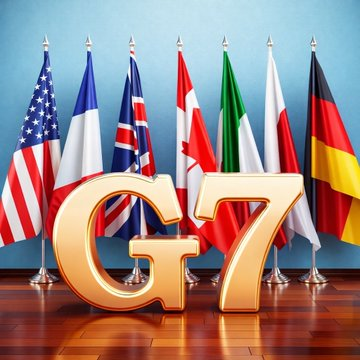
PARIS / WASHINGTON D.C. — As the military deadlock between the United States and Iran pushes global financial systems to a breaking point, Finance Ministers and leaders from the Group of Seven (G7) have convened an urgent summit in Paris. The central directive of the emergency meeting is to coordinate a unified response to the ongoing de facto closure of the Strait of Hormuz and to mitigate what Germany has officially termed a “serious threat to the global economy.”
The summit coincides with a massive spike in market anxiety following a weekend drone strike on the UAE’s Barakah Nuclear Plant and a strict warning from President Donald Trump that the “clock is ticking” for Iranian leadership to accept peace terms.
The Hormuz Crisis: A Global Economic Freeze
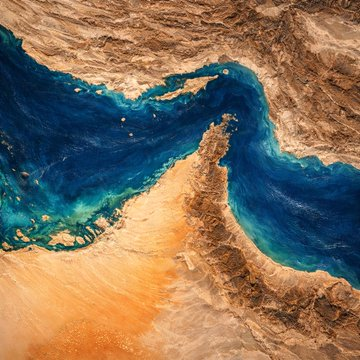
The Strait of Hormuz, which facilitates the transit of roughly one-fifth of the world’s total oil and liquefied natural gas (LNG) supplies, has been heavily restricted due to naval blockades, sea mines, and aggressive ship seizures by the Islamic Revolutionary Guard Corps (IRGC).
German Finance Minister Lars Klingbeil, speaking on the sidelines of the Paris conference, stressed that the G7 is the only forum capable of structuring a sustainable post-conflict maritime framework.
“Our path as Europeans remains clear: We rely on cooperation rather than confrontation,” Klingbeil stated. “The blockade of the Strait of Hormuz poses a serious threat to the global economy. We rely on partnerships, reliability, open trade, and the strength of the rule of law.”
The Dual Strategy: Multinational De-Mining and Strategic Reserves
According to leaked draft statements from the Paris summit, G7 nations—comprising the US, UK, France, Germany, Italy, Japan, and Canada—are preparing a two-pronged economic and military approach to break the chokehold:
- The 26-Nation Coalition Force: Building upon a joint declaration signed by 26 world leaders last week, the G7 is finalizing plans for an “independent and strictly defensive multinational military mission.” This task force will be deployed explicitly for widespread mine-clearing operations inside the Strait the moment a sustainable ceasefire is finalized.
- IEA Emergency Petroleum Release: To prevent an uncontrollable spike in consumer fuel prices, the G7 is backing a coordinated, historic release of strategic petroleum reserves authorized by the International Energy Agency (IEA).
- China’s Alignment: The coalition’s diplomatic leverage has been significantly boosted following assurances from Beijing to the U.S. that China will support efforts to keep global trade flowing freely and will not back Iranian disruption tactics.
The “Transit Fee” Point of Contention
The G7 meeting is also responding directly to Tehran’s controversial new maritime legal strategy. Functional leadership within Iran has recently proposed allowing international commercial shipping back into the Gulf under a mandatory “transit fee” system paid directly to the IRGC.
G7 leaders, backed by strong opposition from major Asian economies like South Korea and Japan, have universally rejected this proposal, labeling it a violation of the United Nations Convention on the Law of the Sea (UNCLOS) and a form of state-sanctioned extortion.
Frequently Asked Questions (FAQs)
Q: Will G7 naval forces enter the Strait of Hormuz immediately?
A: No. European allies, particularly France and Germany, have successfully pushed for a conditional deployment. The multinational naval mission will only commence operations after a sustainable ceasefire framework is officially reached through ongoing Pakistani-mediated diplomacy.
Q: How badly has this blockade affected global energy markets?
A: The prolonged closure has kept crude oil prices fluctuating violently near historic highs. Economists warn that if the G7 cannot guarantee a swift reopening, global supply chain inflation could trigger a widespread recession by late 2026.
Q: What is the US role in this G7 framework?
A: While the US is currently managing a unilateral naval blockade to isolate Iranian oil exports, U.S. Secretary of State Marco Rubio confirmed that Washington envisions transitioning this into the post-conflict multinational G7 framework to secure international insurance coverage for commercial tankers.
Q: Is there an alternative route for Gulf oil if the Strait stays closed?
A: Limited volumes are being rerouted through pipelines across Saudi Arabia to the Red Sea, but these networks lack the capacity to handle the massive daily output usually carried via the Strait of Hormuz.
G7 Economic Risk Assessment: Hormuz Closure
| Economic Indicator | Impact Level | Projections Without Reopening |
|---|---|---|
| Global Crude Prices | Critical | Projected spike beyond $120/barrel |
| Maritime Insurance | Extreme | Total denial of coverage for Gulf transits |
| Supply Chain Latency | High | 14-to-21 day delivery delays for Asia-EU trade |
| Strategic Oil Reserves | Stable | Heavily reliant on multi-nation IEA releases |
Reflecto News will continue providing live updates from the Paris G7 summit as finance ministers finalize their joint economic stabilization package.
Tags: G7 Summit, Strait of Hormuz, Global Economy, Paris Conference, Lars Klingbeil, Marco Rubio, Energy Crisis 2026, Reflecto News, Oil Prices
Questions people ask
What is China's current share of global manufacturing?
China now accounts for twenty eight percent of global manufacturing. This industrial output exceeds the combined manufacturing production of the United States, Japan, and Germany, making China the leading global industrial power according to recent reports.
Why were Andrew Tate and Tristan Tate arrested in Miami?
Andrew Tate and his brother Tristan Tate were taken into custody in Miami by the United States Marshals Service. They face thirty eight new charges in the United Kingdom, including rape and child pornography offences, and prosecutors are seeking their extradition.
What warning did Moscow issue about oil prices?
Kirill Dmitriev, the Chief Executive of the Russian Direct Investment Fund, warned that a tsunami of skyrocketing oil prices is approaching. Moscow describes this potential energy shock as a major threat to global markets.
What political shift is projected for Benjamin Netanyahu's coalition?
Political polls project that Prime Minister Benjamin Netanyahu's coalition is on track to lose its majority in the upcoming October election. This projection indicates a potential political shift in Jerusalem.
Why did a Russian military aircraft land in Tehran?
A Russian airborne command aircraft, widely known as a doomsday plane, landed in Tehran. The arrival of the aircraft represents a high stakes show of support from Russia for Iran during a period of heightened regional tensions.
What did President Masoud Pezeshkian claim about the United States and Israel?
Iranian President Masoud Pezeshkian claimed that the United States and Israel failed in a forty eight hour plan to topple the Iranian government. He made these statements during a televised address marking two years since his inauguration.