Reflecto News is an online news platform covering major international political events, global economic developments, and security conflicts. The site provides updates on topics such as Chinese manufacturing dominance, Middle Eastern political tensions, and high profile legal arrests. Readers can access current articles organized by categories like World News, Iran, and USA.
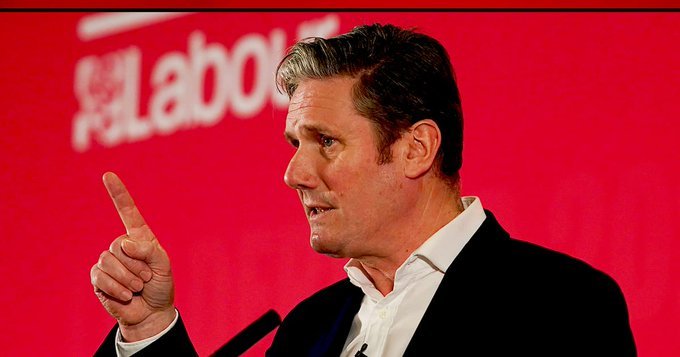
LONDON / WASHINGTON — In a move that has effectively frozen the “Special Relationship,” Prime Minister Keir Starmer has issued his most forceful refusal yet to join the U.S.-led offensive against Iran. Speaking from 10 Downing Street on Wednesday, April 1, 2026, Starmer declared that Britain would not be “dragged into a regional conflagration” that lacks a clear legal mandate or an achievable endgame, marking a definitive fracture in the Western security architecture.
The Prime Minister’s “Not Our War” stance arrives as Operation Epic Fury enters its second month, triggering a series of retaliatory diplomatic strikes from the Trump administration.
1. The Breakdown of Military Coordination
The refusal is not merely rhetorical; it has manifested in a tangible slowing of the “seamless” military cooperation that has defined U.S.-UK ties since 1945.
- Base Access Tightens: The UK has officially restricted the use of RAF Akrotiri in Cyprus and Diego Garcia in the Indian Ocean. While U.S. assets can still use these bases for “defensive refueling” and “search and rescue,” Starmer has banned their use as launchpads for kinetic strikes on Iranian soil.
- Intelligence Bottlenecks: Sources within the “Five Eyes” community report a “noticeable cooling” in real-time tactical intelligence sharing. The UK is reportedly withholding certain targeting data to ensure it is not used in operations that violate the Prime Minister’s “defensive-only” directive.
- The “Carrier” Insult: This policy shift prompted President Trump to mock the Royal Navy earlier today, calling the UK “too old” and claiming they “don’t even have a navy” after technical failures sidelined the British carrier strike groups.
2. Strategic Pivot: The “European Pillar”
Faced with an unpredictable Washington, Starmer is rapidly reorienting British foreign policy toward its closest neighbors.
- The EU Security Pact: Just hours ago, Starmer announced he would seek a “new partnership with the EU” in the coming weeks. This “Security & Economic Pact” is seen as a direct attempt to build a “European pillar” of defense that can function independently of a “U.S.-First” NATO.
- The “Paper Tiger” Label: President Trump’s response was swift, labeling NATO a “paper tiger” and threatening a total U.S. withdrawal—a move Starmer described as “generation-defining instability.”
- National Interest over Alliance: “I will act in the British national interest,” Starmer told the Commons. “That means protecting our energy security and our people, not participating in an offensive that is spiking gas to $4 a gallon and endangering global trade.”
3. The Domestic Crisis: Inflation and Energy
The Prime Minister’s defiance is rooted in a domestic reality that mirrors the President’s own political troubles.
| Metric | UK Status (April 1, 2026) | U.S. Status (April 1, 2026) |
| Fuel Costs | £1.90+ / Liter | $4.00+ / Gallon |
| War Approval | ~22% Support | ~40% Support |
| Strategic Stance | Defensive / Monitoring | Offensive / Kinetic |
| Energy Focus | Renewables & EU Interconnects | Domestic Drilling & “Nuclear Rethink” |
Analysis: The Divorce of 2026?
The “Starmer vs. Trump” rift represents more than a personality clash; it is a fundamental disagreement over the world order. While Trump views the April 6 deadline as a “finish line” for a decisive military victory, Starmer views the entire campaign as a “strategic error” that has empowered Russia’s Kirill Dmitriev and pushed Europe toward an “energy lockdown.”
As the President prepares for his 9:00 PM ET address tonight, the “Special Relationship” is essentially in a state of managed divorce. If Trump follows through on his threat to leave NATO, Starmer’s “European Pivot” may become the only lifeboat left for a Britain that has chosen to say “No” to its oldest ally for the first time in the modern era.
Questions people ask
What is China's current share of global manufacturing?
China now accounts for twenty eight percent of global manufacturing. This industrial output exceeds the combined manufacturing production of the United States, Japan, and Germany, making China the leading global industrial power according to recent reports.
Why were Andrew Tate and Tristan Tate arrested in Miami?
Andrew Tate and his brother Tristan Tate were taken into custody in Miami by the United States Marshals Service. They face thirty eight new charges in the United Kingdom, including rape and child pornography offences, and prosecutors are seeking their extradition.
What warning did Moscow issue about oil prices?
Kirill Dmitriev, the Chief Executive of the Russian Direct Investment Fund, warned that a tsunami of skyrocketing oil prices is approaching. Moscow describes this potential energy shock as a major threat to global markets.
What political shift is projected for Benjamin Netanyahu's coalition?
Political polls project that Prime Minister Benjamin Netanyahu's coalition is on track to lose its majority in the upcoming October election. This projection indicates a potential political shift in Jerusalem.
Why did a Russian military aircraft land in Tehran?
A Russian airborne command aircraft, widely known as a doomsday plane, landed in Tehran. The arrival of the aircraft represents a high stakes show of support from Russia for Iran during a period of heightened regional tensions.
What did President Masoud Pezeshkian claim about the United States and Israel?
Iranian President Masoud Pezeshkian claimed that the United States and Israel failed in a forty eight hour plan to topple the Iranian government. He made these statements during a televised address marking two years since his inauguration.