Reflecto News is an online news platform covering major international political events, global economic developments, and security conflicts. The site provides updates on topics such as Chinese manufacturing dominance, Middle Eastern political tensions, and high profile legal arrests. Readers can access current articles organized by categories like World News, Iran, and USA.
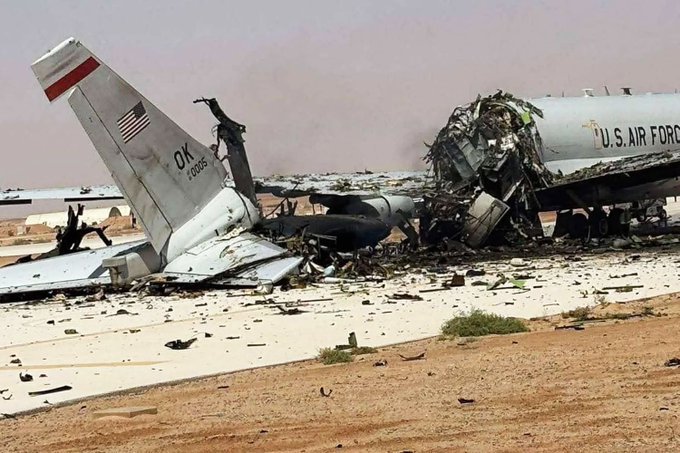
WASHINGTON / RIYADH — As the smoke clears from recent high-intensity drone and missile strikes on Prince Sultan Air Base (PSAB) and other key installations in the Persian Gulf, a damning report from the Wall Street Journal on Wednesday, April 1, 2026, reveals that the Pentagon has been sitting on a “survival plan” for years.
The report highlights a significant failure of strategic foresight: despite repeated warnings from top military officials that bases in Eastern Saudi Arabia were “sitting ducks” for Iranian proxies, a proposal to move critical assets to the Kingdom’s western coast was stalled by two successive administrations.
1. The Vulnerability Gap: Why PSAB?
For over a decade, Prince Sultan Air Base has served as a central hub for U.S. airpower in the Middle East. However, its geographic location makes it a primary target for the “missile cities” and drone launchpads controlled by Tehran and the Houthis.
- Proximity to the “Kill Zone”: PSAB is located within easy reach of short- and medium-range ballistic missiles.
- The “Swarm” Threat: Military officials warned as early as 2022 that existing Patriot and THAAD missile defense systems could be overwhelmed by “low-and-slow” drone swarms—a prediction that came true during the March 2026 attacks.
- Infrastructure Density: Because the base is a massive, fixed target with concentrated fuel and ammunition depots, a single successful strike can cause “disproportionate” operational damage.
2. The “Western Pivot” Proposal
The proposed solution, championed by U.S. Central Command (CENTCOM), was to shift the bulk of American air and logistics assets to western Saudi Arabia, near the Red Sea.
- Increased Reaction Time: Moving bases 500–800 miles west would have provided an extra 5 to 10 minutes of early warning for incoming missiles, allowing interceptors a much higher “kill probability.”
- The Hijaz Shield: The mountainous terrain of western Saudi Arabia offers natural geographic barriers that make drone navigation and low-altitude missile strikes significantly more difficult.
- Logistical Redundancy: Western bases like Yanbu and Tabuk provide direct access to the Red Sea, bypassing the “chokepoint” of the Strait of Hormuz—which Iran has successfully blocked for much of the last month.
3. A Bipartisan Failure of Implementation
The WSJ report notes that the plan to relocate was “briefed and buried” by both the Biden and Trump administrations, albeit for different reasons.
- The Biden Era (2021–2024): The administration was reportedly hesitant to fund a multi-billion dollar base expansion in Saudi Arabia due to political friction over human rights and a desire to “pivot to Asia.” Moving bases was seen as a “permanent commitment” to a region the U.S. was trying to de-prioritize.
- The Trump Era (2025–2026): While more aligned with Riyadh, the current administration focused heavily on “Maximum Pressure” and offensive readiness rather than “defensive relocation.” Sources suggest the administration viewed moving bases as a “sign of weakness” or a retreat in the face of Iranian threats.
| Administration | Primary Obstacle to Relocation | Strategic Focus |
| Biden | Political optics & “Pivot to Asia” | Diplomatic De-escalation |
| Trump | Preference for “Offensive Posture” | Maximum Pressure / Combat Readiness |
| Result | Plan Stalled | Bases remain in “Kill Zone” |
Analysis: The Cost of Inertia
The current reality of Operation Epic Fury has vindicated the “Red Sea Buffer” advocates. With U.S. gas prices hitting $4 a gallon and domestic approval for the war dipping below 40%, the cost of maintaining exposed bases is no longer just military—it’s political.
As President Trump prepares for his 9:00 PM ET address tonight, the WSJ report adds a layer of accountability to the conversation. If the U.S. had moved its “crown jewels” to the west years ago, the “infrastructure war” of March 2026 might have looked very different. Instead, the Pentagon is left playing a high-stakes game of “missile defense” with assets that many experts believe should have been moved long before the first shot was fired.
Questions people ask
What is China's current share of global manufacturing?
China now accounts for twenty eight percent of global manufacturing. This industrial output exceeds the combined manufacturing production of the United States, Japan, and Germany, making China the leading global industrial power according to recent reports.
Why were Andrew Tate and Tristan Tate arrested in Miami?
Andrew Tate and his brother Tristan Tate were taken into custody in Miami by the United States Marshals Service. They face thirty eight new charges in the United Kingdom, including rape and child pornography offences, and prosecutors are seeking their extradition.
What warning did Moscow issue about oil prices?
Kirill Dmitriev, the Chief Executive of the Russian Direct Investment Fund, warned that a tsunami of skyrocketing oil prices is approaching. Moscow describes this potential energy shock as a major threat to global markets.
What political shift is projected for Benjamin Netanyahu's coalition?
Political polls project that Prime Minister Benjamin Netanyahu's coalition is on track to lose its majority in the upcoming October election. This projection indicates a potential political shift in Jerusalem.
Why did a Russian military aircraft land in Tehran?
A Russian airborne command aircraft, widely known as a doomsday plane, landed in Tehran. The arrival of the aircraft represents a high stakes show of support from Russia for Iran during a period of heightened regional tensions.
What did President Masoud Pezeshkian claim about the United States and Israel?
Iranian President Masoud Pezeshkian claimed that the United States and Israel failed in a forty eight hour plan to topple the Iranian government. He made these statements during a televised address marking two years since his inauguration.