Reflecto News is an online news platform covering major international political events, global economic developments, and security conflicts. The site provides updates on topics such as Chinese manufacturing dominance, Middle Eastern political tensions, and high profile legal arrests. Readers can access current articles organized by categories like World News, Iran, and USA.
Reflecto News | Breaking News | Israeli Politics & Justice
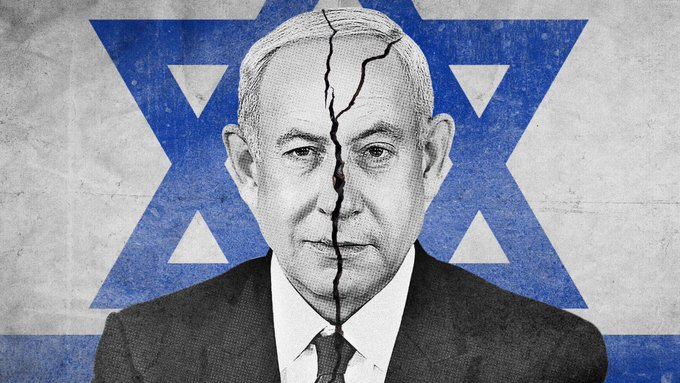
JERUSALEM — For the second time in just over a week, Prime Minister Benjamin Netanyahu’s testimony in his long-running corruption trial was abruptly canceled on Monday morning, this time at the last minute due to unspecified “security concerns” raised by his defense team .
The testimony, which was set to resume at 9:30 a.m. at the Tel Aviv District Court after a two-month hiatus caused by the recent war with Iran, was called off following a last-minute request by Netanyahu’s lawyer, Amit Hadad . According to Hebrew media reports, prosecutors were not given an opportunity to respond because the request was not filed in advance, prompting the court to delay proceedings until a formal motion could be reviewed later in the day .
The development marks the latest in a growing pattern of delays that have pushed Israel’s most politically consequential trial past the five-year mark, with critics accusing the prime minister of using security and diplomatic responsibilities to evade the witness stand .
A Growing Pattern: Security, Diplomacy, and Repeated Delays
The abrupt cancellation on Monday follows a similar postponement ordered last week by the Jerusalem District Court. In that instance, the court accepted a defense request citing “security and diplomatic considerations” as justification to cancel Netanyahu’s scheduled appearances for the week and instead hear testimony from another defense witness .
This pattern has drawn sharp criticism from legal observers and political opponents alike:
| Date | Reason Cited | Status |
|---|---|---|
| April 27, 2026 (Monday) | “Unspecified security concerns” – request made hours before testimony | Canceled at last minute |
| April 20, 2026 (Week prior) | “Security-diplomatic reasons” submitted in sealed materials | Cancelled for the week |
| February–April 2026 | Conflict with Iran / national security demands | Entire trial paused for two months |
According to a report by the AhlulBayt News Agency, legal analysts and opposition figures have accused Netanyahu’s team of weaponizing the security situation to delay a verdict until after the October 2026 elections . If no conviction is finalized before the vote, Netanyahu would be eligible to run again at the head of the Likud party—potentially securing another term before facing legal consequences .
Netanyahu has testified 80 times so far and is nearing the end of cross-examination. But with elections just months away, his legal strategy appears focused on delay.
“The primary goal is to allow Netanyahu to run in the upcoming October elections,” a Ramallah-based journalist told ABNA. “This tactic has become a recurring pattern in this trial.”
Case 4000: The Multi-Million Dollar ‘Bezeq-Walla Affair’
The testimony that was to resume Monday centers on Case 4000, widely considered the most serious of the three charges Netanyahu faces.
In this case, Netanyahu stands accused of bribery, fraud, and breach of trust for allegedly advancing regulatory decisions worth an estimated 1.8 billion shekels (roughly $600 million) to Shaul Elovitch, a telecommunications mogul who controlled Bezeq and the Walla news website .
| Case ID | Nature of Allegations | Estimated Value of Benefits |
|---|---|---|
| Case 1000 | Fraud & breach of trust – acceptance of gifts (cigars, champagne) | ~$235,000 |
| Case 2000 | Fraud & breach of trust – illicit media coverage negotiations | Not specified |
| Case 4000 | Bribery, fraud & breach of trust – regulatory benefits for media coverage | ~$600 million |
In exchange for those regulatory favors, prosecutors say, Elovitch directed Walla to provide Netanyahu with favorable coverage and to suppress negative stories about him and his family .
Netanyahu has denied all wrongdoing, dismissing the charges as a “witch hunt” and a politically motivated “coup attempt” by his opponents and a hostile media establishment .
The Collision Course with the October Elections
Complicating the legal calendar is the looming political deadline: Israel’s next Knesset elections must be held by October 27, 2026.
Under Israeli law, Netanyahu is not required to step down if convicted until all appeals are exhausted, meaning a pre-election conviction would not automatically bar him from running. However, a conviction would dramatically reshape the political landscape, empowering his opponents and potentially fracturing his coalition.
This creates a powerful incentive for the defense to push any final verdict past the election—a goal that repeated security-based delays appear designed to achieve .
His legal team has frequently sought schedule adjustments, citing national security demands and health concerns. Netanyahu himself has argued that appearing in court multiple times a week is “an impossible demand.”
Herzog Pushes Plea Deal as Pardon Looms in Background
Adding to the legal and political drama, President Isaac Herzog announced on Sunday that he will not grant Netanyahu’s formal pardon request “at this stage,” instead urging the prime minister and state prosecutors to first exhaust efforts toward a plea deal .
Herzog, whose largely ceremonial role as president nonetheless grants him the power to pardon, stated that a courtroom settlement was a “proper and correct solution” that would serve the national interest. “The president therefore believes that before addressing the pardon request itself, efforts should first be exhausted to reach an agreement between the parties, outside the courtroom,” Herzog’s office said in a statement .
The announcement came shortly after a report by The New York Times revealed that Herzog had told Netanyahu he would not evacuate his official residence to allow a pardon to be finalized, effectively signaling that the prime minister should not expect a last-minute presidential lifeline .
Netanyahu submitted a formal pardon request to Herzog in November 2025. He has also reportedly pressed former U.S. President Donald Trump to pressure Herzog on his behalf .
The International Dimension: ICC Arrest Warrant
While Netanyahu fights the corruption charges at home, he also faces a separate legal battle on the international stage.
In November 2024, the International Criminal Court (ICC) issued an arrest warrant for Netanyahu, along with former Defense Minister Yoav Gallant, for alleged “war crimes and crimes against humanity” in Gaza . The warrant has complicated his international travel and further polarized global opinion around the Israeli leader’s wartime decision-making.
That case, however, is proceeding independently of the domestic trial and has no direct bearing on the corruption charges being deliberated in the Tel Aviv District Court.
What’s Next: Court Decision Pending
The court administration stated that a formal motion from Netanyahu’s defense team — outlining the specific “security developments” that necessitated the cancellation — would be submitted later Monday. After reviewing that motion, the judges will decide whether to reschedule the testimony or allow further delays .
Prosecutors have objected to repeated postponements, arguing that the prime minister should align his schedule with the court’s calendar and that completing his cross-examination is a matter of “public interest” . However, with the trial now in its sixth year and the prime minister’s schedule dominated by security crises and diplomatic initiatives, Netanyahu’s day in court—once again—will have to wait.
Frequently Asked Questions
Q1. Why was Netanyahu’s testimony canceled at the last minute?
It was canceled due to “unspecified security concerns” raised by Netanyahu’s defense team just hours before he was scheduled to appear in court . Prosecutors were reportedly not given advance notice or an opportunity to respond.
Q2. Has this pattern of delays happened before?
Yes. The trial, which began in 2020, has been repeatedly delayed—first due to the COVID-19 pandemic, then because of the Gaza war, and more recently due to the two-month war with Iran. Delays citing “security and diplomatic reasons” have become increasingly common over the past year .
Q3. What is “Case 4000”?
Case 4000 is the most serious of the three cases against Netanyahu. He is accused of bribery, fraud, and breach of trust for granting regulatory favors worth approximately $600 million to telecommunications mogul Shaul Elovitch in exchange for positive news coverage on Elovitch’s Walla news website .
Q4. Could a conviction prevent Netanyahu from running in October?
No. Under Israeli law, even a conviction does not automatically bar a sitting prime minister from office until all appeals are exhausted. However, a pre-election conviction would likely reshape the political landscape, weaken his coalition, and impact his campaign .
Q5. Is Netanyahu seeking a pardon?
Yes. Netanyahu submitted a formal pardon request to President Isaac Herzog in November 2025. Herzog announced on Sunday that he would not consider a pardon “at this stage” and instead urged Netanyahu to pursue a plea deal with prosecutors .
Q6. Is the ICC arrest warrant related to the corruption trial?
No. The ICC warrant, issued in November 2024, concerns allegations of war crimes and crimes against humanity in Gaza. That case is separate from the domestic bribery, fraud, and breach of trust charges Netanyahu is facing in Israeli courts .
Key Takeaways
| Aspect | Summary |
|---|---|
| What happened | Netanyahu’s testimony canceled at last minute citing “security concerns” |
| When | April 27, 2026 (after a two-month Iran-war hiatus) |
| Case in focus | Case 4000 — bribery allegations involving $600M in regulatory benefits |
| Pattern | Repeated delays citing same “security/diplomatic” reasons |
| Election connection | Critics say delays aim to push verdict past October 2026 elections |
| Pardon status | President Herzog refuses to consider pardon now, urges plea deal |
| Netanyahu’s position | Denies all charges, claims “witch hunt” |
Follow Reflecto News for continuous updates on the Netanyahu trial, Israeli politics, and all breaking news from the Middle East.
This article is the intellectual property of Reflecto News. Redistribution without attribution is prohibited.
Questions people ask
What is China's current share of global manufacturing?
China now accounts for twenty eight percent of global manufacturing. This industrial output exceeds the combined manufacturing production of the United States, Japan, and Germany, making China the leading global industrial power according to recent reports.
Why were Andrew Tate and Tristan Tate arrested in Miami?
Andrew Tate and his brother Tristan Tate were taken into custody in Miami by the United States Marshals Service. They face thirty eight new charges in the United Kingdom, including rape and child pornography offences, and prosecutors are seeking their extradition.
What warning did Moscow issue about oil prices?
Kirill Dmitriev, the Chief Executive of the Russian Direct Investment Fund, warned that a tsunami of skyrocketing oil prices is approaching. Moscow describes this potential energy shock as a major threat to global markets.
What political shift is projected for Benjamin Netanyahu's coalition?
Political polls project that Prime Minister Benjamin Netanyahu's coalition is on track to lose its majority in the upcoming October election. This projection indicates a potential political shift in Jerusalem.
Why did a Russian military aircraft land in Tehran?
A Russian airborne command aircraft, widely known as a doomsday plane, landed in Tehran. The arrival of the aircraft represents a high stakes show of support from Russia for Iran during a period of heightened regional tensions.
What did President Masoud Pezeshkian claim about the United States and Israel?
Iranian President Masoud Pezeshkian claimed that the United States and Israel failed in a forty eight hour plan to topple the Iranian government. He made these statements during a televised address marking two years since his inauguration.