Reflecto News is an online news platform covering major international political events, global economic developments, and security conflicts. The site provides updates on topics such as Chinese manufacturing dominance, Middle Eastern political tensions, and high profile legal arrests. Readers can access current articles organized by categories like World News, Iran, and USA.
Reflecto News | International Affairs | Human Rights
LONDON — The United Kingdom’s Foreign, Commonwealth and Development Office (FCDO) has shut down its specialist unit tasked with monitoring potential breaches of international humanitarian law by Israel in Gaza and Lebanon, citing budget cuts and internal restructuring .
The closure also ends funding for a major open-source monitoring project run by the Centre for Information Resilience (CIR), meaning FCDO officials will lose access to a database containing over 26,000 verified conflict incidents documenting the war from October 2023 through the present . The decision reportedly contradicts recent public pledges by Foreign Secretary Yvette Cooper that respect for international law would be central to the department’s foreign policy agenda .
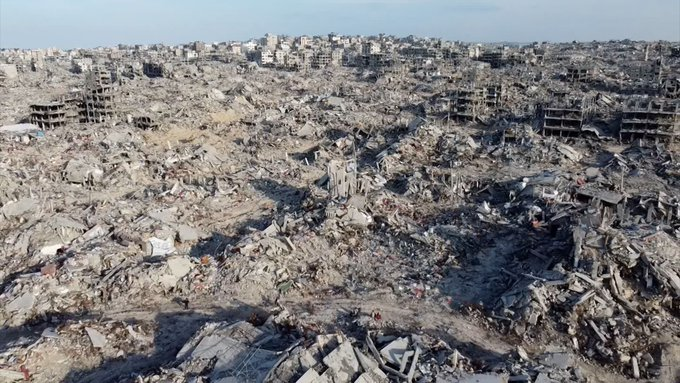
What Was the International Humanitarian Law Cell?
The International Humanitarian Law (IHL) cell was a dedicated FCDO team responsible for tracking, documenting, and verifying incidents where Israeli forces may have breached international law during successive conflicts in Gaza and, more recently, Lebanon . Its work fed into critical government decisions, including whether to suspend arms export licenses to Israel .
The cell relied heavily on data from the Centre for Information Resilience (CIR), an independent open-source investigation organization funded by the Foreign Office .
The 26,000 Verified Incidents: What the CIR Database Contained
The CIR’s “Conflict and Security Monitoring Project” maintained what is believed to be the world’s largest open-source database of conflict incidents across Israel, Palestine, and Lebanon .
| Aspect | Details |
|---|---|
| Total verified incidents | Approximately 26,000 documented events |
| Time period covered | From October 7, 2023 to the present |
| Geographic scope | Israel, occupied Palestinian territories, and Lebanon |
| Investigations conducted | Over 20 open-source inquiries, including into shootings of children in Gaza |
| Users | British embassies in Tel Aviv, Beirut, and Damascus; consulate in Jerusalem |
| Support for law enforcement | Provided material to the Metropolitan Police for war crimes assessments |
The database was used to identify patterns of violations, assess risks, and inform policy decisions—including whether UK arms export licenses to Israel should remain suspended under international law obligations .
Why Was the Unit Shut Down?
The closure is attributed to two interconnected factors :
- Overseas aid budget cuts: The UK has reduced its overseas aid spending to 0.3% of gross national income, down from the previous target of 0.7% .
- Internal restructuring: An FCDO review ordered by Oliver Robbins (the department’s former permanent secretary, dismissed last week over the Peter Mandelson scandal) led to the cuts .
An FCDO spokesperson told multiple outlets that the change was part of “an internal restructure” and that the cell’s work would be continued by “a different team in the FCDO” . The spokesperson added: “We continue to heavily invest expertise and resources into our conflict prevention and resolution work, including the monitoring of international humanitarian law in Gaza” .
The spokesperson also stated that the department would “retain access” to CIR research it had already funded, while noting that CIR reports were “only one of the many ways we inform our assessments” . However, The Guardian and other outlets report that officials have been warned the loss of funding will mean the FCDO loses ongoing access to the CIR’s live database .
Human Rights Groups Respond with Alarm
Human rights organizations have sharply criticized the decision, arguing it comes amid ongoing and serious violations of international law .
Yasmine Ahmed, UK Director of Human Rights Watch, said: “This is a damning cut that makes me question the extent to which this government is complying with its obligations under the arms export criteria, the Arms Trade Treaty, and the Genocide Convention” .
Katie Fallon, advocacy manager at Campaign Against Arms Trade (CAAT), argued the closure may be deliberate: “It will protect ministers and officials who know that they have been manipulating the data… beyond any logical interpretation, to obscure unimaginable violations and crimes committed against the most vulnerable people… and sustain arms sales at any cost” .
The International Centre of Justice for Palestinians (ICJP) said: “By dismantling this capability, the Foreign Office is also depriving decision-makers and investigators of access to critical evidence and data documenting alleged Israeli breaches of international law” .
Arms Export Decision-Making
The CIR database played a key role in the Foreign Office’s assessment of whether UK arms export licenses to Israel should remain suspended . These assessments were directly relevant to compliance with:
- The Arms Trade Treaty
- The UK’s own strategic export licensing criteria (which prohibit exports where there is a “clear risk” of violations of international humanitarian law)
- The Genocide Convention
A June 2025 report published by Declassified UK revealed that in 2024, the FCDO reviewed 413 incidents of potential violations identified on the basis of CIR data, but found only one to be a “possible” breach—the Israeli strike on a World Central Kitchen convoy that killed seven aid workers, including three Britons . The other 412 incidents were judged “inconclusive” .
The Political Contradiction: Cooper’s Pledge vs. Policy
The closure appears to directly contradict recent public statements by Foreign Secretary Yvette Cooper.
On April 9, 2026—just two weeks before the closure was first reported—Cooper delivered a major foreign policy speech in which she declared that supporting international law would be a “linchpin” of the Foreign Office’s agenda under her leadership . She said that international law and the role of international frameworks are “vital to Britain’s national interests” .
The ICJP said Wednesday’s decision “runs contrary to the department’s decision… to effectively dismantle such linchpins and frameworks” .
Labour’s Overseas Aid Record
The cuts to the IHL cell are understood to be part of broader reductions to the Foreign Office’s conflict and atrocity prevention work, which has previously issued warnings about emerging crises, including in Sudan .
The Labour government has reduced overseas aid to 0.3% of GNI—a sharp reduction from previous targets . The move has drawn criticism from development and human rights groups, who note that the UK was once a global leader in conflict monitoring and atrocity prevention.
Critics have also pointed out that the cuts come at a time when the UK has continued to supply arms to Israel. UK Parliament records show that in 2024 alone, the Labour government approved £127.6 million in single-issue arms licenses to Israel—more than the total approved from 2020 to 2023 combined .
Key Takeaways for Reflecto News Readers
| Aspect | Summary |
|---|---|
| Unit closed | IHL cell tracking potential Israeli breaches of international law |
| Funding ended | CIR’s Conflict and Security Monitoring Project (26,000 incident database) |
| Reason | Overseas aid budget cuts (0.3% GNI) + FCDO restructuring |
| Timing | Two weeks after Cooper’s “international law is a linchpin” speech |
| Data impact | FCDO loses live access to the world’s largest open-source Middle East conflict database |
| Human rights reaction | HRW, CAAT, ICJP: “damning,” potentially complicit in obscuring violations |
| UK arms exports | £127.6 million in new licenses approved between October–December 2024 |
| Arms export decisions | Database was a key input for assessments of whether IHL obligations allow continued arms sales |
Follow Reflecto News for continuous updates on UK foreign policy, arms export regulation, and international human rights monitoring.
This article is the intellectual property of Reflecto News. Redistribution without attribution is prohibited. For syndication or media inquiries, please contact the editorial team.
Questions people ask
What is China's current share of global manufacturing?
China now accounts for twenty eight percent of global manufacturing. This industrial output exceeds the combined manufacturing production of the United States, Japan, and Germany, making China the leading global industrial power according to recent reports.
Why were Andrew Tate and Tristan Tate arrested in Miami?
Andrew Tate and his brother Tristan Tate were taken into custody in Miami by the United States Marshals Service. They face thirty eight new charges in the United Kingdom, including rape and child pornography offences, and prosecutors are seeking their extradition.
What warning did Moscow issue about oil prices?
Kirill Dmitriev, the Chief Executive of the Russian Direct Investment Fund, warned that a tsunami of skyrocketing oil prices is approaching. Moscow describes this potential energy shock as a major threat to global markets.
What political shift is projected for Benjamin Netanyahu's coalition?
Political polls project that Prime Minister Benjamin Netanyahu's coalition is on track to lose its majority in the upcoming October election. This projection indicates a potential political shift in Jerusalem.
Why did a Russian military aircraft land in Tehran?
A Russian airborne command aircraft, widely known as a doomsday plane, landed in Tehran. The arrival of the aircraft represents a high stakes show of support from Russia for Iran during a period of heightened regional tensions.
What did President Masoud Pezeshkian claim about the United States and Israel?
Iranian President Masoud Pezeshkian claimed that the United States and Israel failed in a forty eight hour plan to topple the Iranian government. He made these statements during a televised address marking two years since his inauguration.