Reflecto News is an online news platform covering major international political events, global economic developments, and security conflicts. The site provides updates on topics such as Chinese manufacturing dominance, Middle Eastern political tensions, and high profile legal arrests. Readers can access current articles organized by categories like World News, Iran, and USA.
French Defence Minister Highlights Mine-Clearance Capabilities and Defensive Escort Plans Amid Ongoing Efforts to Reopen Vital Oil Route
By Reflecto News Staff
April 17, 2026Z
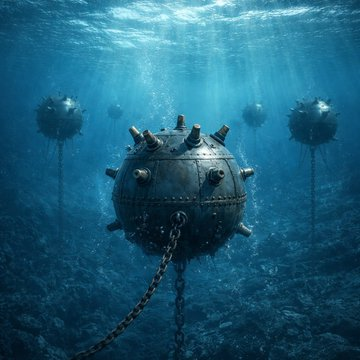
French Defence Minister Catherine Vautrin has affirmed that European nations, including Belgium, the Netherlands, and France, possess the specialized mine-clearance capabilities needed to help secure safe passage through the Strait of Hormuz, where Iran reportedly laid naval mines during recent regional conflict.
Speaking on French TV station TF1 on April 17, 2026, Vautrin emphasized that these assets could support non-offensive escort services for commercial shipping, adding that the matter would be discussed in talks held later that day in Paris.
The statement comes as international efforts intensify to restore freedom of navigation in the Strait of Hormuz — a narrow chokepoint through which approximately 20% of global oil trade passes daily — following disruptions caused by the U.S.-Iran tensions and reported Iranian mining activities.
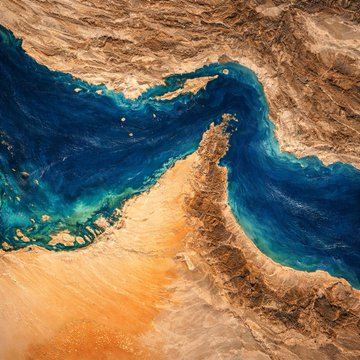
Map illustrating reported hazardous areas and shipping considerations in the Strait of Hormuz amid mine concerns.
France’s Position: Defensive and Collaborative Approach
Minister Vautrin stressed that any European involvement would be strictly defensive and focused on ensuring safe maritime transit rather than offensive operations. “There are capabilities to provide fully supported escort services — that is to say, in no way offensive, of course — for ships to ensure safe passage through the strait,” she stated.
This aligns with broader European initiatives led by France and the United Kingdom to form a multinational coalition for post-conflict stabilization in the waterway. The proposed mission aims to clear mines, escort vessels, and rebuild confidence among shipping companies without direct involvement of “belligerent” parties such as the United States, Israel, or Iran itself.
European naval vessel operating in regional waters, representative of capabilities for maritime security operations.
Background: Iranian Mines and the Hormuz Crisis
During the heightened phase of the 2025–2026 U.S.-Iran conflict, Iran’s Islamic Revolutionary Guard Corps (IRGC) is reported to have deployed naval mines in parts of the Strait of Hormuz as a defensive measure. U.S. officials have claimed that Iran has since struggled to locate and remove all the mines it placed, contributing to ongoing navigation risks even under a fragile ceasefire.
Iran has released maps indicating restricted or hazardous zones and alternative “safe” routes, while international concerns persist about drifting or unmarked mines posing threats to commercial tankers. No major confirmed strikes on civilian vessels from these mines have been widely reported, but the mere presence has deterred shipping and driven up insurance costs.
Illustration of proposed toll lanes or alternative routes in the Strait of Hormuz to avoid reported mine hazards.
European Initiative: A Post-Conflict Plan
France and the UK are spearheading discussions for an international defensive mission that includes:
- Extensive mine-clearing operations using advanced minesweepers and drone technology
- Naval escorts for merchant vessels
- Surveillance and coordination to reopen the strait safely
Countries with strong underwater and mine-countermeasure expertise — such as Belgium, the Netherlands, Denmark, Sweden, and Norway — are highlighted for their contributions. The plan envisions deployment only after active hostilities subside, aiming to operate independently of U.S. command.
Modern mine-clearance technology and vessels, including drone-equipped systems, play a key role in such operations.
Strategic Importance of the Strait of Hormuz
The Strait of Hormuz connects the Persian Gulf to the Gulf of Oman and serves as the primary export route for oil from major producers including Saudi Arabia, Iraq, the UAE, Kuwait, and Iran. Disruptions here can trigger sharp spikes in global energy prices and supply chain volatility.
European nations, heavily reliant on imported energy, have a direct stake in restoring reliable shipping. The initiative also reflects Europe’s desire to assert greater strategic autonomy in maritime security matters.
Oil tanker transiting waters near the Strait of Hormuz, underscoring the economic stakes involved.
Potential Challenges and Next Steps
Implementing mine clearance in a geopolitically sensitive area carries risks, including coordination with regional actors and ensuring compliance with international maritime law. Discussions in Paris today are expected to address operational details, participation levels, and timelines.
While the U.S. has conducted its own demining activities in the area, the European-led effort seeks a broader, defensive coalition to support long-term stability.
Frequently Asked Questions (FAQs)
Q1: What did the French Defence Minister say exactly?
A: Catherine Vautrin stated that European countries like Belgium, the Netherlands, and France have mine-clearance capacity to help secure the Strait of Hormuz and can provide non-offensive escort services for safe shipping passage. She noted the topic would be debated in Paris on April 17, 2026.
Q2: Has Iran actually placed mines in the Strait of Hormuz?
A: Reports and statements from U.S. officials and Iranian sources indicate that mines were deployed by Iran during the conflict. Iran has acknowledged hazardous areas and provided alternative routing guidance.
Q3: Why is Europe proposing its own mission?
A: The initiative aims to reopen the critical shipping lane through a strictly defensive, multinational effort that excludes warring parties, focusing on mine clearance and escorts to restore global trade confidence.
Q4: When would European mine-clearing operations begin?
A: Officials emphasize that the mission would only activate once active hostilities have ended, as part of post-conflict stabilization.
Q5: How does this affect global oil prices?
A: Safe reopening of the Strait of Hormuz would help stabilize energy markets by reducing risks to roughly one-fifth of the world’s daily oil supply.
Q6: What technologies are involved in modern mine clearance?
A: Advanced systems include minesweepers, remotely operated vehicles, autonomous underwater drones, and sonar-equipped vessels used by European navies.
Reflecto News Analysis
France’s announcement underscores Europe’s proactive role in addressing maritime security challenges stemming from the Iran conflict. By highlighting specialized capabilities and pushing for a defensive coalition, European leaders seek to safeguard energy security while minimizing escalation risks. Success of these efforts will depend on diplomatic coordination and the evolving ceasefire dynamics.
As debates continue in Paris and beyond, the world’s attention remains fixed on the Strait of Hormuz — a vital artery whose stability affects economies far beyond the Middle East.
For the latest developments on Middle East security, global energy markets, and international naval operations, stay tuned to Reflecto News — your trusted source for accurate and timely coverage.
Related Coverage:
- Strait of Hormuz Crisis: Timeline of Key Events
- Mine Warfare in Modern Conflicts: Capabilities and Challenges
- Europe’s Strategic Autonomy in Maritime Security
Images used for illustrative purposes from public and news sources.
Questions people ask
What is China's current share of global manufacturing?
China now accounts for twenty eight percent of global manufacturing. This industrial output exceeds the combined manufacturing production of the United States, Japan, and Germany, making China the leading global industrial power according to recent reports.
Why were Andrew Tate and Tristan Tate arrested in Miami?
Andrew Tate and his brother Tristan Tate were taken into custody in Miami by the United States Marshals Service. They face thirty eight new charges in the United Kingdom, including rape and child pornography offences, and prosecutors are seeking their extradition.
What warning did Moscow issue about oil prices?
Kirill Dmitriev, the Chief Executive of the Russian Direct Investment Fund, warned that a tsunami of skyrocketing oil prices is approaching. Moscow describes this potential energy shock as a major threat to global markets.
What political shift is projected for Benjamin Netanyahu's coalition?
Political polls project that Prime Minister Benjamin Netanyahu's coalition is on track to lose its majority in the upcoming October election. This projection indicates a potential political shift in Jerusalem.
Why did a Russian military aircraft land in Tehran?
A Russian airborne command aircraft, widely known as a doomsday plane, landed in Tehran. The arrival of the aircraft represents a high stakes show of support from Russia for Iran during a period of heightened regional tensions.
What did President Masoud Pezeshkian claim about the United States and Israel?
Iranian President Masoud Pezeshkian claimed that the United States and Israel failed in a forty eight hour plan to topple the Iranian government. He made these statements during a televised address marking two years since his inauguration.