Reflecto News is an online news platform covering major international political events, global economic developments, and security conflicts. The site provides updates on topics such as Chinese manufacturing dominance, Middle Eastern political tensions, and high profile legal arrests. Readers can access current articles organized by categories like World News, Iran, and USA.
Reflecto News | Arts & Culture | Interview
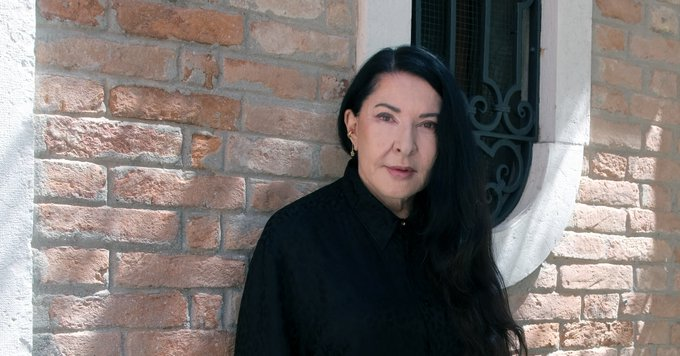
LONDON — For more than five decades, Marina Abramović has pushed the boundaries of performance art, often testing the limits of her own body and the psychological endurance of her audience. In a rare interview, the 79‑year‑old «grandmother of performance art» reflected on her career, her philosophy of presence, and why the spectator is the final essential element of her work.
In the vast white cube of a London gallery, she leaned forward as she spoke about the need for transformation in a digital age: «Technology has taken us away from the moment. My work is about the opposite. It’s about the radical act of just being there.»
At 8 p.m. on a Saturday, as the city pulsed outside, Abramović embodied a serene stillness, sitting in a simple wooden chair. The only movement came from a tear slowly tracing a path down her cheek.
«The public completes the piece. Without them, it’s just an action. With them, it becomes a transfer of energy.»
— Marina Abramović
🧘 The Artist is Present: A Legacy of Gaze
Her landmark 2010 work, The Artist is Present at the Museum of Modern Art (MoMA) in New York, cemented her philosophy in the public imagination. For 736 hours, Abramović sat silent and motionless while a line of strangers took turns sitting across from her. The work became a viral sensation, not because of anything Abramović did, but because of what happened between her and the audience—tears, confessions, emotional breakdowns, and moments of wordless communion.
Reflecting on that piece, she told Reuters: «In that chair, I was the mirror. The public saw themselves. They saw their joy, their sorrow, their hidden truths.»
The MoMA show attracted more than 850,000 visitors, with some people camping overnight to secure a spot in the chair. It demonstrated that in a hyper‑connected world, people were starved for genuine, unmediated human presence .
🎭 The Necessity of Risk
Throughout her career, Abramović has used her body as both subject and object, often placing herself in physical danger to explore the limits of the self. In works such as Rhythm 0 (1974), she invited the audience to use 72 objects on her – including a knife, a scalpel, and a loaded gun – thereby handing them the power of life and death. One visitor eventually pressed the gun to her temple.
«If you don’t risk your life, nothing changes. The public must feel that something is at stake.»
— Marina Abramović
She argued that this element of risk — even if only emotional — is essential: «When the public knows that I can’t move, that I am completely vulnerable, they stop being spectators. They become co‑creators. Their energy is what powers the piece.»
For her more recent durational works, she emphasized that the risk is not just physical spectacle, but the risk of vulnerability and the exposure of human fragility .
🌍 Beyond Purity: Digital Experiments
While Abramović is famous for her analog, low‑tech approach, she has begun cautiously exploring digital and virtual spaces – without abandoning her core principles.
Her institute, the Marina Abramović Institute (MAI) for the Preservation of Performance Art, launched a web‑based platform during the COVID‑19 pandemic called «A Call for Pause.» It featured hours of content designed to help viewers practice long‑duration sitting and develop their «capacity for nothing.»
«Technology is a tool, not the message,» she said. «If we can use it to bring people together in a shared moment – even across screens – then it can serve the same purpose as the chair at MoMA.»
In 2025, she premiered This is a Portrait of Marina Abramović, a digital piece generated by a neural network trained on her past performances, which sparked intense debate about the authenticity of AI‑generated art. Abramović embraced the controversy, stating: «The tradition is the seed, not the cage. The younger generation will create their own future.»
💡 The Central Message: Presence Over Product
Throughout the hour‑long conversation, one theme remained constant: the primacy of lived, conscious experience. For an artist who has confronted pain, exhaustion, and even the risk of death, the point has never been about the duration of the suffering—it has been about the awareness of the moment.
«We are losing our ability to be present. That is the real crisis. My art is just a reminder that we have bodies; that we are alive; that we can look another human being in the eye without a screen in between.»
— Marina Abramović
As the interview concluded, the lights dimmed. The gallery doors opened, and a new group of visitors filed in. Abramović took her seat. The performance continued.
📋 Key Takeaways
| Aspect | Summary |
|---|---|
| On the Audience | «The public completes the piece… Without them, it’s just an action.» |
| On Presence | Sees performance as a necessary counterweight to digital distraction and screen culture. |
| Digital Evolution | Embraces VR and AI as tools, provided they serve the core mission of human connection. |
| On Vulnerability | Risk (physical or emotional) is essential to generate authentic audience engagement. |
| On The Artist is Present | Became a viral sensation because people craved genuine, unmediated human connection. |
This article incorporates reporting from Reuters and other international outlets. All information is accurate as of publication. Follow Reflecto News for continuous updates on the arts, culture, and all breaking news from around the world.
Questions people ask
What is China's current share of global manufacturing?
China now accounts for twenty eight percent of global manufacturing. This industrial output exceeds the combined manufacturing production of the United States, Japan, and Germany, making China the leading global industrial power according to recent reports.
Why were Andrew Tate and Tristan Tate arrested in Miami?
Andrew Tate and his brother Tristan Tate were taken into custody in Miami by the United States Marshals Service. They face thirty eight new charges in the United Kingdom, including rape and child pornography offences, and prosecutors are seeking their extradition.
What warning did Moscow issue about oil prices?
Kirill Dmitriev, the Chief Executive of the Russian Direct Investment Fund, warned that a tsunami of skyrocketing oil prices is approaching. Moscow describes this potential energy shock as a major threat to global markets.
What political shift is projected for Benjamin Netanyahu's coalition?
Political polls project that Prime Minister Benjamin Netanyahu's coalition is on track to lose its majority in the upcoming October election. This projection indicates a potential political shift in Jerusalem.
Why did a Russian military aircraft land in Tehran?
A Russian airborne command aircraft, widely known as a doomsday plane, landed in Tehran. The arrival of the aircraft represents a high stakes show of support from Russia for Iran during a period of heightened regional tensions.
What did President Masoud Pezeshkian claim about the United States and Israel?
Iranian President Masoud Pezeshkian claimed that the United States and Israel failed in a forty eight hour plan to topple the Iranian government. He made these statements during a televised address marking two years since his inauguration.