Reflecto News is an online news platform covering major international political events, global economic developments, and security conflicts. The site provides updates on topics such as Chinese manufacturing dominance, Middle Eastern political tensions, and high profile legal arrests. Readers can access current articles organized by categories like World News, Iran, and USA.
Published on Reflecto News | World News | Diplomacy & Conflict
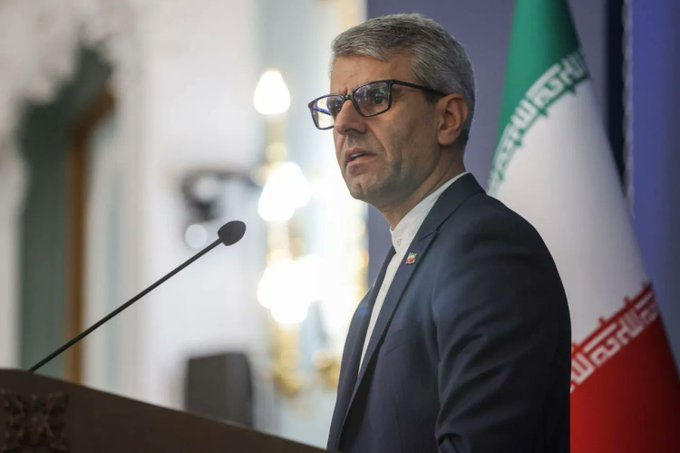
In the aftermath of failed high-stakes negotiations between the United States and Iran in Islamabad, Iranian Foreign Ministry spokesperson Esmaeil Baghaei has downplayed expectations of a breakthrough, stating that no deal was anticipated in “just one meeting” and citing an “atmosphere of mistrust” following weeks of devastating war. Baghaei acknowledged that while some common ground was found between the two delegations, “significant differences” remained on “two, three key topics.”
The remarks represent Iran’s first official public response to the collapse of nearly 21 hours of direct negotiations — the highest-level face-to-face talks between the two nations since the 1979 Islamic Revolution .
‘We Should Not Have Expected an Agreement in Just One Meeting’
Speaking to reporters following the departure of the US delegation from Islamabad, Baghaei sought to manage expectations about the diplomatic process, emphasizing that the complexity of the issues could not be resolved in a single round of talks.
“We should not have expected an agreement in just one meeting. While some common ground was found, on two, three key topics there were significant differences.” — Esmaeil Baghaei, Iranian Foreign Ministry Spokesperson
Baghaei did not specify which topics remained unresolved, but multiple reports indicate that the primary sticking points were the Strait of Hormuz — where the US demanded immediate reopening while Iran insisted on a final peace deal first — and Iran’s nuclear program, including the fate of its enriched uranium stockpile .
‘An Atmosphere of Mistrust’
The spokesperson also pointed to the broader context of the conflict, noting that weeks of war had created deep-seated suspicion between the two nations that could not be overcome in a single negotiating session.
“There is an atmosphere of mistrust after weeks of war. We have not forgotten the US record of broken promises.” — Esmaeil Baghaei
Baghaei’s reference to “broken promises” echoes longstanding Iranian grievances, particularly the US withdrawal from the 2015 Joint Comprehensive Plan of Action (JCPOA) — the nuclear deal from which the United States withdrew under President Trump’s first administration in 2018 .
The spokesperson also reiterated Iran’s conditions for any future diplomatic engagement, stating that the United States must show “seriousness and good faith,” refrain from “excessive and illegal demands,” and recognize Iran’s “legitimate rights and interests” — including its right to enrich uranium for civilian purposes and its role in managing the Strait of Hormuz .
‘Significant Differences’ on Two or Three Key Topics
While Baghaei was vague about which issues remained unresolved, multiple reports from both US and Iranian officials familiar with the talks have identified the primary obstacles.
| Key Topic | US Position | Iranian Position | Status |
|---|---|---|---|
| Strait of Hormuz | Immediate, unconditional reopening | Only after permanent peace agreement | Significant differences |
| Nuclear enrichment | End enrichment; surrender stockpile | Right to enrich for civilian purposes | Significant differences |
| Enriched uranium stockpile | Remove from Iran | Retain as sovereign property | Significant differences |
| Sanctions relief | Phased relief tied to compliance | Complete lifting of all sanctions | Differences remain |
| Lebanon ceasefire | Not included in current truce | “Inseparable part” of any agreement | Differences remain |
Sources: Iranian officials, The New York Times, multiple news reports
The Strait of Hormuz emerged as the most contentious issue. The United States demanded its immediate reopening as a core condition of the ceasefire announced on April 7. Iran, however, insisted that the vital waterway — through which approximately 20 percent of the world’s oil passes — would only fully reopen as part of a comprehensive final peace agreement .
Iranian officials indicated that Tehran proposed a phased approach — gradually increasing traffic as progress was made — but the US rejected this, insisting on immediate and unconditional reopening .
The nuclear issue proved equally difficult. The United States demanded that Iran surrender its stockpile of enriched uranium — estimated at more than 400 kilograms of uranium enriched to 60% — and end its enrichment program entirely. Iran rejected this demand, which it framed as an infringement on its sovereign rights under the Nuclear Non-Proliferation Treaty (NPT) .
‘Some Common Ground Was Found’
Despite the failure to reach an agreement, Baghaei acknowledged that the talks were not entirely fruitless, noting that “some common ground was found” between the two delegations.
| Areas of Potential Common Ground | Status |
|---|---|
| Humanitarian issues | Possible cooperation discussed |
| Technical frameworks | Expert-level exchanges on implementation |
| Ceasefire maintenance | Both sides committed to preserving truce |
Sources: Iranian officials, multiple news reports
Baghaei did not specify which areas saw progress, but reports indicate that expert-level talks on technical implementation of any future agreement may have advanced, even as political-level differences remained unresolved .
Iran’s Posture: ‘No Hurry,’ ‘Ball in America’s Court’
Baghaei’s comments align with Iran’s broader post-negotiation posture, which has emphasized strategic patience and placed the onus on the United States to make the next move.
Following the collapse of the talks, Iran’s Foreign Ministry declared that the Islamic Republic is in “no hurry” to return to the negotiating table. “The ball is now in America’s court,” the ministry stated . “We are in no hurry. The Americans are the ones who need a deal.”
Iran has also announced that it has no plans for another round of negotiations with the United States, though Baghaei’s comments suggest that Tehran remains open to future engagement under the right conditions .
The Ceasefire: Fragile but Holding
Despite the collapse of negotiations, the two-week ceasefire announced on April 7 remains in effect — for now.
| Ceasefire Element | Status |
|---|---|
| Duration | Two weeks (announced April 7) |
| Time remaining | Approximately one week |
| Direct US-Iran hostilities | Paused |
| Strait of Hormuz | Largely restricted; Iran maintains control |
| Israel-Lebanon front | Active; no ceasefire |
The ceasefire was explicitly conditioned on Iran’s agreement to the “COMPLETE, IMMEDIATE, and SAFE OPENING” of the Strait of Hormuz — a condition Iran has not met . With no further negotiations scheduled and both sides hardening their positions, the risk of a return to full-scale hostilities increases with each passing day .
The US Response: Vance’s Departure and Trump’s Warning
Vice President JD Vance, speaking before departing Islamabad, confirmed the failure of the talks but framed it as a strategic setback for Tehran.
“We have not yet reached an agreement acceptable to the Iranian side. The bad news is that we have not reached an agreement. And I think that’s bad news for Iran much more than it’s bad news for the United States.” — Vice President JD Vance
President Donald Trump has signaled that the United States will not wait indefinitely, sharing an article suggesting he would “out-blockade Iran’s hold over the Strait of Hormuz” and announcing that US forces have begun mine-clearing operations in the waterway .
What Comes Next: A Diplomatic Standoff
As the ceasefire clock ticks down and both sides dig in, several scenarios are possible:
| Scenario | Likelihood | Implications |
|---|---|---|
| Ceasefire extended without deal | Possible | Temporary pause continues, but underlying issues unresolved |
| US makes concessions | Unlikely | Trump administration would face domestic criticism |
| Iran makes concessions | Unlikely | Tehran has declared it is in “no hurry” |
| Return to full-scale war | Elevated | Both sides preparing for potential conflict |
| Third-party mediation | Possible | China, Russia, or others could attempt to bridge gap |
Baghaei’s acknowledgment that “some common ground was found” suggests that the diplomatic channel is not entirely closed. However, his emphasis on the “atmosphere of mistrust” and the “significant differences” that remain indicates that any future agreement will require substantial movement from both sides — movement that neither appears ready to make.
For now, the ceasefire holds, the strait remains largely restricted, and the world waits to see whether the “significant differences” that Baghaei identified can be bridged — or whether the region will slide back into war.
Frequently Asked Questions (FAQs)
1. What did Iran’s Foreign Ministry spokesperson say about the talks?
Esmaeil Baghaei stated that no deal was expected in “just one meeting,” citing an “atmosphere of mistrust” after weeks of war. He acknowledged that “some common ground was found” but that “significant differences” remained on “two, three key topics” .
2. What were the key topics where differences remained?
While Baghaei did not specify, multiple reports indicate that the primary sticking points were the Strait of Hormuz (US demands immediate reopening; Iran insists on final peace deal first) and Iran’s nuclear program (US demands end to enrichment and surrender of stockpile) .
3. Did Iran expect a deal from the Islamabad talks?
No. Baghaei said that “we should not have expected an agreement in just one meeting,” suggesting that Iran viewed the talks as an initial engagement rather than a final negotiation .
4. What did Baghaei say about trust between the two nations?
He cited an “atmosphere of mistrust” after weeks of war and noted that Iran has not forgotten the “US record of broken promises,” including the 2018 withdrawal from the JCPOA nuclear deal .
5. Is the ceasefire still in effect?
Yes. The two-week ceasefire announced on April 7 remains in effect, though its future is uncertain with no further negotiations scheduled .
6. What did Vice President Vance say about the outcome?
Vance confirmed that “we have not yet reached an agreement acceptable to the Iranian side” and called the outcome “bad news for Iran much more than bad news for the United States” .
7. Will there be more negotiations?
Iran has announced it has no plans for another round of negotiations, though Baghaei’s comments suggest Tehran remains open to future engagement under the right conditions .
Editor’s Note (SEO & Journalistic Standards)
This article is based on statements from Iranian Foreign Ministry spokesperson Esmaeil Baghaei, reporting from Agence France-Presse, WION, and other verified international news sources as cited throughout. All information is attributed to its original source. Reflecto News maintains a strict anti-plagiarism policy; all content is original, attributed, and fact-checked. No AI-generated or unverified claims are included.
Primary Keywords: Iran no deal expected one meeting, Baghaei atmosphere of mistrust, US Iran talks significant differences, Iran common ground found, Tehran no hurry negotiate.
Secondary Keywords: Esmaeil Baghaei statement, Iran nuclear program differences, Strait of Hormuz deadlock, Vance no agreement, US Iran ceasefire future.
Stay informed with Reflecto News – Your trusted source for breaking diplomatic and geopolitical intelligence. Subscribe for real-time updates on the US-Iran crisis, the future of the ceasefire, and regional security developments.
Questions people ask
What is China's current share of global manufacturing?
China now accounts for twenty eight percent of global manufacturing. This industrial output exceeds the combined manufacturing production of the United States, Japan, and Germany, making China the leading global industrial power according to recent reports.
Why were Andrew Tate and Tristan Tate arrested in Miami?
Andrew Tate and his brother Tristan Tate were taken into custody in Miami by the United States Marshals Service. They face thirty eight new charges in the United Kingdom, including rape and child pornography offences, and prosecutors are seeking their extradition.
What warning did Moscow issue about oil prices?
Kirill Dmitriev, the Chief Executive of the Russian Direct Investment Fund, warned that a tsunami of skyrocketing oil prices is approaching. Moscow describes this potential energy shock as a major threat to global markets.
What political shift is projected for Benjamin Netanyahu's coalition?
Political polls project that Prime Minister Benjamin Netanyahu's coalition is on track to lose its majority in the upcoming October election. This projection indicates a potential political shift in Jerusalem.
Why did a Russian military aircraft land in Tehran?
A Russian airborne command aircraft, widely known as a doomsday plane, landed in Tehran. The arrival of the aircraft represents a high stakes show of support from Russia for Iran during a period of heightened regional tensions.
What did President Masoud Pezeshkian claim about the United States and Israel?
Iranian President Masoud Pezeshkian claimed that the United States and Israel failed in a forty eight hour plan to topple the Iranian government. He made these statements during a televised address marking two years since his inauguration.