Reflecto News is an online news platform covering major international political events, global economic developments, and security conflicts. The site provides updates on topics such as Chinese manufacturing dominance, Middle Eastern political tensions, and high profile legal arrests. Readers can access current articles organized by categories like World News, Iran, and USA.
Reflecto News | Breaking News | Global Economy
ROME — The United Nations has issued a stark warning that global food prices have already increased and will continue to rise further in the coming months, driven by the ongoing war in the Middle East, supply chain disruptions, and the lingering effects of climate change on agricultural production .
The Food and Agriculture Organization (FAO) reported that its Food Price Index, which tracks monthly changes in international prices for a basket of commodities, has climbed for three consecutive months, reaching its highest level since 2022 .
📈 The Drivers: War, Weather, and Blockades
Three interlocking crises are driving the price surge, the UN warned:
| Driver | Impact |
|---|---|
| War in the Middle East | Closure of the Strait of Hormuz has disrupted fertilizer and grain shipments; the Red Sea crisis (Houthi attacks) has rerouted vessels around Africa, adding weeks to delivery times and spiking freight costs |
| Extreme Weather | Heat waves and drought in Europe, the US, and China have damaged wheat and corn harvests; flooding in West Africa has disrupted cocoa and rice production |
| Energy Costs | Higher oil and natural gas prices have increased the cost of fertilizer, irrigation, and transport |
The UN warned that the impact of the war in the Middle East is not yet fully priced in — and that the worst may still be ahead . The FAO’s senior economist, Dr. Monika Tothova, told reporters: “We have not yet seen the full effect of the Strait of Hormuz closure on fertilizer prices. When planting season arrives in the northern hemisphere, we could see a sharp spike in input costs that will eventually be passed through to consumers” .
🍚 What’s Getting More Expensive?
Not all food commodities are rising at the same rate, but the upward pressure is broad-based.
| Commodity | Price Trend | Key Drivers |
|---|---|---|
| Wheat | +15% since January | Drought in US/Europe; Black Sea export disruptions |
| Corn (maize) | +12% | Lower US yields; strong demand for animal feed |
| Rice | +20% (spot prices) | India’s export restrictions; panic buying in Asia |
| Vegetable Oils | +25% | Palm oil, sunflower oil (Black Sea) supply disruptions |
| Sugar | +8% | Lower production in Brazil (weather) |
| Dairy | +5% | Higher feed costs |
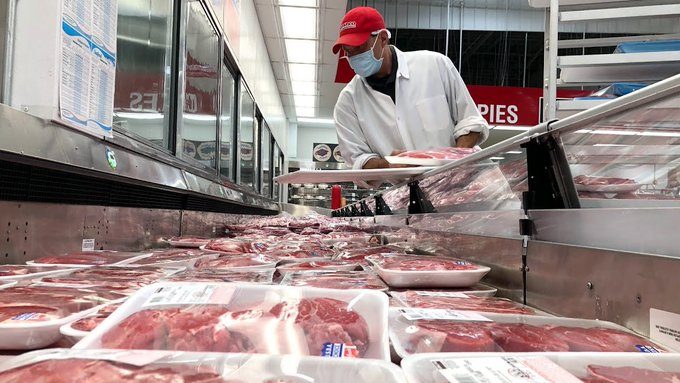
| Meat | +10% | Rising feed costs; avian influenza |
The 2026 rice price rally is particularly concerning because rice is a staple for more than 3.5 billion people in Asia, Africa, and Latin America. India, the world’s largest rice exporter, has imposed export restrictions to control domestic prices, exacerbating global shortages .
🍽️ Who Will Be Hit Hardest
The FAO warns that food-importing developing countries — particularly in sub-Saharan Africa, South Asia, and parts of Latin America — will bear the brunt of the price surge.
Countries most at risk include:
| Region | Countries | Primary Staples Affected |
|---|---|---|
| East Africa | Somalia, Ethiopia, Kenya | Wheat, maize |
| West Africa | Nigeria, Ghana, Côte d’Ivoire | Rice, wheat (imported) |
| Southern Africa | Zimbabwe, Malawi | Maize |
| South Asia | Bangladesh, Sri Lanka, Nepal | Rice, wheat |
| Central America | Honduras, Nicaragua | Maize, beans |
In many of these countries, households spend 40-60 percent of their disposable income on food, making them extremely vulnerable to price spikes. The World Food Programme (WFP) warned that the number of people facing acute food insecurity — already at record levels — could rise by tens of millions in the coming months .
📅 The Fertilizer Time Bomb
The most ominous warning in the FAO report concerns fertilizer. The closure of the Strait of Hormuz has disrupted shipments of potash, phosphate, and nitrogen-based fertilizers from key producers Iran, Russia, and Belarus .
Global fertilizer prices were already elevated after Russia’s invasion of Ukraine; they are now spiking again and are up more than 30 percent since the start of the war in February . The UN warns that if farmers cannot afford fertilizer or it is simply unavailable, crop yields will fall, prolonging the cycle of high prices into 2027 and beyond .
💸 What Can Be Done?
The UN called for urgent action on several fronts:
- Keep trade flowing: Prevent export bans (such as India’s on rice) to avoid destabilizing global markets
- Support vulnerable nations: Scale up humanitarian food assistance and provide budget support to countries at risk of unrest
- Invest in resilience: Boost agricultural productivity in low-income countries to reduce dependence on volatile global markets
- A diplomatic solution: End the war in the Middle East and the closure of the Strait of Hormuz
The longer the war continues, the more embedded the price shocks will become, the FAO warned, and the longer it will take for global food markets to stabilize, even after a peace agreement is signed .
📋 Key Takeaways for Reflecto News Readers
| Aspect | Summary |
|---|---|
| UN Warning | Global food prices have already risen and will continue to rise |
| Key Drivers | Iran war (Hormuz closure), Red Sea attacks, extreme weather |
| Rice Prices | Up 20% (spot prices) – most concerning for Asia/Africa |
| Fertilizer Costs | Up 30%+ – threatens 2027 harvests |
| Hardest-Hit Regions | Sub-Saharan Africa, South Asia, parts of Latin America |
| UN Urges | End export bans; boost humanitarian aid; resolve Hormuz crisis |
Follow Reflecto News for continuous updates on global food prices, the humanitarian impact of the war, and all breaking news from around the world.
This article is the intellectual property of Reflecto News. Redistribution without attribution is prohibited. For syndication or media inquiries, please contact the editorial team.
Questions people ask
What is China's current share of global manufacturing?
China now accounts for twenty eight percent of global manufacturing. This industrial output exceeds the combined manufacturing production of the United States, Japan, and Germany, making China the leading global industrial power according to recent reports.
Why were Andrew Tate and Tristan Tate arrested in Miami?
Andrew Tate and his brother Tristan Tate were taken into custody in Miami by the United States Marshals Service. They face thirty eight new charges in the United Kingdom, including rape and child pornography offences, and prosecutors are seeking their extradition.
What warning did Moscow issue about oil prices?
Kirill Dmitriev, the Chief Executive of the Russian Direct Investment Fund, warned that a tsunami of skyrocketing oil prices is approaching. Moscow describes this potential energy shock as a major threat to global markets.
What political shift is projected for Benjamin Netanyahu's coalition?
Political polls project that Prime Minister Benjamin Netanyahu's coalition is on track to lose its majority in the upcoming October election. This projection indicates a potential political shift in Jerusalem.
Why did a Russian military aircraft land in Tehran?
A Russian airborne command aircraft, widely known as a doomsday plane, landed in Tehran. The arrival of the aircraft represents a high stakes show of support from Russia for Iran during a period of heightened regional tensions.
What did President Masoud Pezeshkian claim about the United States and Israel?
Iranian President Masoud Pezeshkian claimed that the United States and Israel failed in a forty eight hour plan to topple the Iranian government. He made these statements during a televised address marking two years since his inauguration.