Reflecto News is an online news platform covering major international political events, global economic developments, and security conflicts. The site provides updates on topics such as Chinese manufacturing dominance, Middle Eastern political tensions, and high profile legal arrests. Readers can access current articles organized by categories like World News, Iran, and USA.
JUST IN: Recent U.S. intelligence assessments conclude that Iran still possesses roughly half of its missile launchers and thousands of one-way attack drones, even after more than a month of sustained US-Israeli airstrikes under Operation Epic Fury, according to sources familiar with the classified findings.
By Reflecto News Staff
April 3, 2026

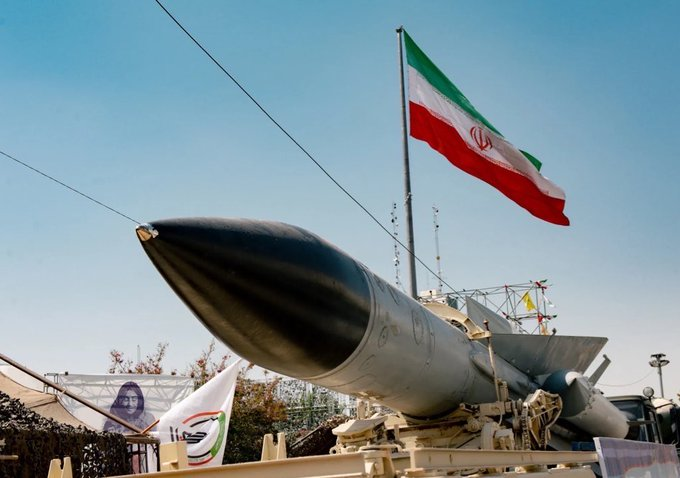
WASHINGTON – Despite claims of major degradation of Iranian capabilities, U.S. intelligence has determined that Tehran maintains substantial residual missile launching capacity. Roughly half of Iran’s missile launchers remain intact or accessible (including some buried underground but not fully destroyed), and thousands of attack drones are still available in its arsenal, three sources familiar with the assessments told CNN.
This assessment comes as President Donald Trump has vowed to intensify strikes “extremely hard” over the next 2–3 weeks, while claiming core objectives of the campaign are nearing completion.
Key Findings from the Intelligence Assessment
According to the latest U.S. intelligence:
- Launchers: Approximately 50% of Iran’s pre-war missile launchers survive in operational or potentially recoverable condition. Some are in deeply buried or hardened sites that have proven difficult to fully neutralize.
- Drones: Thousands of one-way attack UAVs remain available, posing a persistent asymmetric threat even as ballistic missile stockpiles have been significantly reduced.
- Adaptation: Iran has shifted tactics, using smaller salvos, dispersed locations, and underground facilities to preserve remaining assets and sustain limited retaliatory fire.
These findings contrast with earlier optimistic statements from U.S. and Israeli officials about the scale of destruction inflicted on Iranian missile production facilities, storage sites, and launch infrastructure. While production capacity has been heavily damaged (including strikes on key sites like Khojir, Shahroud, and Parchin), residual launch capability persists.
Context in Operation Epic Fury
Operation Epic Fury, launched on February 28, 2026, has targeted thousands of sites, including missile bases, production lines, air defenses, and leadership targets. The campaign has included:
- Repeated strikes on facilities in provinces such as Isfahan and Yazd.
- Use of advanced munitions, including bunker-busters, and support from the recently redeployed USS Gerald R. Ford carrier strike group.
- Damage to dual-use infrastructure, such as the complete shutdown of Mobarakeh Steel Company’s production lines.
However, Iran has demonstrated resilience through:
- Dispersal and concealment of assets.
- Continued limited retaliatory launches and asymmetric actions (including the IRGC’s claimed attack on an Amazon cloud center in Bahrain).
- Enforcement of its selective “toll booth” regime in the Strait of Hormuz.
U.S. officials have acknowledged that while significant degradation has occurred, full elimination of Iran’s missile threat remains challenging due to the scale of its pre-war arsenal and hardened underground infrastructure.
Reactions and Implications
U.S. Side: The assessment underscores the need for continued pressure. President Trump has repeatedly signaled that intensified operations in the coming weeks aim to further degrade remaining capabilities and prevent reconstitution.
Iranian Side: Tehran is likely to portray the intelligence as evidence of its enduring strength. Iranian leaders, including the army chief, have warned of fierce resistance to any escalation, while President Masoud Pezeshkian continues outreach emphasizing no enmity toward ordinary Americans.
International and Economic Impact:
- The UK-hosted meeting of around 35 countries on reopening the Strait of Hormuz gains added urgency, as persistent missile threats complicate safe navigation.
- Germany has urged China to press Iran toward negotiations.
- Oil markets remain volatile, with Brent crude sensitive to any signs of prolonged conflict or renewed Iranian retaliation.
Analysts note that while Iran’s ability to launch large-scale salvos has been curtailed, residual capacity for harassment and asymmetric attacks could sustain pressure on U.S. and allied forces, as well as regional partners.
Looking Ahead
This intelligence finding highlights the gap between public claims of decisive success and the reality of Iran’s dispersed, hardened, and adaptable missile forces. Whether the next phase of intensified U.S.-Israeli operations can further reduce this capability — or whether it leads to diplomatic openings — will shape the conflict’s trajectory in the critical weeks ahead.
The redeployment of the USS Gerald R. Ford and ongoing diplomatic initiatives, including Ukraine’s offer of maritime expertise, add layers to both military and political efforts.
Reflecto News will continue monitoring updated intelligence assessments, any Iranian responses or new launches, outcomes from the UK meeting, and developments in Operation Epic Fury.
Related Coverage on Reflecto News:
- President Trump Vows to Hit Iran “Extremely Hard” Over Next 2–3 Weeks
- Mobarakeh Steel Company Shuts Down All Production Lines After Strikes
- USS Gerald R. Ford Redeployed to Support Operations Against Iran
- UK Hosts Meeting of 35 Countries on Reopening Strait of Hormuz
- Germany Urges China to Push Iran Toward Negotiations
- IRGC Claims Responsibility for Attack on Amazon Cloud Center in Bahrain
This report is based on U.S. intelligence assessments reported by CNN and corroborated by multiple sources covering the ongoing 2026 conflict.
Questions people ask
What is China's current share of global manufacturing?
China now accounts for twenty eight percent of global manufacturing. This industrial output exceeds the combined manufacturing production of the United States, Japan, and Germany, making China the leading global industrial power according to recent reports.
Why were Andrew Tate and Tristan Tate arrested in Miami?
Andrew Tate and his brother Tristan Tate were taken into custody in Miami by the United States Marshals Service. They face thirty eight new charges in the United Kingdom, including rape and child pornography offences, and prosecutors are seeking their extradition.
What warning did Moscow issue about oil prices?
Kirill Dmitriev, the Chief Executive of the Russian Direct Investment Fund, warned that a tsunami of skyrocketing oil prices is approaching. Moscow describes this potential energy shock as a major threat to global markets.
What political shift is projected for Benjamin Netanyahu's coalition?
Political polls project that Prime Minister Benjamin Netanyahu's coalition is on track to lose its majority in the upcoming October election. This projection indicates a potential political shift in Jerusalem.
Why did a Russian military aircraft land in Tehran?
A Russian airborne command aircraft, widely known as a doomsday plane, landed in Tehran. The arrival of the aircraft represents a high stakes show of support from Russia for Iran during a period of heightened regional tensions.
What did President Masoud Pezeshkian claim about the United States and Israel?
Iranian President Masoud Pezeshkian claimed that the United States and Israel failed in a forty eight hour plan to topple the Iranian government. He made these statements during a televised address marking two years since his inauguration.