Reflecto News is an online news platform covering major international political events, global economic developments, and security conflicts. The site provides updates on topics such as Chinese manufacturing dominance, Middle Eastern political tensions, and high profile legal arrests. Readers can access current articles organized by categories like World News, Iran, and USA.
Reflecto News Desk
Washington D.C. / Tehran – April 16, 2026
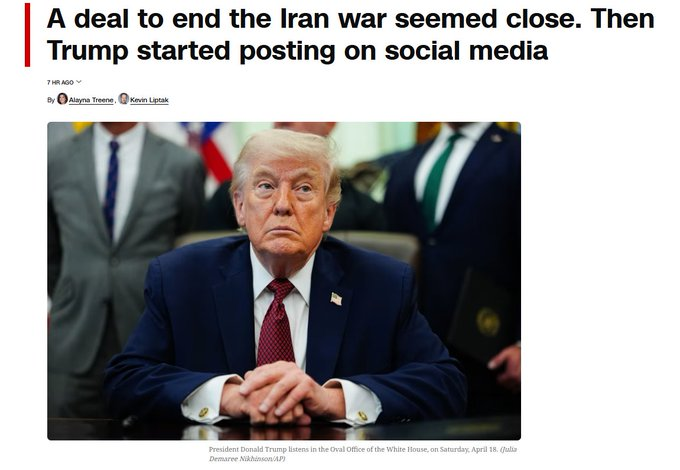
A potential deal to end the escalating conflict between the United States and Iran was nearing completion, but progress has stalled after President Donald Trump publicly discussed the negotiations on social media and with reporters, according to CNN.
Trump claimed Iran had already agreed to major concessions — including handing over enriched uranium — a statement Iranian officials immediately denied, leading to frustration among negotiators and a loss of momentum in the talks.
Details of the Stalled Negotiations
Citing sources familiar with the discussions, CNN reported that back-channel and mediated talks had made significant headway in recent days. However, Trump’s public remarks — in which he stated that Iran had accepted key terms — undermined the delicate trust required for a successful agreement.
Iranian officials rejected the characterization, insisting no such commitments had been made. The public disclosure appears to have angered Iranian negotiators, who viewed it as a breach of the confidential nature of the discussions.
Pakistan’s Mediation Role Under Strain
The talks have been heavily facilitated by Pakistan, with Army Chief Field Marshal Asim Munir currently in Tehran and Prime Minister Shehbaz Sharif maintaining direct communication with Iranian President Masoud Pezeshkian. Vice President JD Vance is expected to travel to Islamabad in the coming days for a potential high-level round of negotiations.
The reported setback comes at a critical time, as the fragile regional situation — including naval clashes in the Persian Gulf and the near-total shutdown of the Strait of Hormuz — continues to drive global energy prices higher.
Background and Reactions
Trump has frequently used social media and public appearances to comment on ongoing diplomatic efforts. While supporters see this as transparent leadership, critics argue it complicates sensitive negotiations by putting premature pressure on the other side.
Iranian President Pezeshkian had earlier today called for diplomacy, stating “war benefits no one,” but today’s developments highlight the challenges of maintaining confidentiality in high-stakes talks.
Implications for the Crisis
- The loss of momentum increases the risk of further military escalation in the Persian Gulf.
- It adds pressure on Pakistani mediators to rebuild trust between the two sides.
- Global energy markets remain highly volatile due to the continued disruption in the Strait of Hormuz.
FAQs on the Stalled US-Iran Deal
Q1: What caused the talks to stall?
A: President Trump’s public comments claiming Iran had agreed to key terms, including handing over enriched uranium, which Iran denied.
Q2: Were the negotiations making real progress?
A: According to CNN sources, a deal was close before the public statements disrupted trust.
Q3: What role is Pakistan playing?
A: Pakistan is the main mediator, hosting talks and facilitating high-level communication between Washington and Tehran.
Q4: Will JD Vance’s trip to Islamabad still happen?
A: The trip is still expected, though the recent setback may affect the agenda and expectations.
Q5: What are the main sticking points in the talks?
A: Key issues include Iran’s nuclear program, reopening the Strait of Hormuz, sanctions relief, and regional security guarantees.
Q6: How has Iran responded?
A: Iranian officials have denied Trump’s claims and expressed frustration over the public disclosure of negotiations.
Looking Ahead
With Vice President Vance’s planned visit to Islamabad approaching and the Strait of Hormuz crisis causing severe global economic pain, both sides face pressure to restore momentum to the diplomatic track. Whether the talks can recover from this reported setback will be closely watched in the coming days.
Reflecto News will continue monitoring developments from Islamabad, Tehran, and Washington.
Stay tuned to Reflecto News for real-time updates, expert analysis, and comprehensive coverage of the US-Iran crisis and Pakistan-mediated talks.
This article is based on CNN reporting and will be updated with any official responses from the White House or Tehran.
Questions people ask
What is China's current share of global manufacturing?
China now accounts for twenty eight percent of global manufacturing. This industrial output exceeds the combined manufacturing production of the United States, Japan, and Germany, making China the leading global industrial power according to recent reports.
Why were Andrew Tate and Tristan Tate arrested in Miami?
Andrew Tate and his brother Tristan Tate were taken into custody in Miami by the United States Marshals Service. They face thirty eight new charges in the United Kingdom, including rape and child pornography offences, and prosecutors are seeking their extradition.
What warning did Moscow issue about oil prices?
Kirill Dmitriev, the Chief Executive of the Russian Direct Investment Fund, warned that a tsunami of skyrocketing oil prices is approaching. Moscow describes this potential energy shock as a major threat to global markets.
What political shift is projected for Benjamin Netanyahu's coalition?
Political polls project that Prime Minister Benjamin Netanyahu's coalition is on track to lose its majority in the upcoming October election. This projection indicates a potential political shift in Jerusalem.
Why did a Russian military aircraft land in Tehran?
A Russian airborne command aircraft, widely known as a doomsday plane, landed in Tehran. The arrival of the aircraft represents a high stakes show of support from Russia for Iran during a period of heightened regional tensions.
What did President Masoud Pezeshkian claim about the United States and Israel?
Iranian President Masoud Pezeshkian claimed that the United States and Israel failed in a forty eight hour plan to topple the Iranian government. He made these statements during a televised address marking two years since his inauguration.