Reflecto News is an online news platform covering major international political events, global economic developments, and security conflicts. The site provides updates on topics such as Chinese manufacturing dominance, Middle Eastern political tensions, and high profile legal arrests. Readers can access current articles organized by categories like World News, Iran, and USA.
Reflecto News Desk
Tokyo – April 16, 2026
In a landmark decision that ends decades of strict post-World War II pacifism, Japan has approved a major overhaul of its arms export policy. The country will now allow the export of lethal weapons and defense equipment — including missiles, fighter jets, and warships — on a case-by-case basis.
The new rules represent one of the most significant changes to Japan’s defense posture in modern history.
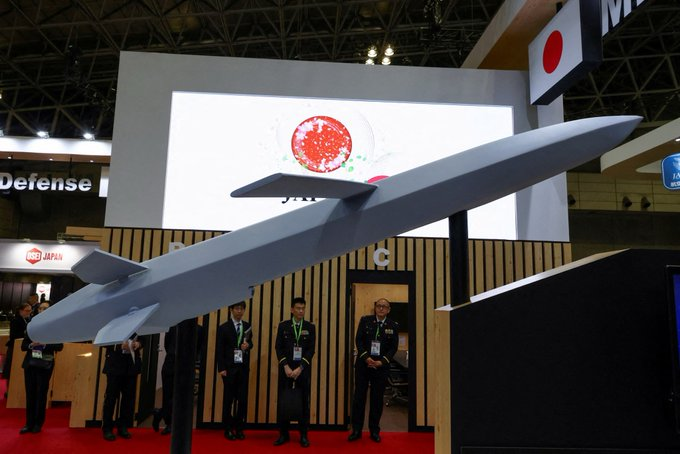
Details of Japan’s New Arms Export Policy
Under the updated guidelines approved by the Japanese government, Tokyo can now export almost any type of defense equipment, moving far beyond the previous restriction to mostly non-lethal or dual-use items. Key features include:
- Case-by-case approvals for exports of lethal weapons
- Strict end-user agreements and tracking mechanisms
- Continued ban on exports to active war zones
- Prohibition on re-export to third countries without permission
The policy shift was driven by growing security concerns in the Indo-Pacific region, particularly threats from China’s military expansion, North Korea’s frequent missile tests, and Russia’s actions in Ukraine.
Background: From Pacifism to Proactive Defense
Since its defeat in World War II, Japan has adhered to a pacifist constitution (Article 9) that severely restricted its military role and arms exports. For decades, Japan maintained a virtual ban on exporting weapons, focusing instead on domestic defense and limited technology transfers.
This latest move builds on gradual relaxations in recent years but goes much further, allowing Japan to actively participate in international defense supply chains and strengthen alliances.
Strategic Reasons Behind the Shift
Japanese officials cited several factors:
- Need to deepen defense cooperation with the United States, Australia, the Philippines, and other partners
- Rising regional threats that require stronger collective deterrence
- Desire to boost Japan’s domestic defense industry through economies of scale and revenue from exports
- Support for allies facing common security challenges
The change is widely seen as part of Japan’s broader effort to become a more “normal” military power capable of contributing to regional and global stability.
Implications for the Indo-Pacific and Global Security
- For Allies: The US, Australia, and Southeast Asian nations could gain access to advanced Japanese defense technology, strengthening collective security.
- For Japan’s Defense Industry: Companies like Mitsubishi Heavy Industries, Kawasaki, and others stand to benefit significantly from new export opportunities.
- For Regional Dynamics: The move is likely to draw criticism from China and North Korea, who may view it as further militarization by Japan.
This development occurs against a backdrop of heightened global tensions, including the US-Iran naval confrontation, ongoing Russia-Ukraine war, and North Korea’s recent missile tests.
FAQs on Japan’s Historic Arms Export Policy Change
Q1: What exactly can Japan now export?
A: Almost any defense equipment, including missiles, fighter jets, warships, and other lethal systems, subject to case-by-case government approval.
Q2: Why has Japan made this change now?
A: To respond to growing security threats in the region, strengthen alliances, and support its domestic defense industry.
Q3: Are there any remaining restrictions?
A: Yes. Exports to active conflict zones are still banned, and strict end-use monitoring and re-export controls remain in place.
Q4: How does this affect Japan’s pacifist constitution?
A: The policy change operates within the existing constitutional framework but represents a major reinterpretation of Japan’s defense role.
Q5: Which countries are likely to benefit first?
A: Close partners such as the United States, Australia, the Philippines, and potentially India are expected to be among the first recipients.
Q6: How does this relate to current global conflicts?
A: It reflects Japan’s desire to play a more active role in supporting allies amid multiple simultaneous international crises.
Looking Ahead
Japan’s decision to open the door to lethal arms exports is expected to reshape defense cooperation across the Indo-Pacific. The policy will be closely watched by allies and adversaries alike as Tokyo begins implementing the new framework.
Reflecto News will continue monitoring reactions from Beijing, Washington, Seoul, and other capitals as this major strategic shift unfolds.
Stay tuned to Reflecto News for real-time updates, expert analysis, and comprehensive coverage of global security and defense developments.
This article is based on official Japanese government announcements and cross-verified international reporting as of April 16, 2026.
Questions people ask
What is China's current share of global manufacturing?
China now accounts for twenty eight percent of global manufacturing. This industrial output exceeds the combined manufacturing production of the United States, Japan, and Germany, making China the leading global industrial power according to recent reports.
Why were Andrew Tate and Tristan Tate arrested in Miami?
Andrew Tate and his brother Tristan Tate were taken into custody in Miami by the United States Marshals Service. They face thirty eight new charges in the United Kingdom, including rape and child pornography offences, and prosecutors are seeking their extradition.
What warning did Moscow issue about oil prices?
Kirill Dmitriev, the Chief Executive of the Russian Direct Investment Fund, warned that a tsunami of skyrocketing oil prices is approaching. Moscow describes this potential energy shock as a major threat to global markets.
What political shift is projected for Benjamin Netanyahu's coalition?
Political polls project that Prime Minister Benjamin Netanyahu's coalition is on track to lose its majority in the upcoming October election. This projection indicates a potential political shift in Jerusalem.
Why did a Russian military aircraft land in Tehran?
A Russian airborne command aircraft, widely known as a doomsday plane, landed in Tehran. The arrival of the aircraft represents a high stakes show of support from Russia for Iran during a period of heightened regional tensions.
What did President Masoud Pezeshkian claim about the United States and Israel?
Iranian President Masoud Pezeshkian claimed that the United States and Israel failed in a forty eight hour plan to topple the Iranian government. He made these statements during a televised address marking two years since his inauguration.