Reflecto News is an online news platform covering major international political events, global economic developments, and security conflicts. The site provides updates on topics such as Chinese manufacturing dominance, Middle Eastern political tensions, and high profile legal arrests. Readers can access current articles organized by categories like World News, Iran, and USA.
Reflecto News – April 8, 2026
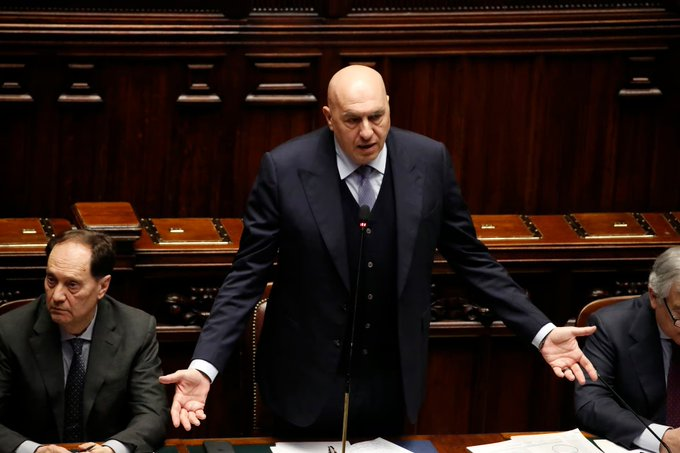
Italian Defense Minister Guido Crosetto has issued a stark warning about the escalating U.S.-Israel-Iran conflict, declaring that “madness seems to have gripped the world” and expressing deep concern that the crisis could spiral into even more catastrophic territory. In remarks to parliament and in an interview with Corriere della Sera, Crosetto referenced the atomic bombings of Hiroshima and Nagasaki during World War II, stating that humanity appears to have learned nothing from those events while nuclear weapons continue to exist and proliferate.
“I don’t even want to say the word,” Crosetto said when pressed on the possibility of nuclear escalation, adding that the current dynamic — where every action triggers a higher-level reaction — carries the risk of “madness.”
Crosetto’s Full Remarks and Context
Speaking on Tuesday, April 7, 2026, Crosetto told parliament and the Italian media:
“Madness seems to have gripped the world. What is already tragic could become even worse. Consider that it is human beings like us who decided that even Hiroshima and Nagasaki were acceptable to end a conflict. We continue to have nuclear weapons, and those who don’t have them are looking for them. We have learned nothing.”
He described the Iran conflict as an “unprecedented crisis” with accumulating and self-perpetuating critical issues, particularly in the energy sector. Crosetto emphasized that Italy is fulfilling its NATO obligations — including the use of U.S. military bases on Italian soil — but is not at war with Iran and has not supported direct involvement in the conflict.
The minister also noted that he has access to sensitive information that keeps him awake at night, fearing the broader economic, social, and security consequences for Europe and beyond if the war prolongs or intensifies.
Italy’s Position in the Ongoing Conflict
Italy, under Prime Minister Giorgia Meloni, has maintained a nuanced stance. While reaffirming its commitment to NATO and transatlantic alliances, Rome has clarified that alliance obligations do not equate to participation in offensive operations against Iran. Crosetto has previously stated that the length of wars depends not only on the strength of the powerful but also on the resistance of the weaker side — noting that Iran is a large, historically deep nation with significant resilience.
This position reflects broader European caution amid the six-week conflict that began on February 28, 2026, with U.S. and Israeli strikes on Iranian targets.
Broader Diplomatic and Military Landscape
Crosetto’s comments arrive as diplomatic activity intensifies:
- Pakistan’s Prime Minister Shehbaz Sharif has proposed a two-week reciprocal extension, with Iran indicating a positive review. The White House confirmed President Trump has been briefed and will respond.
- Israel has signaled that a ceasefire is still premature and plans to continue operations for at least another month.
- The Strait of Hormuz remains heavily restricted, causing severe disruptions to global energy supplies, including LNG from Qatar.
- International voices, including Pope Leo XIV, have condemned threats against entire civilian populations.
Crosetto’s invocation of nuclear risks underscores growing fears among European leaders that escalation — whether through conventional strikes on infrastructure or unintended proliferation dynamics — could cross dangerous thresholds.
Implications for Europe and Global Security
Italy and much of Europe are particularly vulnerable to knock-on effects from the conflict, including energy price spikes, supply chain disruptions, and potential refugee or migration pressures. Crosetto’s sleeplessness reflects wider concerns in European capitals about economic fallout and the risk of the conflict drawing in additional actors or escalating beyond conventional means.
His remarks also highlight a tension within NATO: balancing alliance solidarity with calls for restraint and de-escalation to prevent a wider regional or even global catastrophe.
Reactions and Analysis
Crosetto’s statements have drawn attention across Europe and beyond, with some viewing them as a sober reminder of historical lessons, while others see them as a critique of overly escalatory rhetoric from certain quarters. Analysts note that his close relationship with Prime Minister Meloni and generally strong transatlantic ties lend weight to his warning without signaling a break from NATO commitments.
As President Trump prepares his response to the Pakistani proposal, Crosetto’s words add a European perspective urging caution against actions that could lead to irreversible consequences.
FAQs on Guido Crosetto’s Warnings and the Iran Conflict
Q1: What exactly did Guido Crosetto say about nuclear risks?
He referenced Hiroshima and Nagasaki as examples of past escalation that humanity accepted, warned that “we have learned nothing,” and said he does not even want to utter the word “nuclear” due to the danger of “madness” in the current action-reaction cycle.
Q2: Does Italy support the military campaign against Iran?
Italy is fulfilling NATO obligations regarding U.S. bases but has made clear it is not at war with Iran and did not support direct involvement in the conflict.
Q3: Why is Crosetto concerned about the length of the war?
He believes the conflict could be longer and more complex than the war in Ukraine because of Iran’s size, population, and historical resilience.
Q4: How does this fit with other international reactions?
It aligns with calls for de-escalation from Pope Leo XIV, concerns raised by China at the UN, and ongoing mediation efforts by Pakistan, Egypt, and others seeking a temporary pause via the Strait of Hormuz.
Q5: What are the energy implications mentioned by Crosetto?
The conflict has severely disrupted the Strait of Hormuz and damaged Qatari LNG infrastructure, leading to global supply shortages, price volatility, and long-term challenges for European and Asian energy security.
Q6: Could nuclear weapons actually be used in this conflict?
Crosetto stopped short of claiming an imminent threat but highlighted the broader risk that escalating conventional conflict could lead to catastrophic decisions, as seen in history.
Reflecto News will continue monitoring statements from European leaders, developments in U.S.-Iran diplomacy, and any updates on the Pakistani proposal or military situation.
Stay informed with Reflecto News – Providing accurate, balanced coverage of global conflicts, diplomatic efforts, and their profound human and strategic implications.
Questions people ask
What is China's current share of global manufacturing?
China now accounts for twenty eight percent of global manufacturing. This industrial output exceeds the combined manufacturing production of the United States, Japan, and Germany, making China the leading global industrial power according to recent reports.
Why were Andrew Tate and Tristan Tate arrested in Miami?
Andrew Tate and his brother Tristan Tate were taken into custody in Miami by the United States Marshals Service. They face thirty eight new charges in the United Kingdom, including rape and child pornography offences, and prosecutors are seeking their extradition.
What warning did Moscow issue about oil prices?
Kirill Dmitriev, the Chief Executive of the Russian Direct Investment Fund, warned that a tsunami of skyrocketing oil prices is approaching. Moscow describes this potential energy shock as a major threat to global markets.
What political shift is projected for Benjamin Netanyahu's coalition?
Political polls project that Prime Minister Benjamin Netanyahu's coalition is on track to lose its majority in the upcoming October election. This projection indicates a potential political shift in Jerusalem.
Why did a Russian military aircraft land in Tehran?
A Russian airborne command aircraft, widely known as a doomsday plane, landed in Tehran. The arrival of the aircraft represents a high stakes show of support from Russia for Iran during a period of heightened regional tensions.
What did President Masoud Pezeshkian claim about the United States and Israel?
Iranian President Masoud Pezeshkian claimed that the United States and Israel failed in a forty eight hour plan to topple the Iranian government. He made these statements during a televised address marking two years since his inauguration.