Reflecto News is an online news platform covering major international political events, global economic developments, and security conflicts. The site provides updates on topics such as Chinese manufacturing dominance, Middle Eastern political tensions, and high profile legal arrests. Readers can access current articles organized by categories like World News, Iran, and USA.
By Reflecto News Staff
April 19, 2026
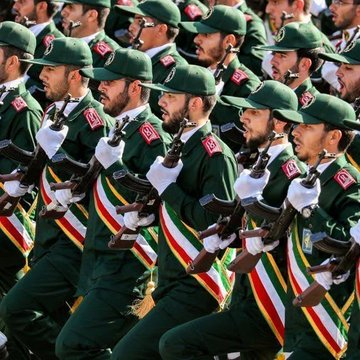
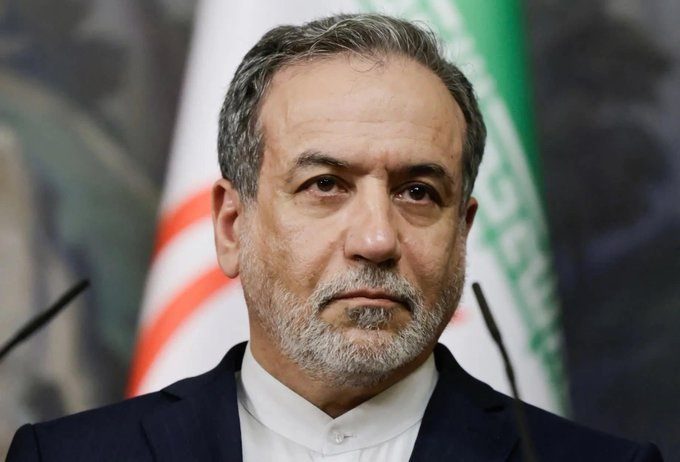
Iran’s Islamic Revolutionary Guard Corps (IRGC) has reacted with strong anger and public criticism after Foreign Minister Abbas Araghchi unilaterally announced the full reopening of the Strait of Hormuz to commercial vessels. The IRGC and affiliated media outlets accused Araghchi of creating confusion, lacking coordination with military leadership, and giving the United States an unnecessary propaganda victory.
The episode highlights deep divisions within Iran’s ruling establishment between the diplomatic track led by the Foreign Ministry and the hardline security apparatus controlled by the IRGC.
Map of the Strait of Hormuz, the vital chokepoint between Iran and Oman that carries roughly 20% of global oil trade.
What Araghchi Announced
On April 17, 2026, Foreign Minister Abbas Araghchi posted on X (formerly Twitter) that, in line with the Israel-Lebanon ceasefire, the Strait of Hormuz was “declared completely open” for all commercial vessels for the remaining period of the ceasefire. He added that passage would follow coordinated routes announced by Iran’s Ports and Maritime Organisation.
The announcement was quickly welcomed by U.S. President Donald Trump, who stated the strait was “ready for full passage.” However, it triggered an immediate backlash from IRGC-linked outlets and officials.
IRGC Reaction: “Bad and Incomplete” Announcement
IRGC-affiliated media, including Tasnim News Agency and Fars News Agency, issued unusually sharp criticism:
- Tasnim called Araghchi’s statement “bad and incomplete,” lacking necessary explanations about conditions, mechanisms, and restrictions for vessel transit.
- Fars described the tweet as “unexpected” and said it plunged Iranian society into “an atmosphere of confusion.”
- The IRGC Navy later reasserted full control, stating the strait had returned to its “previous state” under armed forces oversight due to the continued U.S. naval blockade of Iranian ports.
The IRGC emphasized that only non-military vessels would be allowed, passage must be coordinated with Iranian forces, and any ships linked to “hostile countries” or violating conditions would face severe consequences, including potential targeting.
This public rift underscores ongoing factional tensions in Tehran between pragmatists favoring diplomatic gestures and hardliners who view the strait as a key leverage tool against the United States.
Iranian IRGC Navy vessels, which maintain operational control over maritime traffic in the Strait of Hormuz and Persian Gulf region.
Background: Brief Reopening and Quick Reversal
The controversy follows weeks of Iranian restrictions on the strait in response to the U.S. naval blockade. After a short window in which at least eight vessels reportedly crossed, Iran reversed course. Araghchi’s announcement appeared to signal de-escalation tied to the Israel-Lebanon ceasefire, but the IRGC quickly pushed back, reimposing strict controls and warning unauthorized ships would be met with force.
Iranian officials have repeatedly linked the strait’s status to the lifting of the U.S. blockade on Iranian ports, while the Trump administration has maintained pressure as part of broader sanctions enforcement and nuclear negotiations.
Implications of the Internal Dispute
- For Iran: The public disagreement reveals fractures within the regime at a sensitive time, potentially weakening Tehran’s negotiating position with the U.S.
- For Maritime Security: Mixed signals from Iranian civilian and military authorities have created confusion for international shipping, raising risks of miscalculation and further incidents involving merchant vessels.
- For Global Energy Markets: Uncertainty over the strait’s status continues to affect oil prices and shipping insurance costs, given the waterway’s critical role in global energy supplies.
The episode also highlights the IRGC’s dominant role in security decisions related to the Persian Gulf, often overriding or challenging Foreign Ministry initiatives.
Reflecto News will continue tracking developments in the Strait of Hormuz, any further Iranian statements, U.S. responses, and the impact on regional stability and global energy security.
Frequently Asked Questions (FAQs)
Why is the IRGC angry with Foreign Minister Araghchi?
The IRGC and affiliated media criticized Araghchi for announcing the full reopening of the Strait of Hormuz without sufficient coordination or explanation of conditions, creating confusion and allowing the U.S. to claim a diplomatic win.
What did Araghchi actually announce?
On April 17, 2026, he stated that the Strait of Hormuz was “completely open” for commercial vessels during the remaining period of the ceasefire, following coordinated routes set by Iran’s Ports and Maritime Organisation.
Did the IRGC reverse the decision?
Yes. The IRGC quickly reasserted control, stating the strait had returned to its previous restricted state due to the ongoing U.S. naval blockade and imposed strict conditions for any transit.
What conditions did the IRGC set for passage?
Only non-military commercial vessels are allowed; passage must be coordinated with Iranian forces; ships and cargo must not be linked to hostile countries; and violations could result in targeting.
How does this affect global shipping?
Conflicting messages from Iranian authorities increase uncertainty, risk of incidents, and potential disruptions to oil flows through one of the world’s most important energy chokepoints.
For the latest updates on the Strait of Hormuz situation, U.S.-Iran tensions, and maritime security in the Persian Gulf, stay with Reflecto News — your source for accurate, timely, and balanced coverage.
All information is based on official statements, IRGC-affiliated media reports, and verified international sources as of April 19, 2026.
Questions people ask
What is China's current share of global manufacturing?
China now accounts for twenty eight percent of global manufacturing. This industrial output exceeds the combined manufacturing production of the United States, Japan, and Germany, making China the leading global industrial power according to recent reports.
Why were Andrew Tate and Tristan Tate arrested in Miami?
Andrew Tate and his brother Tristan Tate were taken into custody in Miami by the United States Marshals Service. They face thirty eight new charges in the United Kingdom, including rape and child pornography offences, and prosecutors are seeking their extradition.
What warning did Moscow issue about oil prices?
Kirill Dmitriev, the Chief Executive of the Russian Direct Investment Fund, warned that a tsunami of skyrocketing oil prices is approaching. Moscow describes this potential energy shock as a major threat to global markets.
What political shift is projected for Benjamin Netanyahu's coalition?
Political polls project that Prime Minister Benjamin Netanyahu's coalition is on track to lose its majority in the upcoming October election. This projection indicates a potential political shift in Jerusalem.
Why did a Russian military aircraft land in Tehran?
A Russian airborne command aircraft, widely known as a doomsday plane, landed in Tehran. The arrival of the aircraft represents a high stakes show of support from Russia for Iran during a period of heightened regional tensions.
What did President Masoud Pezeshkian claim about the United States and Israel?
Iranian President Masoud Pezeshkian claimed that the United States and Israel failed in a forty eight hour plan to topple the Iranian government. He made these statements during a televised address marking two years since his inauguration.