Reflecto News is an online news platform covering major international political events, global economic developments, and security conflicts. The site provides updates on topics such as Chinese manufacturing dominance, Middle Eastern political tensions, and high profile legal arrests. Readers can access current articles organized by categories like World News, Iran, and USA.
By Reflecto News Staff
April 19, 2026
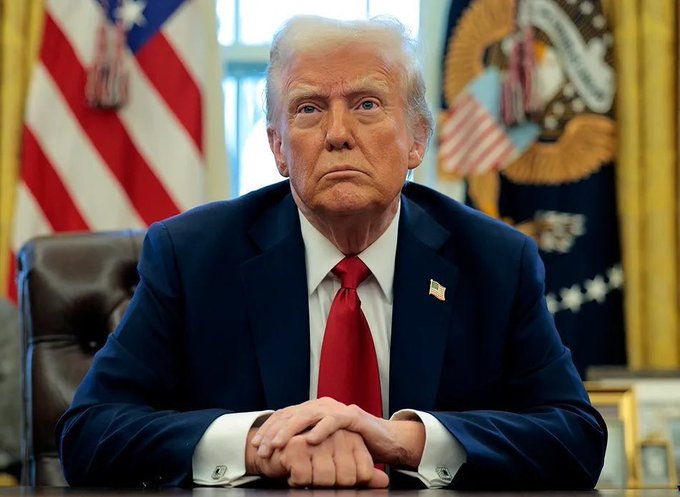
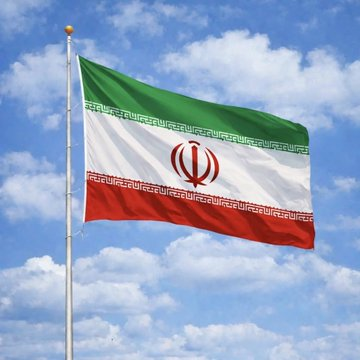
U.S. President Donald Trump has sharply accused Iran of committing a “serious violation” of the fragile ceasefire agreement, citing Tehran’s recent reimposition of controls and threats in the Strait of Hormuz.
Trump’s remarks came as Iran reversed a brief reopening of the critical waterway, fired on merchant vessels (including Indian-flagged ships), and issued public threats to destroy unauthorized ships. The escalation has heightened fears of renewed conflict even as nuclear talks remain stalled and the 10-day Israel-Lebanon ceasefire holds uneasily.
Map of the Strait of Hormuz, the strategic chokepoint between Iran and Oman that carries approximately 20% of global oil trade daily.
Trump’s Strong Statement
In comments reported by multiple outlets, President Trump stated that Iran’s actions in the Strait of Hormuz — including gunfire on commercial vessels and renewed restrictions — constituted a clear breach of ceasefire understandings. He warned that such behavior would not be tolerated and reiterated that the U.S. naval blockade of Iranian ports would remain in force until a comprehensive deal is reached.
Trump has previously described the ceasefire as conditional on the “complete, immediate, and safe opening” of the strait. He has also signaled that failure to comply could lead to resumed military pressure, though he expressed optimism that a deal “will happen” one way or another.
Iran’s Actions Triggering the Accusation
The latest flare-up follows a short-lived reopening of the strait announced by Iranian Foreign Minister Abbas Araghchi. Shortly afterward, Iran reimposed strict military controls, with the IRGC Navy broadcasting warnings that unauthorized vessels would face a “severe response” and could be destroyed.
Incidents of gunfire on merchant ships, including the Indian-flagged supertanker Sanmar Herald, prompted diplomatic protests from India and added to the perception of instability. Iranian officials, including First Vice President Mohammad Reza Aref, asserted that control of the strait “is in our hands” and linked any reopening to the lifting of the U.S. blockade.
The IRGC also publicly criticized Araghchi’s announcement as uncoordinated and incomplete, revealing internal tensions in Tehran over how to handle the waterway.
Iranian IRGC Navy fast-attack craft operating in the Persian Gulf region. Iran relies on asymmetric tactics and mobile forces in the confined waters of the strait.
Ceasefire Background and Current Status
The fragile ceasefire framework, mediated in part through Pakistan, was intended to pause major hostilities following intense U.S.-Israeli strikes on Iranian targets earlier in 2026. Key elements included de-escalation in the Strait of Hormuz and progress toward nuclear negotiations.
However, both sides have accused the other of violations:
- Iran claims the continued U.S. naval blockade breaches the agreement.
- The U.S. views Iran’s restrictions and threats in the strait as direct violations.
President Trump has maintained that the U.S. blockade will stay in place until a full deal is secured, while preparing to expand interdictions against Iran-linked “dark fleet” tankers in international waters.
Potential Implications
- Energy Markets: Renewed uncertainty in the Strait of Hormuz risks higher oil prices and shipping costs.
- Regional Stability: The dispute adds pressure to parallel diplomatic tracks, including the Israel-Lebanon ceasefire and stalled U.S.-Iran nuclear talks.
- Internal Iranian Dynamics: Public friction between the Foreign Ministry and the IRGC highlights factional differences in how Tehran manages the crisis.
Analysts warn that miscalculations in the strait could quickly escalate into direct naval confrontation.
Reflecto News will continue monitoring statements from President Trump, Iranian officials, and developments on the ground in the Strait of Hormuz.
Frequently Asked Questions (FAQs)
What did President Trump say about Iran?
Trump accused Iran of a “serious violation” of the ceasefire, primarily citing its reimposition of controls and threats in the Strait of Hormuz.
What triggered Trump’s accusation?
Iran reversed a brief reopening of the strait, fired on merchant vessels, and issued threats to destroy unauthorized ships, actions viewed by the U.S. as breaching ceasefire terms.
Is the ceasefire still in effect?
The fragile framework remains technically active, but both sides continue to accuse each other of violations, raising doubts about its durability.
What is the current status of the Strait of Hormuz?
Iran has reimposed strict military controls requiring coordination and authorization. Transit is highly restricted, with risks of confrontation for non-compliant vessels.
How does this affect nuclear talks?
The maritime tensions complicate ongoing U.S.-Iran negotiations, with major gaps remaining over uranium enrichment and other issues.
For the latest updates on U.S.-Iran relations, the Strait of Hormuz situation, and Middle East security developments, stay with Reflecto News — delivering accurate, timely, and balanced coverage.
All information is based on official statements from President Trump, Iranian officials, and verified international reporting as of April 19, 2026.
Questions people ask
What is China's current share of global manufacturing?
China now accounts for twenty eight percent of global manufacturing. This industrial output exceeds the combined manufacturing production of the United States, Japan, and Germany, making China the leading global industrial power according to recent reports.
Why were Andrew Tate and Tristan Tate arrested in Miami?
Andrew Tate and his brother Tristan Tate were taken into custody in Miami by the United States Marshals Service. They face thirty eight new charges in the United Kingdom, including rape and child pornography offences, and prosecutors are seeking their extradition.
What warning did Moscow issue about oil prices?
Kirill Dmitriev, the Chief Executive of the Russian Direct Investment Fund, warned that a tsunami of skyrocketing oil prices is approaching. Moscow describes this potential energy shock as a major threat to global markets.
What political shift is projected for Benjamin Netanyahu's coalition?
Political polls project that Prime Minister Benjamin Netanyahu's coalition is on track to lose its majority in the upcoming October election. This projection indicates a potential political shift in Jerusalem.
Why did a Russian military aircraft land in Tehran?
A Russian airborne command aircraft, widely known as a doomsday plane, landed in Tehran. The arrival of the aircraft represents a high stakes show of support from Russia for Iran during a period of heightened regional tensions.
What did President Masoud Pezeshkian claim about the United States and Israel?
Iranian President Masoud Pezeshkian claimed that the United States and Israel failed in a forty eight hour plan to topple the Iranian government. He made these statements during a televised address marking two years since his inauguration.