Reflecto News is an online news platform covering major international political events, global economic developments, and security conflicts. The site provides updates on topics such as Chinese manufacturing dominance, Middle Eastern political tensions, and high profile legal arrests. Readers can access current articles organized by categories like World News, Iran, and USA.
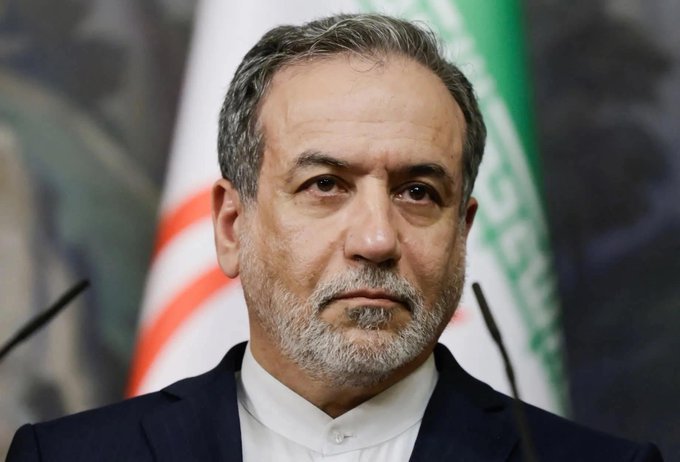
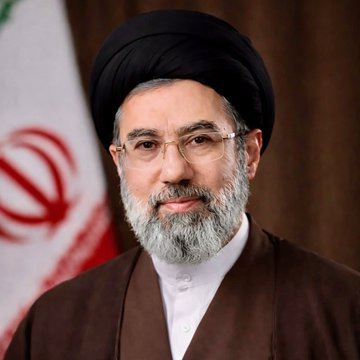
JUST IN: As rumors and speculation swirl amid the ongoing US-Israeli Operation Epic Fury, Iranian Foreign Minister Abbas Araghchi (or Araqchi) has assured that Supreme Leader Mojtaba Khamenei is in good health and could make a public appearance in the near future.
By Reflecto News Staff
April 2, 2026
TEHRAN – Iran’s Foreign Minister has pushed back against persistent rumors regarding the well-being of the country’s newly appointed Supreme Leader, Ayatollah Mojtaba Khamenei. In recent statements, the minister emphasized that the 56-year-old leader is in “good health,” actively managing state affairs, and is expected to appear publicly soon, aiming to quell speculation fueled by the absence of recent visual confirmations since his appointment in early March 2026.
This reassurance comes at a critical moment in the ongoing conflict, with Iran facing sustained US-Israeli strikes, including recent attacks on IRGC missile bases in Isfahan and other strategic sites.
Who Is Mojtaba Khamenei?
Mojtaba Hosseini Khamenei, born in 1969 in Mashhad, is the second son of the late Ayatollah Ali Khamenei. He succeeded his father as Iran’s third Supreme Leader following Ali Khamenei’s death in US-Israeli strikes on February 28, 2026. The Assembly of Experts formally appointed him on March 8, 2026, in a move widely seen as ensuring continuity of the Islamic Republic’s hardline theocratic system during wartime.
Prior to his elevation, Mojtaba Khamenei operated largely behind the scenes as a powerful aide and gatekeeper in his father’s office. He built strong ties with the Islamic Revolutionary Guard Corps (IRGC) and was viewed as a conservative figure with deep influence in security and ideological matters. Unlike his father, who held the position for over three decades, Mojtaba has no extensive public record in formal government roles, making his leadership style and visibility subjects of intense scrutiny.
Reports indicate that Mojtaba’s wife and at least one child were also killed in the initial strikes that claimed his father’s life, adding a personal dimension to the family’s losses amid the broader conflict.
Context of the Foreign Minister’s Statement
Foreign Minister Abbas Araghchi (sometimes spelled Araqchi) made the remarks in response to circulating reports—particularly from U.S. sources—suggesting that the new Supreme Leader may have been wounded or disfigured in the early days of Operation Epic Fury. Earlier statements from the minister described Khamenei as being in “excellent health,” “fully managing the country,” and with “no problem” affecting his duties.
The latest assurance that he “may appear in public soon” appears designed to counter the lack of video or photographic evidence of the leader since his appointment. While audio messages attributed to him have been broadcast on state television, the absence of visual proof has fueled online speculation and questions about his condition and control over the regime.
This messaging aligns with Iran’s broader wartime communications strategy: projecting stability and resilience despite heavy military pressure, including the recent doubling of the U.S. A-10 Warthog fleet in the region and strikes on key facilities in Isfahan.
Background: Succession Amid War
The transition to Mojtaba Khamenei occurred under extraordinary circumstances. His father, Ayatollah Ali Khamenei, was killed in the opening salvos of the joint US-Israeli campaign on February 28, 2026. The rapid selection by the Assembly of Experts underscored the regime’s priority on continuity and preventing any power vacuum that adversaries could exploit.
President Masoud Pezeshkian, a reformist-leaning figure, quickly congratulated the new Supreme Leader and pledged national unity under his command. This gesture highlighted the delicate balance between the elected presidency and the unelected Supreme Leadership, which holds ultimate authority over Iran’s military, judiciary, and foreign policy.
Rumors vs. Official Narrative
Speculation about Mojtaba Khamenei’s health intensified in mid-March 2026 after U.S. officials reportedly described him as wounded. Iranian officials have consistently dismissed these claims, with the Foreign Minister reiterating that the leader remains in control and that the situation in Iran is stable.
The promise of an imminent public appearance could serve as a significant morale booster for Iranian forces and the public, while signaling to the international community that the leadership structure remains intact despite sustained airstrikes on IRGC assets, missile bases, and other targets.
Implications for the Ongoing Conflict
Mojtaba Khamenei’s health and visibility carry strategic weight:
- Domestic Unity: A public appearance would help rally support and counter any perceptions of weakness during a time of economic hardship, casualties, and infrastructure damage from Operation Epic Fury.
- Military and IRGC Morale: The Supreme Leader holds supreme command over Iran’s armed forces, including the IRGC. Clear leadership signals are vital as Iran responds to strikes on facilities in Isfahan and elsewhere.
- Diplomatic Signaling: Reassurances from the Foreign Minister may aim to project strength in potential back-channel talks or to deter further escalation by demonstrating regime cohesion.
- Succession Precedent: As the first hereditary succession in the Islamic Republic’s history, any instability around Mojtaba could invite internal challenges or external opportunism.
Analysts note that hardline elements within the IRGC are likely to play a key role in supporting the new leader, while President Pezeshkian continues to balance reformist domestic priorities with wartime realities.
Reactions
Inside Iran: State media has amplified the Foreign Minister’s comments, framing them as evidence of national resilience. Hardline outlets emphasize continuity, while some reformist voices quietly hope for any signs of de-escalation.
United States and Israel: Washington and Jerusalem have maintained pressure through military operations, with officials expressing skepticism about Iranian claims while focusing on degrading missile and nuclear-related capabilities.
International Community: Calls for restraint and humanitarian concerns continue, with regional actors monitoring how leadership stability in Tehran affects proxy dynamics, energy markets, and the Strait of Hormuz.
Looking Ahead
Whether Supreme Leader Mojtaba Khamenei makes a public appearance in the coming days could mark a turning point in public perception of the wartime leadership. As strikes continue and diplomatic avenues remain limited, the world watches to see if the new Supreme Leader can consolidate authority amid one of the most severe challenges the Islamic Republic has faced.
Reflecto News will provide live updates on any public appearance, further statements from Iranian officials, and developments in Operation Epic Fury.
Related Coverage on Reflecto News:
- Operation Epic Fury: Aftermath of Strikes on IRGC Missile Base in Isfahan
- U.S. Doubles A-10 Warthog Fleet in the Middle East
- Iranian President Pezeshkian: No Hostility Toward American Civilians
- U.S.-Iran Conflict: Timeline and Strategic Targets
This article draws from official Iranian statements, international reporting, and verified developments in the ongoing regional conflict.
Questions people ask
What is China's current share of global manufacturing?
China now accounts for twenty eight percent of global manufacturing. This industrial output exceeds the combined manufacturing production of the United States, Japan, and Germany, making China the leading global industrial power according to recent reports.
Why were Andrew Tate and Tristan Tate arrested in Miami?
Andrew Tate and his brother Tristan Tate were taken into custody in Miami by the United States Marshals Service. They face thirty eight new charges in the United Kingdom, including rape and child pornography offences, and prosecutors are seeking their extradition.
What warning did Moscow issue about oil prices?
Kirill Dmitriev, the Chief Executive of the Russian Direct Investment Fund, warned that a tsunami of skyrocketing oil prices is approaching. Moscow describes this potential energy shock as a major threat to global markets.
What political shift is projected for Benjamin Netanyahu's coalition?
Political polls project that Prime Minister Benjamin Netanyahu's coalition is on track to lose its majority in the upcoming October election. This projection indicates a potential political shift in Jerusalem.
Why did a Russian military aircraft land in Tehran?
A Russian airborne command aircraft, widely known as a doomsday plane, landed in Tehran. The arrival of the aircraft represents a high stakes show of support from Russia for Iran during a period of heightened regional tensions.
What did President Masoud Pezeshkian claim about the United States and Israel?
Iranian President Masoud Pezeshkian claimed that the United States and Israel failed in a forty eight hour plan to topple the Iranian government. He made these statements during a televised address marking two years since his inauguration.