Reflecto News is an online news platform covering major international political events, global economic developments, and security conflicts. The site provides updates on topics such as Chinese manufacturing dominance, Middle Eastern political tensions, and high profile legal arrests. Readers can access current articles organized by categories like World News, Iran, and USA.
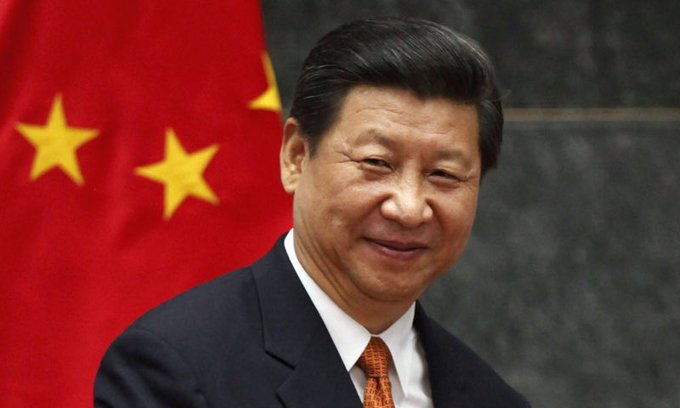
Chinese firms have reloaded a record 1.31 million metric tons of LNG year-to-date — equivalent to 19 cargoes — cashing in on sky-high spot prices while Japan, South Korea, India, Thailand, and the Philippines race to secure alternative supplies amid disruptions from the ongoing Iran conflict.
By Reflecto News Desk
April 2, 2026 | Singapore/Beijing
In a striking display of market agility, China — the world’s largest LNG importer — has emerged as an unlikely savior for cash-strapped Asian neighbors. While much of the region grapples with acute shortages triggered by the U.S.-Israeli war with Iran, Chinese trading firms are offloading excess cargoes at premium prices, helping to ease (and profit from) the regional crunch.
What Is LNG and Why Does It Matter to Asia?
Liquefied Natural Gas (LNG) is natural gas cooled to -162°C (-260°F) for easier storage and sea transport in specialized tankers. Once regasified at import terminals, it fuels power plants, industries, households, and even vehicles across energy-hungry Asia.
The region accounts for roughly 70% of global LNG demand. Countries like Japan, South Korea, China, India, and Taiwan rely heavily on imports because they lack sufficient domestic reserves. LNG provides cleaner-burning power than coal and supports the transition away from dirtier fuels — but its supply chain is vulnerable to geopolitical shocks.
The Iran War’s Devastating Impact on Energy Flows
The conflict, which escalated on February 28, 2026, with U.S. and Israeli strikes on Iran, has effectively choked the Strait of Hormuz — the narrow waterway through which about 20% of global LNG and 30% of seaborne oil trade normally flows.
Qatar, the world’s top LNG exporter, saw its Ras Laffan facilities damaged in retaliatory strikes, triggering a force majeure declaration and sidelining up to 12.8 million tons per year of production for potentially three to five years. Tanker traffic through the strait has been paralyzed, cutting off supplies that predominantly serve Asia (over 80% of Hormuz LNG cargoes head there).
Strait of Hormuz at a glance (pre-war 2024 averages):
- 20.3 million barrels of oil and petroleum products per day
- 290 million cubic meters of LNG per day
- 80% of that LNG destined for Asia
The result? Asian spot LNG prices have surged 143% since late February, hitting three-year highs and forcing utilities to scramble for replacement cargoes from the U.S., Australia, and Russia — often at eye-watering costs.
China’s Strategic Pivot: From Big Buyer to Major Reseller
While others panic, China is thriving. Data from analytics firms Kpler, ICIS, and Vortexa show Chinese firms reloaded 8 to 10 cargoes in March alone — the highest monthly total on record. Year-to-date figures stand at 1.31 million metric tons (19 cargoes), already surpassing full-year resales from 2025 (0.82 million tons) and 2023 (0.98 million tons, the previous second-highest).
Destinations so far:
- 10 cargoes to South Korea
- 5 cargoes to Thailand
- Remainder split between Japan, India, and the Philippines
Why can China afford to sell? Its domestic demand has weakened significantly. Robust pipeline imports from Russia and Central Asia, rising domestic gas production, healthy inventories, and a shift toward coal and renewables in the power sector have reduced the need for seaborne LNG. March imports fell to just 3.68 million tons — the lowest since 2018.
Chinese state-owned and private traders, armed with flexible long-term contracts (many from the U.S. with destination clauses), are now acting as sophisticated portfolio players — buying low and selling high on the spot market.
Soaring Prices and the Scramble Across Asia
The price spike is hitting hardest in price-sensitive markets. South Korea and Japan, despite long-term contracts, are topping up on the spot market. India, Thailand, and the Philippines — already stretched — face higher electricity costs and potential blackouts if they cannot secure cargoes quickly.
Some buyers are already burning more coal, cutting industrial output, or drawing down stockpiles. Europe, still rebuilding inventories after earlier crises, faces renewed competition as Asian buyers outbid on available U.S. cargoes.
Asian Spot LNG Price Trend (S&P Global Energy data):
Prices have spiked sharply in early 2026, reaching levels last seen during the 2022 energy crisis.
Broader Implications: Energy Security Redefined
This episode underscores Asia’s heavy reliance on Middle Eastern energy and the fragility of just-in-time supply chains. Analysts warn it could accelerate diversification efforts:
- Longer-term contracts with U.S. and Australian producers
- Investment in domestic renewables and nuclear
- Strategic stockpiling and floating storage solutions
- Greater role for Chinese traders in regional LNG markets
For China, the windfall strengthens its position as a global LNG player and provides diplomatic leverage. For the rest of Asia, it highlights the urgent need for resilient energy policies.
What Lies Ahead?
Consultancies including S&P Global, ICIS, Kpler, and Rystad have slashed global LNG supply forecasts by up to 35 million tons due to Qatar’s outages and Hormuz risks. Prices are expected to remain elevated through 2026, potentially delaying demand recovery in emerging Asia.
Yet China’s willingness to resell offers short-term relief — a rare bright spot in an otherwise grim energy picture. As one Singapore-based trader noted, “China isn’t just weathering the storm; it’s profiting from it.”
Reflecto News will continue monitoring developments in the global LNG market as the Iran conflict evolves. Stay tuned for updates on prices, new supply deals, and regional impacts.
Sources: Reuters, Kpler, ICIS, Vortexa, S&P Global Energy, Bloomberg. Data as of April 1, 2026.
Questions people ask
What is China's current share of global manufacturing?
China now accounts for twenty eight percent of global manufacturing. This industrial output exceeds the combined manufacturing production of the United States, Japan, and Germany, making China the leading global industrial power according to recent reports.
Why were Andrew Tate and Tristan Tate arrested in Miami?
Andrew Tate and his brother Tristan Tate were taken into custody in Miami by the United States Marshals Service. They face thirty eight new charges in the United Kingdom, including rape and child pornography offences, and prosecutors are seeking their extradition.
What warning did Moscow issue about oil prices?
Kirill Dmitriev, the Chief Executive of the Russian Direct Investment Fund, warned that a tsunami of skyrocketing oil prices is approaching. Moscow describes this potential energy shock as a major threat to global markets.
What political shift is projected for Benjamin Netanyahu's coalition?
Political polls project that Prime Minister Benjamin Netanyahu's coalition is on track to lose its majority in the upcoming October election. This projection indicates a potential political shift in Jerusalem.
Why did a Russian military aircraft land in Tehran?
A Russian airborne command aircraft, widely known as a doomsday plane, landed in Tehran. The arrival of the aircraft represents a high stakes show of support from Russia for Iran during a period of heightened regional tensions.
What did President Masoud Pezeshkian claim about the United States and Israel?
Iranian President Masoud Pezeshkian claimed that the United States and Israel failed in a forty eight hour plan to topple the Iranian government. He made these statements during a televised address marking two years since his inauguration.