Reflecto News is an online news platform covering major international political events, global economic developments, and security conflicts. The site provides updates on topics such as Chinese manufacturing dominance, Middle Eastern political tensions, and high profile legal arrests. Readers can access current articles organized by categories like World News, Iran, and USA.
Reflecto News | Breaking News | Middle East Politics
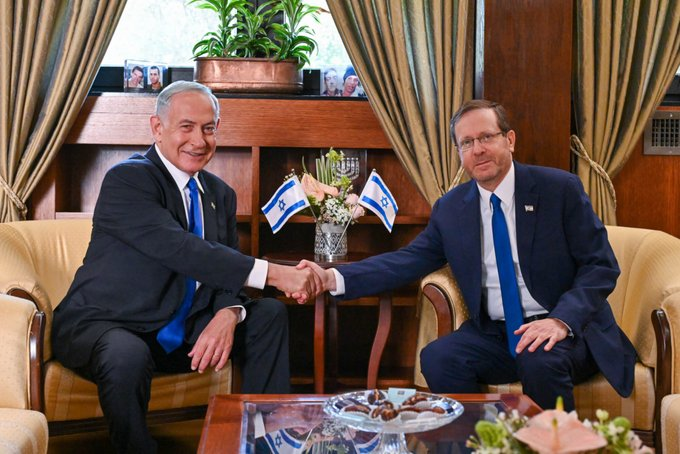
JERUSALEM — President Isaac Herzog has decided against granting Prime Minister Benjamin Netanyahu a pardon in his long-running corruption trial for now, opting instead to pursue a mediated plea deal between the premier and state prosecutors . The decision marks a significant development in a case that has polarized Israeli politics for nearly a decade.
Herzog’s Position: Exhaust Negotiations First
President Herzog confirmed through his office on Sunday that he will not issue a pardon to Prime Minister Netanyahu at this stage. Instead, he believes both parties should first attempt to reach an agreement outside the courtroom before any pardon request is considered .
“President Isaac Herzog sees reaching an agreement between the parties in Prime Minister Netanyahu’s cases as a proper and correct solution. Therefore, the president believes that it is right to first, before discussing the pardon request itself, exhaust a process that could lead to the formation of an agreement between the parties, outside the walls of the court.”
— President’s Office Statement
According to two senior Israeli officials with direct knowledge of Herzog’s thinking cited by The New York Times, the president believes there are many options beyond the binary “pardon-or-no-pardon” choice . His primary goal as president is to foster national unity, making a negotiated resolution preferable to the divisiveness of granting or denying clemency .
The Pardon Request: A Contentious History
Prime Minister Netanyahu formally requested a pardon from President Herzog in November 2025 . In his request, Netanyahu argued that terminating the corruption cases was:
- A “national interest” necessary to end societal divisions
- Essential to allow him to focus on critical security challenges
- Needed to “lower the flames and promote broad reconciliation”
Netanyahu, 76, has been on trial for nearly six years — the first sitting Israeli prime minister to face criminal charges while in office. He faces charges of bribery, fraud, and breach of trust in three separate cases .
The Legal Challenge: Pardoning a Sitting Premier
Herzog’s hesitation is grounded in significant legal complications. The Justice Ministry’s Pardons Department published a position paper last month stating it would be “extremely problematic” to grant Netanyahu a pardon under current circumstances .
Key legal concerns raised:
| Legal Obstacle | Details |
|---|---|
| Ongoing trial | No conviction has been issued yet |
| No admission of guilt | Netanyahu has consistently denied all charges |
| No remorse expressed | Required for clemency consideration |
| No precedent | Never before has a sitting prime minister been pardoned mid-trial |
“Based on the factual and legal foundation and the overall set of circumstances currently before us, we cannot determine that the pardon authority established in the Basic Law: The President of the State applies in this case. Likewise, we cannot recommend that the president take the exceptional and far-reaching step of exercising the pardon authority in a manner that would halt the legal proceedings.”
— Justice Ministry Pardons Department
Trump Factor: External Pressure on Herzog
President Herzog has faced immense pressure from U.S. President Donald Trump to grant the pardon. Trump has publicly lashed out at Herzog multiple times, calling him “weak and pathetic” and demanding an immediate pardon for Netanyahu .
Trump’s public statements:
| Date | Trump’s Comments |
|---|---|
| March 5, 2026 | Called Herzog “disgraceful for not giving” the pardon; claimed Herzog “promised me five times” |
| February 12, 2026 | Said Herzog “should be ashamed of himself” for holding the issue over Netanyahu |
| October 2025 (Knesset) | Called on Herzog to grant the pardon during address to Israeli parliament |
Herzog’s office has forcefully pushed back against external interference, stating that Israel “is a sovereign state governed by the rule of law” and that the president will act “without any influence from external or internal pressures of any kind” .
What a Plea Deal Would Look Like
A plea deal would require Netanyahu to admit to some wrongdoing — something he has steadfastly refused to do throughout the trial — in exchange for reduced charges or a lighter sentence . The negotiations would place:
| Side | Representative |
|---|---|
| Netanyahu’s defense | Attorney Amit Hadad |
| State Prosecution | Attorney General Gali Baharav-Miara |
Attorney General Baharav-Miara has been a bitter ideological foe of Netanyahu’s government. The prime minister’s coalition has repeatedly sought to fire her, and she has blocked or refused to defend several of its legislative initiatives .
Herzog reportedly believes the talks have a “chance of success,” as he feels the “legal landscape leaves room for creativity and innovation” .
Netanyahu’s Response: Denying Wrongdoing
Throughout the trial, Netanyahu has consistently maintained his innocence. He has characterized the cases against him — concerning allegations that he traded political favors for gifts and favorable press coverage — as a “witch hunt fabricated by his opponents” .
When submitting his pardon request in November, Netanyahu framed it as an act of national unity rather than an admission of guilt:
“Israel is facing enormous challenges, and alongside them great opportunities. To repel the threats and realize the opportunities, national unity is required. I am certain, as are many others in the nation, that an immediate end to the trial would greatly help lower the flames and promote broad reconciliation — something our country desperately needs.”
— Prime Minister Benjamin Netanyahu
However, the Justice Ministry’s position was clear: without admitting guilt or expressing remorse, a pardon would be virtually unprecedented and legally questionable .
Political Reactions: Division on Display
Reaction to Herzog’s decision has fallen along predictable political lines.
Netanyahu supporters:
Heritage Minister Amichai Eliyahu — who submitted his own position paper endorsing the pardon — criticized Herzog’s decision:
“It is unfortunate that the president of the country has today chosen the easy way out of legal procedure, rather than the path of leadership. Herzog missed a historic opportunity to mend the rift and lead us to victory.”
— Amichai Eliyahu, Heritage Minister
Eliyahu called for the government to pursue “necessary fundamental changes in the judicial system” — a reference to the government’s contentious judicial overhaul plan aimed at weakening the courts .
Netanyahu opponents:
Opposition figures have urged the president to reject any pardon unless Netanyahu admits guilt and resigns from political life entirely .
What Comes Next
Herzog’s decision sets in motion a complex diplomatic and legal process over the coming weeks and months:
| Next Step | Timeline |
|---|---|
| Mediation talks begin | Imminent — Herzog to facilitate |
| Netanyahu returns to court | This week (trial resumes after Iran war pause) |
| Legal adviser’s recommendation | Pending review of all documents |
| Possible plea deal | Uncertain — requires Netanyahu admission |
| Pardon decision | Not before negotiations exhausted |
The trial, which began in 2020, is due to resume this week after being put on hold during the recent Iran war . The next national election is scheduled for October 2026 — just six months away — adding further political pressure to resolve the case .
Herzog’s approach represents a middle path: not granting an immediate and divisive pardon, not outright rejecting Netanyahu’s request, but attempting to broker a legal resolution that could offer Netanyahu an off-ramp while preserving the appearance of judicial integrity .
Frequently Asked Questions (FAQs)
Q1: Why won’t President Herzog grant Netanyahu a pardon right now?
Herzog believes it is “right” to first exhaust efforts to reach an agreement between Netanyahu and prosecutors outside the courtroom before considering the pardon request. The Justice Ministry has also raised legal concerns about granting a pardon mid-trial when Netanyahu has not admitted guilt .
Q2: Has Netanyahu admitted to any wrongdoing?
No. Netanyahu has consistently denied all charges, calling them a “witch hunt” fabricated by political opponents. The Justice Ministry noted that his lack of remorse or admission weighs against a pardon .
Q3: What charges does Netanyahu face?
Netanyahu faces charges of bribery, fraud, and breach of trust in three separate cases. Prosecutors allege he accepted expensive gifts including cigars and champagne worth tens of thousands of dollars from wealthy businessmen and arranged political favors in exchange for favorable media coverage .
Q4. Has President Trump been involved?
Yes. President Trump has repeatedly and publicly pressured Herzog to grant the pardon, calling Herzog “weak and pathetic” and “disgraceful.” Herzog’s office has rejected external interference, stating Israel operates under the rule of law .
Q5. Is there precedent for pardoning a sitting prime minister mid-trial?
No. A sitting prime minister has never before been charged with a crime while in office, let alone pardoned mid-trial. This makes Herzog’s decision particularly significant and legally complex .
Q6. How has Netanyahu’s trial divided Israeli society?
The trial has polarized Israeli politics through five rounds of elections between 2019 and 2022. Supporters view it as a witch hunt; opponents see it as a necessary accountability mechanism. The recent Iran war paused proceedings, but divisions remain deep .
Q7. What would a plea deal require?
A plea deal would require Netanyahu to admit to some degree of wrongdoing in exchange for reduced charges or a lighter sentence — something he has consistently refused to do. Negotiations would involve his lawyer and the Attorney General .
Q8. When is the next Israeli election?
Israel’s next national election is scheduled for October 2026 — approximately six months away. This timeline adds political urgency to resolving the case .
Key Takeaways for Reflecto News Readers
| Aspect | Summary |
|---|---|
| Herzog’s decision | No pardon now; will pursue plea deal mediation first |
| Timing | Decision follows November 2025 pardon request |
| Legal barrier | Justice Ministry says mid-trial pardon “extremely problematic” without admission of guilt |
| Trump pressure | US President has publicly attacked Herzog multiple times |
| Trial status | Resumes this week after Iran war pause |
| Election | Scheduled for October 2026 |
| Next steps | Herzog to facilitate talks between Netanyahu’s lawyer and Attorney General |
Sources and Further Reading
Reflecto News has compiled this report from verified sources including The Times of Israel, Al-Monitor, The Jerusalem Post, The New York Times, i24NEWS, Xinhua, and JNS.org. All information is accurate as of publication.
Follow Reflecto News for continuous updates on this developing story, Israeli politics, and all breaking news from around the world.
This article is the intellectual property of Reflecto News. Redistribution without attribution is prohibited. For syndication or media inquiries, please contact the editorial team.
Questions people ask
What is China's current share of global manufacturing?
China now accounts for twenty eight percent of global manufacturing. This industrial output exceeds the combined manufacturing production of the United States, Japan, and Germany, making China the leading global industrial power according to recent reports.
Why were Andrew Tate and Tristan Tate arrested in Miami?
Andrew Tate and his brother Tristan Tate were taken into custody in Miami by the United States Marshals Service. They face thirty eight new charges in the United Kingdom, including rape and child pornography offences, and prosecutors are seeking their extradition.
What warning did Moscow issue about oil prices?
Kirill Dmitriev, the Chief Executive of the Russian Direct Investment Fund, warned that a tsunami of skyrocketing oil prices is approaching. Moscow describes this potential energy shock as a major threat to global markets.
What political shift is projected for Benjamin Netanyahu's coalition?
Political polls project that Prime Minister Benjamin Netanyahu's coalition is on track to lose its majority in the upcoming October election. This projection indicates a potential political shift in Jerusalem.
Why did a Russian military aircraft land in Tehran?
A Russian airborne command aircraft, widely known as a doomsday plane, landed in Tehran. The arrival of the aircraft represents a high stakes show of support from Russia for Iran during a period of heightened regional tensions.
What did President Masoud Pezeshkian claim about the United States and Israel?
Iranian President Masoud Pezeshkian claimed that the United States and Israel failed in a forty eight hour plan to topple the Iranian government. He made these statements during a televised address marking two years since his inauguration.