Reflecto News is an online news platform covering major international political events, global economic developments, and security conflicts. The site provides updates on topics such as Chinese manufacturing dominance, Middle Eastern political tensions, and high profile legal arrests. Readers can access current articles organized by categories like World News, Iran, and USA.
Reflecto News
Breaking coverage of the escalating US-Iran conflict

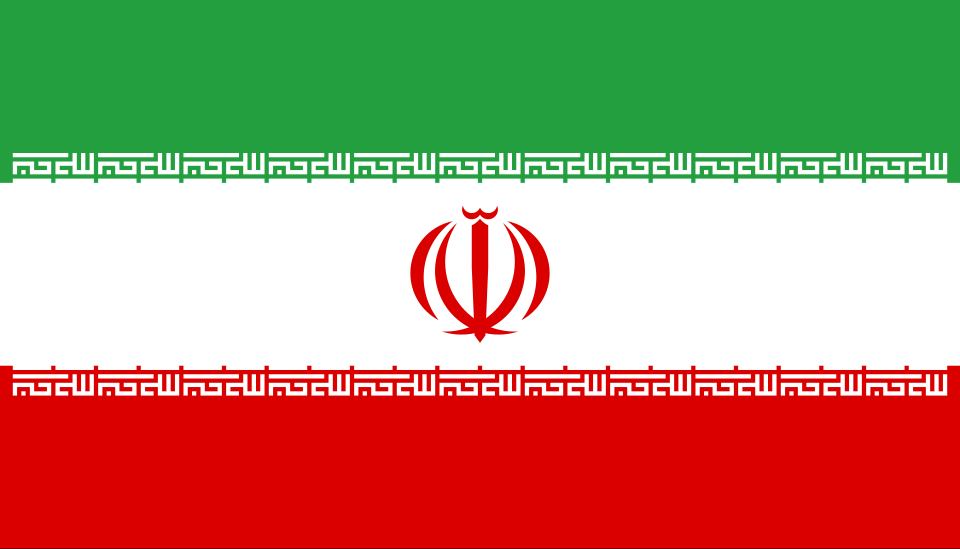
In a significant de-escalation amid the ongoing US-Iran war, the United States has explicitly rejected reports claiming it has accepted Iran’s 10-point peace proposal. Instead, Washington has agreed to a provisional two-week ceasefire, paving the way for continued high-stakes negotiations aimed at permanently ending hostilities.
The announcement comes just hours after intense diplomatic maneuvering mediated primarily by Pakistan, as President Donald Trump stepped back from threats of escalated military action against Iran. The ceasefire includes Iran’s commitment to allow controlled reopening of the strategically vital Strait of Hormuz, a move expected to ease global oil supply pressures.
Background: How the US-Iran Conflict Escalated
The current war traces its roots to heightened tensions over Iran’s nuclear program, regional proxy conflicts, and direct strikes involving the US, Israel, and Iranian forces. Earlier in 2026, US and Israeli operations targeted Iranian nuclear facilities, prompting Iranian retaliation and a near-blockade of the Strait of Hormuz—one of the world’s most critical chokepoints for oil and gas transit, carrying roughly 20% of global supplies.
Trump had issued a firm deadline for Iran to reopen the strait or face “devastating” consequences, including potential strikes on infrastructure. Iran, in turn, rejected temporary truces and insisted on a comprehensive, permanent resolution. Mediators from Pakistan, Egypt, and Turkey worked behind the scenes to bridge the gap, with Islamabad playing a central role in relaying proposals.
What Is Iran’s 10-Point Plan?
Iran submitted its detailed 10-point proposal via Pakistani intermediaries as a framework for ending the war. While a complete official English-language text has not been released publicly, state media and diplomatic sources outline the following core demands:
- Full lifting of all primary and secondary US and international sanctions on Iran.
- Acceptance of Iran’s right to uranium enrichment as part of its nuclear program.
- US military withdrawal from bases and deployment points across the Middle East.
- An immediate end to all attacks on Iran and its regional allies, including the “axis of resistance” (such as Hezbollah in Lebanon).
- Release of all frozen Iranian assets abroad.
- A binding United Nations Security Council resolution to formalize any final agreement.
- Continued Iranian sovereignty and control over the Strait of Hormuz, with provisions for “controlled transit” coordinated by Iranian armed forces.
- Mechanisms for reconstruction and compensation for war damage, potentially including fees on shipping through the strait (shared with Oman).
- Termination of relevant UN Security Council and International Atomic Energy Agency resolutions targeting Iran.
- A permanent end to regional conflicts, ensuring long-term security guarantees against future aggression.
Iran has described the plan as non-negotiable on key issues like sanctions relief and security assurances, emphasizing that only a permanent resolution—not a short-term pause—will suffice.
US Response: “Workable Basis” but No Acceptance
The White House has been clear: reports suggesting the US has fully accepted Iran’s 10-point plan are false. President Trump described the proposal as a “significant step” and a “workable basis on which to negotiate,” noting that “almost all of the various points of past contention” have seen some alignment. However, he stopped short of endorsement, stressing that the two-week ceasefire period will allow time to “finalize and consummate” a broader agreement.
This clarification directly addresses circulating claims and underscores that the US views the plan as a starting point for talks, not a finalized deal. Negotiations are expected to resume in Islamabad as early as Friday, with both sides signaling openness to in-person discussions.
Details of the Two-Week Ceasefire Agreement
Under the provisional truce:
- The US will suspend all bombing and military attacks on Iran for two weeks.
- Iran will permit safe, coordinated passage through the Strait of Hormuz, helping alleviate the global energy crisis triggered by its earlier restrictions.
- Israel has also indicated support for the pause, though the ceasefire does not explicitly extend to operations in Lebanon.
- Iran has stressed that the agreement “does not signify the termination of the war” and that its forces remain ready to respond to any violations.
The deal was reached barely an hour before Trump’s self-imposed deadline expired, averting what could have been a major escalation.
Reactions from Key Stakeholders
- President Donald Trump: Highlighted the ceasefire as a success of US pressure and diplomacy, crediting it with reopening the strait while keeping negotiations alive.
- Iranian Officials: Foreign Minister Abbas Araghchi and the Supreme National Security Council welcomed the pause but reiterated demands for a permanent end to hostilities and full implementation of their plan.
- Pakistan: Prime Minister Shehbaz Sharif, whose government facilitated the breakthrough, invited delegations to Islamabad and praised the “positive and productive” mediation efforts.
- Israel: Expressed conditional support, insisting Iran must cease attacks on the region and eliminate nuclear and missile threats.
- Global Markets: Oil prices have already begun to fall sharply in response to the news, offering relief to energy-dependent economies.
Analysts note that while the ceasefire buys critical time, deep divisions remain—particularly over sanctions, nuclear rights, and US regional presence.
Global Implications and Economic Impact
The Strait of Hormuz’s reopening could stabilize oil markets, lower fuel prices, and reduce inflationary pressures worldwide. However, failure to reach a permanent deal risks renewed closure and further conflict spillover into Lebanon and beyond. Human rights concerns and the humanitarian toll of the war, including displacement in Lebanon, remain pressing issues.
What Happens Next?
Delegations from the US and Iran are set to engage in talks in Islamabad starting this week. Success could lead to a comprehensive peace framework addressing nuclear concerns, sanctions, and regional security. Failure, however, may see the ceasefire collapse and hostilities resume.
FAQs: US-Iran Ceasefire and the 10-Point Plan
Q1: Has the US accepted Iran’s 10-point plan?
No. The US has explicitly denied accepting the plan in full. It views the proposal as a “workable basis” for further negotiations during the two-week ceasefire.
Q2: What is the duration and main condition of the ceasefire?
The ceasefire lasts two weeks. Iran must allow controlled shipping through the Strait of Hormuz in exchange for the US suspending attacks.
Q3: Where will negotiations take place?
Initial talks are scheduled in Islamabad, Pakistan, beginning as early as Friday.
Q4: Does the ceasefire cover Israel or Lebanon?
Israel supports the US-Iran pause but has clarified it does not halt its operations in Lebanon. The focus remains on direct US-Iran hostilities.
Q5: Why is the Strait of Hormuz so important?
It is a critical global oil transit route. Its near-closure had spiked energy prices and threatened supply chains.
Q6: What are the chances of a permanent deal?
Optimism exists due to the rapid diplomatic progress, but experts caution that Iran’s “maximalist” demands and US red lines on nuclear issues make a swift resolution challenging.
Reflecto News will continue to monitor developments closely as talks unfold. This ceasefire represents a fragile but hopeful step toward ending a conflict that has already reshaped Middle East geopolitics and global energy markets. Stay tuned for updates.
Questions people ask
What is China's current share of global manufacturing?
China now accounts for twenty eight percent of global manufacturing. This industrial output exceeds the combined manufacturing production of the United States, Japan, and Germany, making China the leading global industrial power according to recent reports.
Why were Andrew Tate and Tristan Tate arrested in Miami?
Andrew Tate and his brother Tristan Tate were taken into custody in Miami by the United States Marshals Service. They face thirty eight new charges in the United Kingdom, including rape and child pornography offences, and prosecutors are seeking their extradition.
What warning did Moscow issue about oil prices?
Kirill Dmitriev, the Chief Executive of the Russian Direct Investment Fund, warned that a tsunami of skyrocketing oil prices is approaching. Moscow describes this potential energy shock as a major threat to global markets.
What political shift is projected for Benjamin Netanyahu's coalition?
Political polls project that Prime Minister Benjamin Netanyahu's coalition is on track to lose its majority in the upcoming October election. This projection indicates a potential political shift in Jerusalem.
Why did a Russian military aircraft land in Tehran?
A Russian airborne command aircraft, widely known as a doomsday plane, landed in Tehran. The arrival of the aircraft represents a high stakes show of support from Russia for Iran during a period of heightened regional tensions.
What did President Masoud Pezeshkian claim about the United States and Israel?
Iranian President Masoud Pezeshkian claimed that the United States and Israel failed in a forty eight hour plan to topple the Iranian government. He made these statements during a televised address marking two years since his inauguration.