
Reflecto News is an online news platform covering major international political events, global economic developments, and security conflicts. The site provides updates on topics such as Chinese manufacturing dominance, Middle Eastern political tensions, and high profile legal arrests. Readers can access current articles organized by categories like World News, Iran, and USA.
Published on Reflecto News | World News | Diplomacy & Conflict
Pakistani Prime Minister Shehbaz Sharif has publicly expressed his gratitude to President Donald Trump for extending the fragile ceasefire with Iran, calling the decision a “gracious” act that provides a critical window for diplomacy. In a statement issued on Wednesday, Sharif confirmed that Islamabad had formally requested the extension and vowed to work tirelessly to bridge the divide between Washington and Tehran .
“I sincerely thank President Trump for graciously accepting our request to extend the ceasefire. We remain committed to using all our efforts to facilitate dialogue and bridge the divide.” — Shehbaz Sharif, Prime Minister of Pakistan
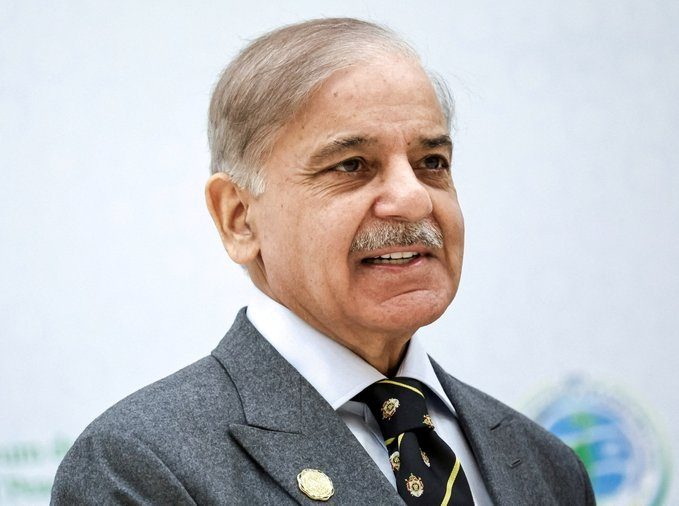
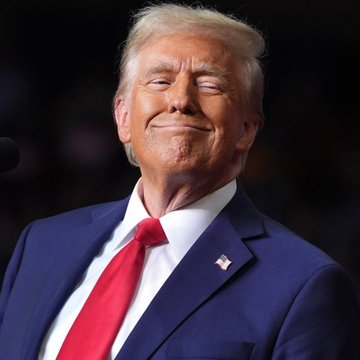
‘Bridging the Divide’
Sharif’s statement underscores Pakistan’s central role as a mediator in the US-Iran conflict. Islamabad has leveraged its unique position as a nation with ties to both Washington and Tehran to broker the initial two-week ceasefire and is now pushing for a more permanent resolution .
The prime minister emphasized that Pakistan’s mediation efforts will continue despite the challenges. “The path to peace is never easy, but it is always worth pursuing,” Sharif said, adding that Islamabad remains in close contact with both capitals .
The Extension: A Diplomatic Lifeline
President Trump announced the ceasefire extension in a Truth Social post early Wednesday, citing a request from Pakistan’s Field Marshal Asim Munir and Prime Minister Sharif. The original two-week truce had been set to expire, and Iran had refused to send a delegation for a second round of talks .
The extension gives Iran time to formulate a “unified proposal” for negotiations, as Trump characterized Tehran’s leadership as “seriously fractured.” It also allows Pakistan additional time to mediate between the two sides .
Pakistan’s Unique Mediation Role
Pakistan’s position as a mediator is rooted in its unique relationships with both the United States and Iran. Islamabad has maintained communication channels with Washington throughout the conflict while also preserving its ties with Tehran, including a 900-kilometer shared border and significant economic interests .
Key elements of Pakistan’s mediation role:
| Asset | Significance |
|---|---|
| US alliance | Pakistan has cooperated with US counterterrorism efforts |
| Iran ties | Shared border, trade relationships, and cultural links |
| Geographic proximity | Islamabad is a convenient venue for talks |
| Military credibility | Field Marshal Munir has direct access to both sides |
Challenges Remain
Despite the extension, significant obstacles remain. Iran has refused to send a delegation for talks until the US lifts its naval blockade of the Strait of Hormuz. Tehran views the blockade as an “act of war” and a violation of the ceasefire terms .
The US, however, has rejected Iran’s precondition, insisting that the blockade will remain until a deal is reached. This “chicken-or-egg” standoff has paralyzed the diplomatic process .
What Comes Next
Sharif’s statement suggests that Pakistan will intensify its mediation efforts in the coming days. Key steps could include:
- Shuttling between capitals: Pakistani officials may travel to Tehran and Washington to bridge differences
- Proposing compromise language: Islamabad could offer formulations that allow both sides to save face
- Hosting technical talks: Even without high-level meetings, expert-level discussions could continue
The prime minister’s public acknowledgment of Trump’s “gracious” acceptance of the extension also serves to reinforce the personal relationship between the two leaders, which has been a key factor in keeping diplomatic channels open .
Frequently Asked Questions (FAQs)
1. Why did Pakistan request a ceasefire extension?
Pakistan requested the extension to allow more time for diplomacy and to give Iran an opportunity to formulate a “unified proposal” for negotiations .
2. Did President Trump accept the request?
Yes. Trump announced the extension in a Truth Social post, citing the request from Pakistan’s leadership .
3. Is Iran sending a delegation to Islamabad for talks?
Not yet. Iran has refused to send a delegation until the US lifts its naval blockade of the Strait of Hormuz .
4. What is Pakistan’s role in the US-Iran conflict?
Pakistan has served as a mediator, leveraging its unique ties to both Washington and Tehran. Islamabad brokered the original ceasefire and is now pushing for a permanent resolution .
5. What happens if the ceasefire extension doesn’t lead to a deal?
Trump has warned that if no deal is reached, “lots of bombs” will begin to fall. The US military remains “ready and able” .
Stay informed with Reflecto News – Your trusted source for breaking diplomatic and geopolitical intelligence. Subscribe for real-time updates on the US-Iran crisis, nuclear negotiations, and global security developments.
Questions people ask
What is China's current share of global manufacturing?
China now accounts for twenty eight percent of global manufacturing. This industrial output exceeds the combined manufacturing production of the United States, Japan, and Germany, making China the leading global industrial power according to recent reports.
Why were Andrew Tate and Tristan Tate arrested in Miami?
Andrew Tate and his brother Tristan Tate were taken into custody in Miami by the United States Marshals Service. They face thirty eight new charges in the United Kingdom, including rape and child pornography offences, and prosecutors are seeking their extradition.
What warning did Moscow issue about oil prices?
Kirill Dmitriev, the Chief Executive of the Russian Direct Investment Fund, warned that a tsunami of skyrocketing oil prices is approaching. Moscow describes this potential energy shock as a major threat to global markets.
What political shift is projected for Benjamin Netanyahu's coalition?
Political polls project that Prime Minister Benjamin Netanyahu's coalition is on track to lose its majority in the upcoming October election. This projection indicates a potential political shift in Jerusalem.
Why did a Russian military aircraft land in Tehran?
A Russian airborne command aircraft, widely known as a doomsday plane, landed in Tehran. The arrival of the aircraft represents a high stakes show of support from Russia for Iran during a period of heightened regional tensions.
What did President Masoud Pezeshkian claim about the United States and Israel?
Iranian President Masoud Pezeshkian claimed that the United States and Israel failed in a forty eight hour plan to topple the Iranian government. He made these statements during a televised address marking two years since his inauguration.