Reflecto News is an online news platform covering major international political events, global economic developments, and security conflicts. The site provides updates on topics such as Chinese manufacturing dominance, Middle Eastern political tensions, and high profile legal arrests. Readers can access current articles organized by categories like World News, Iran, and USA.
Iran’s naval forces say they have established a safe corridor for global shipping, as vessel traffic through the strategic waterway shows sustained increase despite ongoing US blockade
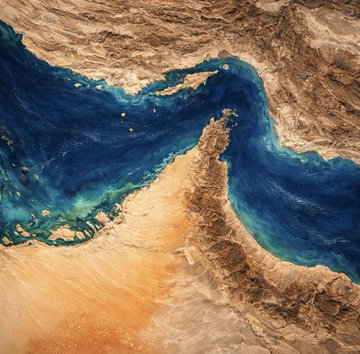
TEHRAN — The Islamic Revolutionary Guard Corps (IRGC) Navy announced on Friday that 35 vessels, including oil tankers, container ships, and other commercial carriers, successfully transited the Strait of Hormuz over the past 24 hours after obtaining necessary authorization and full security coordination with Iranian forces .
The announcement marks the third consecutive day of increased traffic through the strategic waterway, following 31 transits on Thursday and 26 on Wednesday, according to IRGC statements . The daily figures, while significantly below pre-war averages, represent a meaningful uptick from the roughly 10 daily transits reported in earlier weeks .
Iran’s New Maritime Order: Permission Required
The IRGC has established what it describes as a “new maritime order” in the Strait of Hormuz, requiring all vessels passing through designated routes south of Hormuz and Larak islands to obtain final approval from IRGC naval forces .
According to operational protocols detailed by Iranian authorities, ship owners must :
- Submit formal transit requests through their respective country’s ministry of foreign affairs
- Disclose vessel details including cargo value, flag, origin and destination, registered owner and manager, and crew nationalities
- Undergo vetting by Iranian state institutions including the Ports and Maritime Organization and the Supreme National Security Council
- Provide an “affiliation document” to verify the vessel has no connection to the US or Israel
“The affiliation check is to identify if the vessel has any connection to the US or Israel,” a European shipping source told Reuters .
Tehran’s Rationale: Security Amid ‘Aggression’
The IRGC framed the controlled transit system as a necessary response to what it called the “insecurity caused by the aggression of the United States military in the Strait of Hormuz” . Iranian forces maintain that they have established a safe waterway for shipping and the continuity of global trade despite the US naval blockade .
Iran tightened its grip on the strait beginning February 28, when it barred safe passage of vessels belonging to or affiliated with Israel and the United States following their joint strikes on Iranian territory . The United States has imposed its own naval blockade, preventing ships traveling to and from Iranian ports from transiting the waterway .
Danny Citrinowicz, a former Israeli intelligence officer specializing in Iran research and analysis, described the new reality to Reuters: “The straits will be blocked or opened up only by the approval of the Iranian government. Some will get through because of political alliances, others will have to pay, others will be turned back. This is the new norm” .
By the Numbers: Recent Traffic in the Strait
| Time Period | Vessel Transits (IRGC Data) |
|---|---|
| Past 24 hours (to Friday) | 35 |
| Previous 24 hours (to Thursday) | 31 |
| 24-hour period to Wednesday | 26 |
While these figures show sustained movement, they remain far below the pre-war average of 125 to 140 daily passages . The vessels include a mix of oil tankers, container ships, bulk cargo carriers, and other commercial vessels .
Diplomatic Flashpoint: US Rejects ‘Tolling System’
The Iranian-managed transit system has become a central point of contention in ongoing US-Iran negotiations mediated by Pakistan. US Secretary of State Marco Rubio, speaking from a NATO gathering in Helsingborg, Sweden, condemned Tehran’s approach .
“Iran is trying to create a tolling system,” Rubio said, warning that “there is not a country in the world that should accept that” . He identified Tehran’s maneuvers in vital trade corridors as a “non-negotiable hurdle” in ongoing discussions .
President Donald Trump has backed the robust maritime restrictions enforced by US forces, asserting: “We have total control of the Strait of Hormuz with our blockade. We want it free, we don’t want tolls. It’s international; it’s an international waterway” .
Global Trade Reroutes: Panama Canal Sees Surge
The disruptions to shipping through the Strait of Hormuz are reshaping global trade routes, according to the Baltic and International Maritime Council (BIMCO), a leading international shipping association .
Transits through the Panama Canal have risen 8 percent so far this year compared with the same period last year, with oil tankers accounting for much of the increase. BIMCO said the canal has handled an average of 38 crossings per day this year, close to its maximum capacity of 36 to 40 daily transits .
The rerouting comes amid ongoing disruptions in the Strait of Hormuz, where threats, inspections, and attacks on ships have largely brought traffic to a standstill since Iran took effective control following the outbreak of the US-Israeli war on February 28 .
Ceasefire Context: Diplomacy on a Knife’s Edge
The IRGC’s announcement comes as a fragile Pakistan-brokered ceasefire remains in place, though described by officials as increasingly precarious. The United States and Iran continue indirect negotiations, but major differences persist over Iran’s uranium enrichment program, the release of frozen assets, and the status of the Strait of Hormuz .
Trump has warned that the window for diplomacy is limited, stating that the US military remains prepared for a “full, large-scale assault” if an acceptable deal is not reached .
Frequently Asked Questions (FAQs)
Q1: How many ships passed through the Strait of Hormuz with Iran’s permission in the last 24 hours?
A: According to the IRGC Navy, 35 vessels, including oil tankers, container ships, and other commercial vessels, transited the strait over the past 24 hours after obtaining necessary authorization and security coordination with Iranian forces .
Q2: What is the new procedure for ships to transit the Strait of Hormuz?
A: Iran has established a “new maritime order” requiring all vessels to obtain final approval from the IRGC Navy before transiting. Ship owners must submit requests through their country’s foreign ministry, disclose detailed vessel information, and undergo vetting to confirm no connection to the US or Israel .
Q3: How does this compare to pre-war shipping traffic?
A: Pre-war averages ranged from 125 to 140 daily passages through the strait. The current figures of 26-35 daily transits represent a significant reduction, though higher than the approximately 10 daily transits reported in earlier weeks of the conflict .
Q4: What has been the US response to Iran’s management of the strait?
A: The US has rejected Iran’s approach. Secretary of State Marco Rubio called Iran’s proposed tolling system “unacceptable,” and President Trump has asserted that the US maintains “total control” of the strait through its naval blockade, insisting that the waterway must remain free and open without tolls .
Q5: How are global trade routes being affected?
A: Disruptions in the Strait of Hormuz are driving rerouting through the Panama Canal, which has seen an 8 percent increase in transits this year, nearing its maximum daily capacity of 36 to 40 crossings .
Q6: Is this related to the ongoing US-Iran ceasefire negotiations?
A: Yes. Control of the Strait of Hormuz is a central issue in negotiations mediated by Pakistan. The US demands a free and open waterway without tolls, while Iran insists on its authority to manage and charge for passage. The issue remains a major obstacle to a final agreement .
This is a developing story. Reflecto News will continue to provide updates on the situation in the Strait of Hormuz, vessel transit data, and the status of US-Iran negotiations.
Questions people ask
What is China's current share of global manufacturing?
China now accounts for twenty eight percent of global manufacturing. This industrial output exceeds the combined manufacturing production of the United States, Japan, and Germany, making China the leading global industrial power according to recent reports.
Why were Andrew Tate and Tristan Tate arrested in Miami?
Andrew Tate and his brother Tristan Tate were taken into custody in Miami by the United States Marshals Service. They face thirty eight new charges in the United Kingdom, including rape and child pornography offences, and prosecutors are seeking their extradition.
What warning did Moscow issue about oil prices?
Kirill Dmitriev, the Chief Executive of the Russian Direct Investment Fund, warned that a tsunami of skyrocketing oil prices is approaching. Moscow describes this potential energy shock as a major threat to global markets.
What political shift is projected for Benjamin Netanyahu's coalition?
Political polls project that Prime Minister Benjamin Netanyahu's coalition is on track to lose its majority in the upcoming October election. This projection indicates a potential political shift in Jerusalem.
Why did a Russian military aircraft land in Tehran?
A Russian airborne command aircraft, widely known as a doomsday plane, landed in Tehran. The arrival of the aircraft represents a high stakes show of support from Russia for Iran during a period of heightened regional tensions.
What did President Masoud Pezeshkian claim about the United States and Israel?
Iranian President Masoud Pezeshkian claimed that the United States and Israel failed in a forty eight hour plan to topple the Iranian government. He made these statements during a televised address marking two years since his inauguration.