Reflecto News is an online news platform covering major international political events, global economic developments, and security conflicts. The site provides updates on topics such as Chinese manufacturing dominance, Middle Eastern political tensions, and high profile legal arrests. Readers can access current articles organized by categories like World News, Iran, and USA.
Secretary of State strikes cautious note on progress, praises Pakistan’s mediation role, and warns that a “Plan B” remains on the table if Tehran refuses to compromise
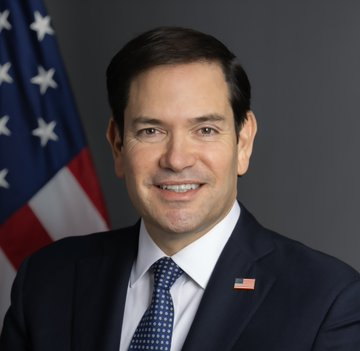
HELSINGBORG, Sweden — U.S. Secretary of State Marco Rubio announced on Friday that the United States is actively working to secure a deal with Iran that would fully reopen the strategic Strait of Hormuz to international shipping and compel Tehran to abandon its nuclear weapons ambitions .
Speaking on the sidelines of a NATO foreign ministers’ meeting in Helsingborg, Sweden, Rubio offered a measured assessment of the negotiations, acknowledging progress while cautioning that significant hurdles remain.
“There’s been some progress. I wouldn’t exaggerate it. I wouldn’t diminish it,” Rubio told reporters . “There’s more work to be done. We’re not there yet. I hope we get there” .
The Core Demands: Uranium Removal and Open Waterways
Rubio outlined two non-negotiable U.S. requirements for any final agreement with Iran.
First, Iran must fully relinquish its nuclear ambitions. The United States demands that Tehran’s stockpile of highly enriched uranium — estimated at approximately 400 kilograms, enough for roughly ten nuclear warheads — be transferred out of the country . President Donald Trump has been unequivocal on this point.
“No, we get the highly enriched; we will get it. We don’t need it. We don’t want it. We’ll probably destroy it after we get it, but we’re not going to let them have it,” Trump told reporters at the White House on Thursday .
Trump reiterated that preventing Iran from obtaining a nuclear weapon remains the administration’s top priority in the region. “We cannot let Iran have a nuclear weapon,” Trump said, warning of wider consequences: “You will have a nuclear war in the Middle East, and that war will come here, that war will go to Europe” .
Second, the Strait of Hormuz must be fully reopened to international shipping without tolls or Iranian control. Iran has been charging ships up to $2 million for safe passage through the strategic waterway while enforcing a controlled transit system that requires vessels to obtain permission from Iranian authorities . The United States has firmly rejected this arrangement.
“We’ve always said a tolling system in the strait would be unacceptable,” Rubio said, adding that Washington is backing a United Nations Security Council resolution, sponsored by Bahrain, opposing the proposal . He claimed the measure has drawn “the highest number of co-sponsors in the history of the Security Council” .
President Trump echoed this position emphatically. “We have total control of the Strait of Hormuz with our blockade. We want it free, we don’t want tolls. It’s international; it’s an international waterway,” Trump said .
‘Slight Progress’ but No Breakthrough
Rubio’s characterization of the negotiations — “slight progress” — reflects the fragile state of diplomatic efforts . While both sides have engaged in intensive indirect talks mediated by Pakistan, a final agreement remains elusive.
The Secretary of State noted that while there have been “a little bit of movement” in recent days, he did not want to raise expectations prematurely . Previous rounds of negotiations, while described as having made progress, have ultimately ended in deadlock .
Rubio praised Pakistan’s central role in facilitating the talks. “Pakistan has played the best role in this entire matter,” he said . He confirmed that Washington remains in constant communication with Islamabad and that Pakistan’s Field Marshal Asim Munir is traveling to Tehran for further discussions .
The ‘Plan B’ Warning
Despite the diplomatic overtures, Rubio made clear that the United States is prepared to pursue alternative options if Iran refuses to compromise.
“We have to have a Plan B” if Iran does not make sufficient concessions, Rubio warned during the NATO meeting . While he did not specify what that plan would entail, the statement underscores Washington’s readiness to consider non-diplomatic measures.
President Trump has also kept military options on the table. Speaking earlier this week, Trump said he was “an hour away” from ordering new strikes on Iran before Gulf allies requested a delay to allow more time for negotiations. However, he has warned that the window for diplomacy is limited. “We’re going to either make sure they don’t have a nuclear weapon or we’re going to have to do something very drastic,” Trump said .
Israel Tensions Simmer
The diplomatic maneuvering has created friction between Washington and its closest regional ally. According to reports, Israeli Prime Minister Benjamin Netanyahu expressed frustration with Trump’s decision to delay military action, and the two leaders reportedly had a “tense phone call” on May 20 regarding the issue .
Netanyahu has insisted that any final agreement must include not only the removal of enriched uranium from Iran but also an end to Tehran’s support for proxy militias and the elimination of its ballistic missile capabilities .
The High Stakes of the Standoff
The conflict, which began on February 28 when the United States and Israel launched coordinated strikes against Iran, has now entered its fourth month . The war has exacted a heavy toll on both sides and on the global economy.
| Impact Category | Details |
|---|---|
| Iranian daily revenue loss | Approximately $435 million per day |
| Iranian losses (blockade) | Estimated $17 billion from naval embargo alone |
| Total Iranian economic damage | Approximately $144 billion from initial strikes |
| US military costs | Over $77 billion [citation:previous coverage] |
| Global oil prices | Brent crude trading above $110 per barrel |
Iran’s economy has been severely strained by the US naval blockade, which has cut off nearly all Iranian oil exports. Tehran has responded by maintaining its closure of the Strait of Hormuz, through which approximately 20 percent of the world’s oil supply normally passes .
Pakistan’s Crucial Mediation Role
Pakistan has emerged as the indispensable intermediary in the US-Iran talks. Islamabad hosted the only round of direct negotiations in April and has since served as the primary channel for exchanging proposals between Washington and Tehran .
Rubio’s public acknowledgment of Pakistan’s role underscores the importance of Islamabad’s continued engagement. The Secretary of State confirmed that Field Marshal Munir’s upcoming visit to Tehran is a key part of the mediation effort .
What Comes Next
With diplomatic efforts showing only “slight progress” and both sides maintaining their core positions on uranium and the strait, the path forward remains uncertain . Several factors will determine whether negotiations yield a breakthrough or collapse:
| Factor | Significance |
|---|---|
| Iran’s uranium position | Tehran’s Supreme Leader has reportedly directed that enriched uranium not be sent abroad |
| Strait of Hormuz tolls | Iran continues to charge fees; US rejects any tolling system |
| Pakistan mediation | Munir’s Tehran visit could generate momentum |
| Gulf state pressure | Saudi Arabia, UAE, Qatar urging restraint and more time for talks |
| US military posture | Trump has kept “Plan B” options on the table |
A ceasefire brokered by Pakistan took effect on April 8, halting major hostilities, but the truce has been described as increasingly fragile . While the pause in fighting has held for more than six weeks, the underlying issues that sparked the war remain unresolved.
For now, Secretary Rubio has characterized the situation as one of cautious optimism. “The President’s preference is always a deal. His preference is always diplomacy, his preference is always an agreement,” Rubio said . However, he tempered expectations, adding: “I’m not here to tell you that it’s going to happen for sure… but we’re going to do everything we can to see if we can get one” .
As Field Marshal Munir prepares to travel to Tehran, the coming days could prove decisive in determining whether these fragile negotiations lead to a lasting peace — or whether the region returns to war.
Frequently Asked Questions (FAQs)
Q1: What did Secretary Rubio say about the status of US-Iran negotiations?
A: Rubio stated that “some progress” has been made but cautioned against overstatement, saying “we’re not there yet.” He described the movement as “slight” and noted that the United States is actively working toward an agreement .
Q2: What are the core US demands in any deal with Iran?
A: The United States demands that Iran transfer its stockpile of highly enriched uranium (approximately 400 kilograms) out of the country and that the Strait of Hormuz be fully reopened to international shipping without tolls or Iranian control .
Q3: What has been the US response to Iran’s proposed tolling system for the strait?
A: Both President Trump and Secretary Rubio have firmly rejected any tolling system, calling it “unacceptable.” Trump insisted that the strait is “an international waterway” that must remain free and open .
Q4: What role is Pakistan playing in the negotiations?
A: Pakistan is the primary mediator between the United States and Iran. Rubio praised Pakistan’s role, confirming that Washington remains in constant contact with Islamabad and that Field Marshal Asim Munir is traveling to Tehran for further discussions .
Q5: Has any final agreement been reached?
A: No. While progress has been reported, Rubio confirmed that “we’re not there yet” and cautioned against raising expectations prematurely .
Q6: What is ‘Plan B’ that Rubio mentioned?
A: Rubio warned that “we have to have a Plan B” if Iran refuses to compromise, though he did not specify what that plan would entail. The statement indicates Washington is prepared to consider non-diplomatic options .
Q7: How has Israel reacted to the ongoing negotiations?
A: Reports indicate Israeli Prime Minister Benjamin Netanyahu expressed frustration with the delay in military action. The two leaders reportedly had a “tense phone call” on May 20, as Israel wants to maintain military pressure on Tehran .
Q8: What is at stake economically in the standoff?
A: Iran is losing approximately $435 million per day, with total losses exceeding $17 billion from the blockade alone. Global oil prices remain elevated above $110 per barrel, and the United States has incurred over $77 billion in military costs .
This is a developing story. Reflecto News will continue to provide updates on US-Iran negotiations, the mediation efforts by Pakistan, and any developments regarding the reopening of the Strait of Hormuz.
Questions people ask
What is China's current share of global manufacturing?
China now accounts for twenty eight percent of global manufacturing. This industrial output exceeds the combined manufacturing production of the United States, Japan, and Germany, making China the leading global industrial power according to recent reports.
Why were Andrew Tate and Tristan Tate arrested in Miami?
Andrew Tate and his brother Tristan Tate were taken into custody in Miami by the United States Marshals Service. They face thirty eight new charges in the United Kingdom, including rape and child pornography offences, and prosecutors are seeking their extradition.
What warning did Moscow issue about oil prices?
Kirill Dmitriev, the Chief Executive of the Russian Direct Investment Fund, warned that a tsunami of skyrocketing oil prices is approaching. Moscow describes this potential energy shock as a major threat to global markets.
What political shift is projected for Benjamin Netanyahu's coalition?
Political polls project that Prime Minister Benjamin Netanyahu's coalition is on track to lose its majority in the upcoming October election. This projection indicates a potential political shift in Jerusalem.
Why did a Russian military aircraft land in Tehran?
A Russian airborne command aircraft, widely known as a doomsday plane, landed in Tehran. The arrival of the aircraft represents a high stakes show of support from Russia for Iran during a period of heightened regional tensions.
What did President Masoud Pezeshkian claim about the United States and Israel?
Iranian President Masoud Pezeshkian claimed that the United States and Israel failed in a forty eight hour plan to topple the Iranian government. He made these statements during a televised address marking two years since his inauguration.